
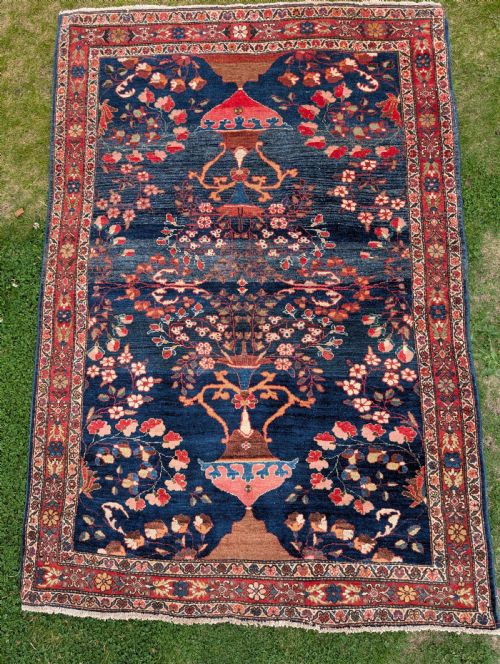
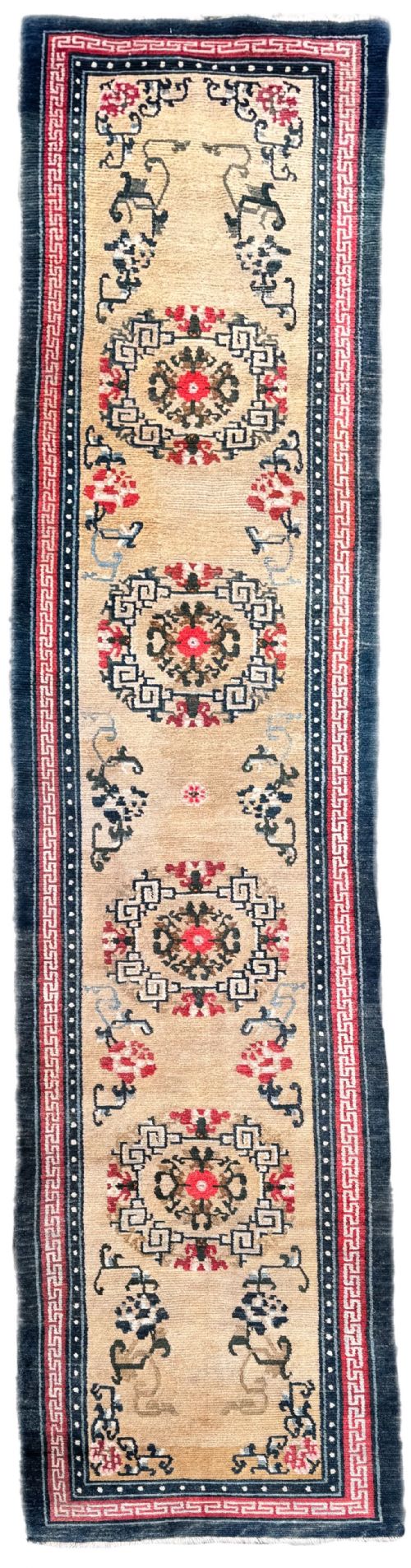
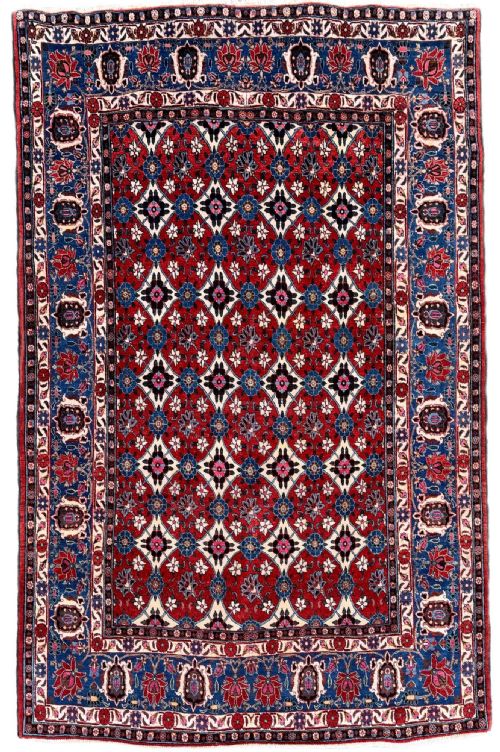
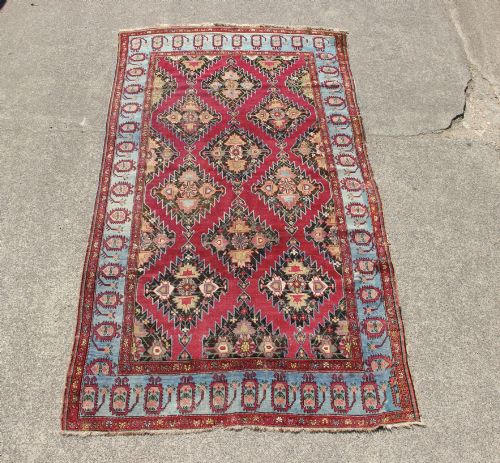
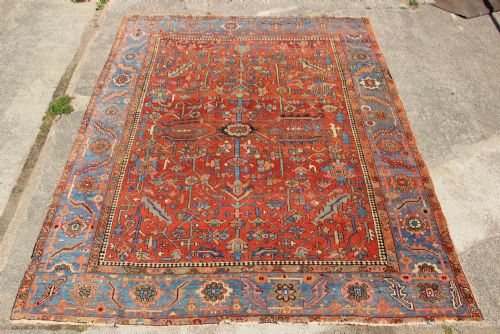
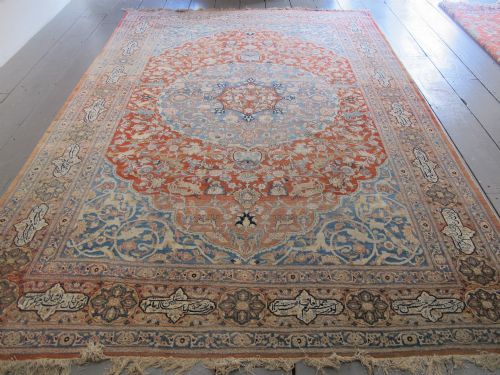


Blue Border Wool Rug
When you search for a blue border wool rug, you are looking at floor coverings defined by distinctive framing borders and soft pile.
Blue Border Wool Rug
A blue border wool rug brings together floor coverings originating largely from Persian, Caucasian, and traditional weaving regions, spanning from the mid-nineteenth century into the early twentieth century. These textiles include large carpets, gallery runners, and smaller rugs designed to anchor living spaces or hallways with structured framing.
The versions most commonly met on this page are antique room-sized carpets and runners from centres such as Heriz, Sultanabad, and Tabriz. They combine traditional motifs with durable construction methods suited to practical daily use.
Makers ranged from village weavers working on domestic vertical looms to large workshops in cities producing finely knotted carpets for export. Each piece reflects the regional palette and pattern traditions of its specific origin.
How they were made
Weavers constructed these pieces primarily using wool, hand-spun wool, and cotton foundations, occasionally incorporating silk, angora wool, or leather elements for contrast and texture. The pile was knotted by hand onto warp and weft threads, creating a dense surface capable of retaining rich dye colours over decades.
Dyes derived from natural sources provided the deep blues seen in the borders, alongside reds, golds, and earth tones that aged with gentle patination. Rugs were then finished with flatwoven ends and bound edges to prevent fraying along the perimeters.
Listings span production dates from the 1850s through the 1930s, featuring wool, cotton, and hand-spun materials.
What varies in quality
The fineness of the knot count and the precision of the design execution distinguish individual pieces across the range. Tighter knots allow for sharper definition in complex border patterns and floral or geometric field motifs.
The consistency of the wool and the depth of the dye work also set pieces apart, with superior examples retaining supple handles and balanced proportions throughout the field and border.
Haji Jalili Tabriz
The Blue Border Wool Rug Glossary
- Warp
- The vertical threads stretched across a loom that form the structural foundation of a knotted rug. The exposed ends often emerge as fringing at either end of the piece.
- Weft
- The horizontal threads passed across the warp strands to hold the knots in place and add structural stability. Multiple weft shots can create firmer handling carpets.
- Pile
- The upright yarn surface formed by individual knots sheared to an even height. This creates the soft layer underfoot and displays the pattern.
- Border
- The outer framing band enclosing the central field of a rug, frequently decorated with repeating geometric or floral motifs rendered in blue tones.
- Kilim
- A flatwoven textile produced without a raised pile, often constructed as a reversible rug or used for storage covers and wall hangings.
Blue Border Wool Rug: Frequently Asked Questions
How do I clean an antique wool rug?
Vacuum gently using a suction-only attachment without a rotating brush bar to protect the delicate wool pile and old foundations.
Professional specialist cleaning is recommended for deep washing to preserve the natural lanolin and prevent dye migration in the blue borders.
Where should I place a long runner?
Narrow runners suit hallways, corridors, and galley kitchens where foot traffic benefits from a durable floor covering.
Ensure you use a breathable rug underlay to prevent slipping on hard wooden or tiled floors and to reduce wear from friction.
How do I identify a Persian tribal rug?
Tribal rugs typically display geometric medallions, hooked motifs, and less rigid symmetry than formal city workshop carpets.
They often feature eccentric colour shifts within the wool and spontaneous design variations introduced by nomadic weavers.
What causes antique wool pile to wear?
Continuous friction from foot traffic and heavy furniture pressure gradually abrade the surface wool fibres over decades of use.
Placing rugs away from pivot points and rotating them periodically helps distribute wear evenly across the surface.