
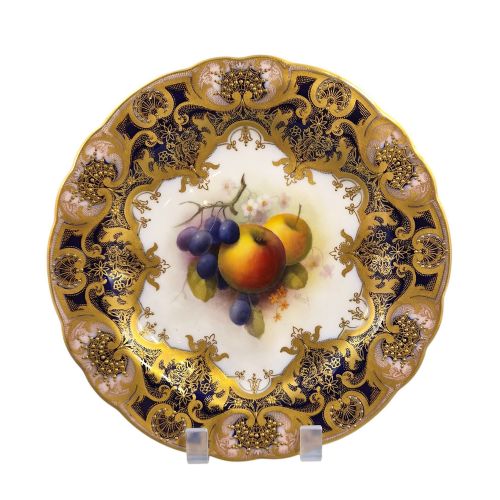
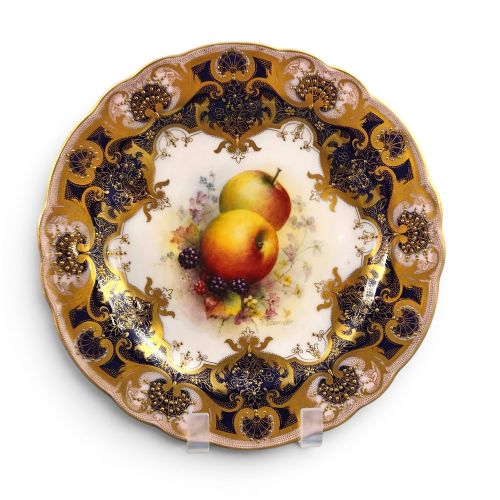
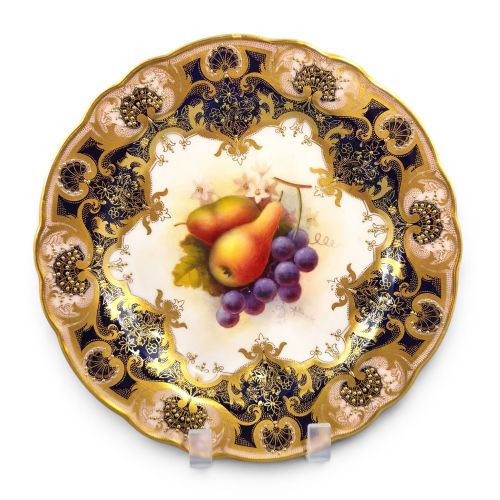
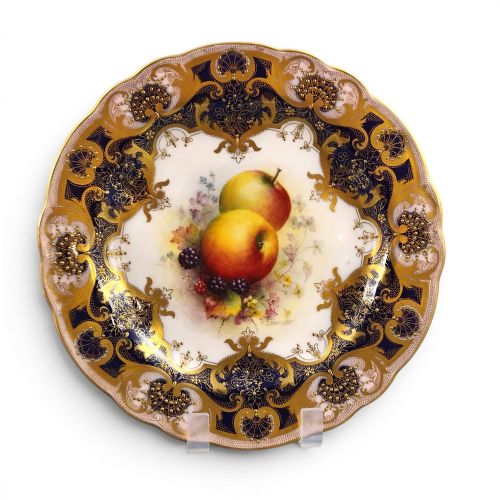


Blue and Gold China Plate
These blue and gold china plate selections combine rich cobalt grounds with gilded embellishment, offering striking display pieces for a traditional interior.
Blue and Gold China Plate
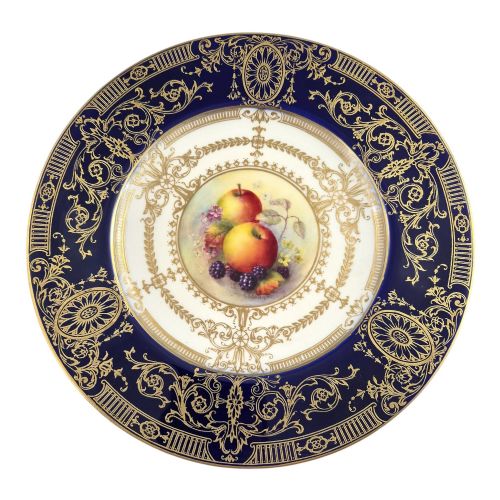
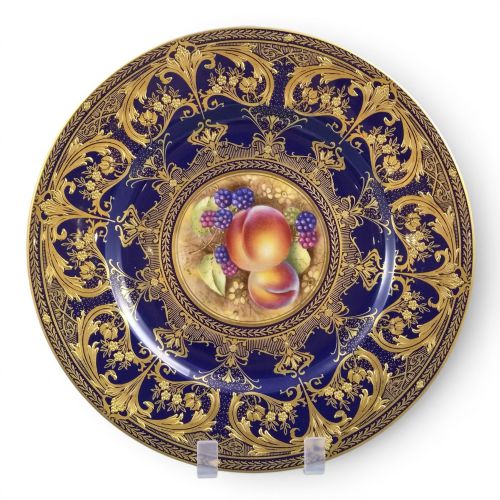
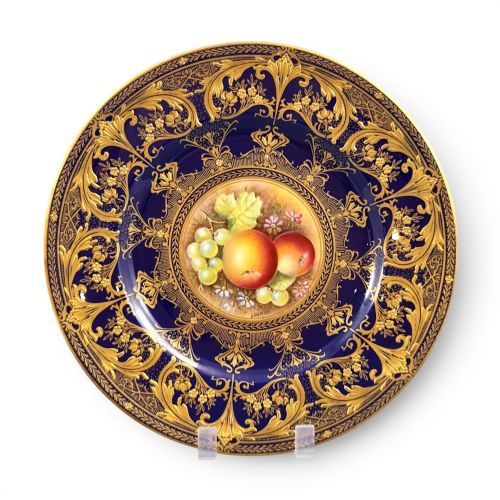
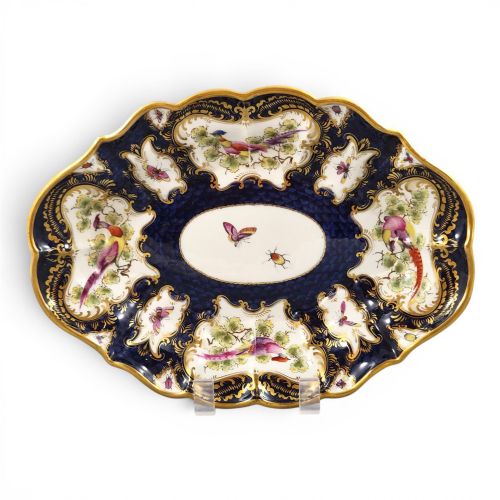
A blue and gold china plate typically takes the form of a cabinet plate or dessert dish intended for display rather than daily dining. These pieces range from nineteenth-century English and French porcelain to twentieth-century bone china productions.
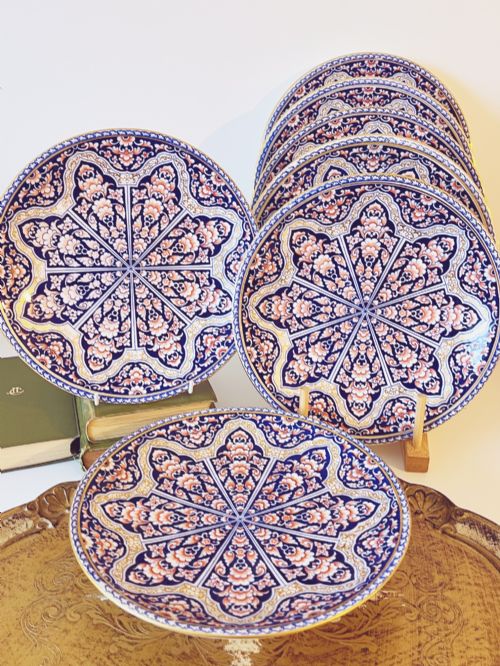
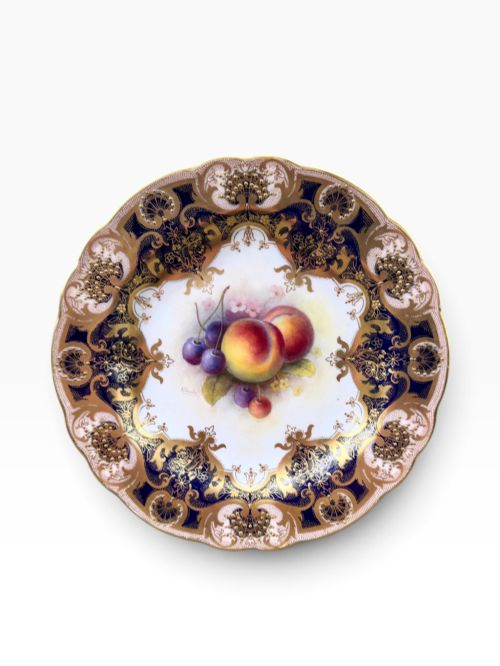
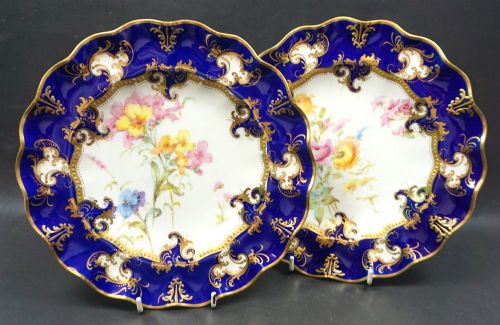
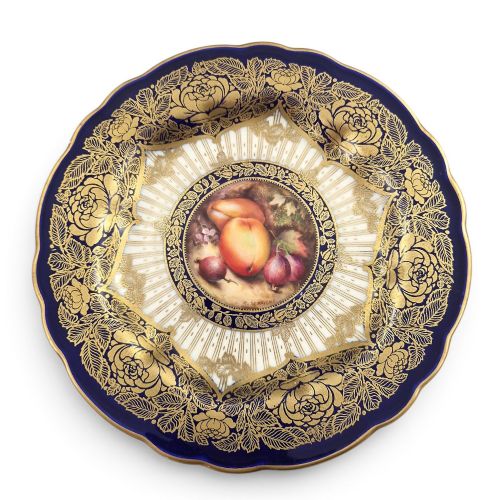
The most common examples encountered here feature elaborate hand-painted florals, fruit studies, or botanical motifs set against deep cobalt blue grounds. Makers utilised extensive gilding, gold leaf, and tooled gilt to frame these central artistic compositions.
Collectors encounter various formats, including individual cabinet plates, pairs, and portions of larger dessert services. Dating spans from the early nineteenth century through the Edwardian period and into the mid-twentieth century.
Manufacturing methods
Potters shaped these vessels using fine porcelain or bone china, applying underglaze blue, enamel, and paint by hand. Artisans signed many of the finest fruit and botanical plates individually.
Workers applied gold leaf, gilding, and gold gilding to the borders and rims, often employing tooling techniques to create textured patterns against the blue enamel.
Painters like Richard Sebright and Albert Shuck spent decades rendering hyper-realistic fruit on plates that were meant only to be looked at.
Factors of quality
Quality rests upon the skill of the hand-painted decoration, particularly in detailed fruit, floral, or figural scenes by known artists. Finer pieces demonstrate superior brushwork and more complex polychrome palettes.
The precision and weight of the applied gold leaf and tooled gilding distinguish standard production items from masterworks. The depth of the cobalt blue glaze and the clarity of the porcelain body further separate tiers of manufacture.
Royal Crown Derby·Royal Worcester·John Ford·Pucher Deroche·Coalport·Meissen·Ridgway·Barr Flight Barr·Royal Vienna·New Hall·Sevres
The Blue and Gold China Plate Glossary
- Cabinet plate
- A decorative plate intended for display in a cabinet or on a wall rather than for practical table use. These often feature elaborate painted scenes and rich gilding.
- Bone china
- A type of soft-paste porcelain incorporating bone ash, known for its high strength, chip resistance, and translucent body. It forms the base of many English dessert services.
- Gilding
- The application of gold leaf or gold powder to the surface of porcelain. It provides the characteristic metallic highlights seen on these plates.
- Cobalt
- A deep blue metallic oxide used to colour glazes and enamels on ceramic pieces. It creates the dark background field that contrasts with gold decoration.
- Dessert service
- A matched set of dishes including plates, comports, and serving vessels created for the final course of a formal meal. Surviving pieces are often dispersed as individual items.
Blue and Gold China Plate: Frequently Asked Questions
What is a cabinet plate?
A cabinet plate is an ornamental ceramic dish produced primarily for visual display rather than functional dining use. They frequently feature intricate hand-painted motifs.
These pieces were often kept in glass-fronted furniture to protect their delicate enamel and gilt decoration from wear.
How do I date these plates?
Dating relies on factory backstamps, impressed marks, and stylistic indicators such as colour palettes and border designs. Many nineteenth and twentieth-century makers utilised specific annual cipher systems.
Comparing the painting style and porcelain body to documented examples from factories like Royal Worcester or Coalport helps narrow the period of origin.
Can I use them for dining?
These decorative plates are generally unsuited for modern dining due to delicate hand-painted surfaces and fragile gold leaf embellishments. Dishwasher use and metal cutlery will quickly damage the historical glazes.
Owners should restrict them to display stands, wall mountings, or careful decorative placement.
What caused the blue and gold style?
The aesthetic drew inspiration from eighteenth-century Sevres and continental porcelain traditions that paired rich cobalt grounds with heavy gilding. Victorian and Edwardian manufacturers revived these opulent colour schemes for affluent households.
Demand for decorative table services drove potteries to produce increasingly elaborate painted and gilded cabinet wares.