







Blue and Brown Pottery
Blue and brown pottery brings together rich cobalt washes and warm earthy tones, offering the solid weight and tactile glazes collectors prize in nineteenth and early twentieth-century ceramics.
Blue and Brown Pottery
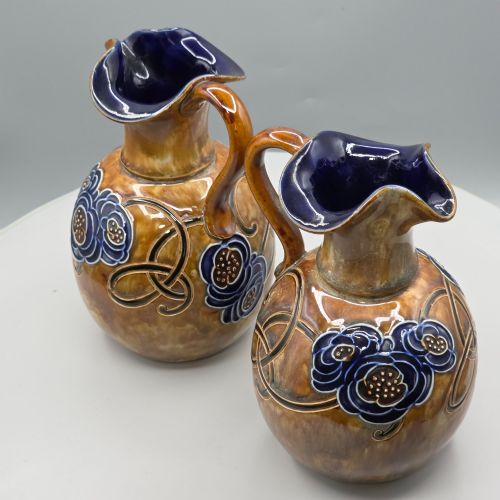
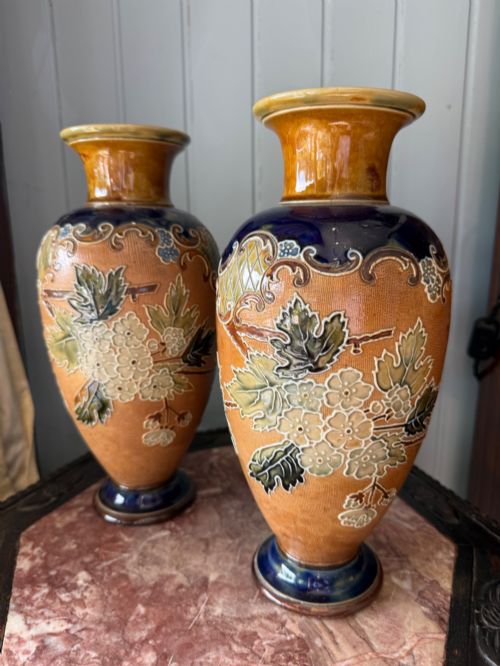
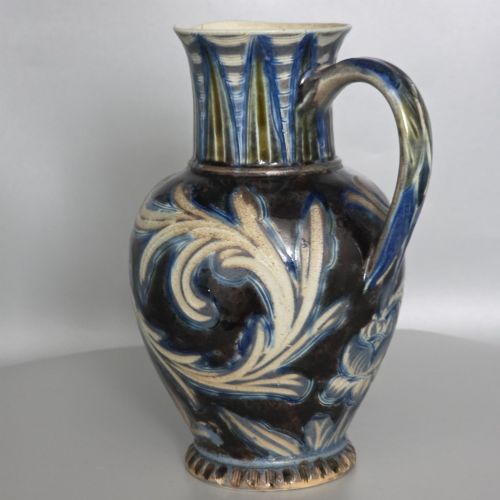
When buyers search for blue and brown pottery, they encounter a diverse selection of nineteenth-century utilitarian vessels and decorative art pottery. The domestic forms range from jugs, pitchers, and teapots to large jardiniere planters and tureens.
Stoneware vessels from workshops like Doulton Lambeth dominate the selection, often finished in rich salt glazes combining cobalt blue highlights with warm brown bodies. Majolica and faience pieces also appear, bringing brightly coloured glazes and moulded figural designs into the palette.
The objects span the Victorian era, the Arts and Crafts movement, and Art Nouveau, reflecting evolving British and continental tastes in decorative ceramics. Most pieces serve both practical and ornamental purposes, displaying robust construction alongside intricate incised or relief decoration.
How blue and brown pottery was made
Potters shaped durable stoneware and earthenware bodies on the wheel or in moulds before applying metallic oxide glazes that produced deep cobalt blues and warm browns during high-temperature firing. Salt glazing imparted a characteristic textured orange-peel finish to many stoneware jugs and vases.
Art pottery pieces often received hand-incised ornamentation, slip decoration, or pate-sur-pate detailing executed by studio artists before final glazing. Majolica pieces utilised lead-based coloured glazes applied over moulded earthenware to achieve glossy, vibrant surfaces.
Blue and Brown Pottery Retail Price Guide 2026
Typical asking prices for blue and brown pottery among the pieces listed under this phrase on Sellingantiques today, from the lower quarter to the upper quarter. They describe what is for sale here now, not the wider market.
Victorian potters modeled majolica teapots as Chinese boys sitting atop giant striped melons.
What varies in quality
The distinction between standard production items and finer pieces rests upon the crispness of the moulded or incised detail and the skill of the artist execution. Pieces bearing identifiable studio signatures or monograms reflect individual artisan input rather than purely factory output.
Glaze consistency and depth determine the visual impact of the blue and brown coloration, with superior examples showing controlled application and harmonious tonal contrast. The integration of precious metal mounts, such as silver rims on stoneware beakers, elevates the standing of a domestic vessel.
Royal Doulton·Doulton Lambeth·Joseph Holdcroft·Minton·Doulton Burslem
The Blue and Brown Pottery Glossary
- Stoneware
- A robust, vitrified ceramic fired at high temperatures until non-porous. It provides a sturdy body suited to heavy salt-glazed jugs and utilitarian wares.
- Majolica
- A type of earthenware coated with an opaque tin-lead glaze and painted with metallic oxide colours. It produces bright, glossy surfaces typical of Victorian figural teapots and tureens.
- Salt Glaze
- A finish created by throwing common salt into the kiln during high-temperature firing, reacting with the silica in the clay body to form a textured, glossy coating. This technique creates the distinctive pebbled surface on many nineteenth-century vessels.
- Earthenware
- A porous, lower-fired ceramic material that requires a protective glaze to hold liquids. It forms the foundation for many decorative majolica and faience pieces.
- Faience
- Tin-glazed earthenware produced in Europe, often featuring painted polychrome designs on a pale background. It encompasses continental pieces such as decorative tureens and carafes.
Blue and Brown Pottery: Frequently Asked Questions
How do I date blue and brown pottery?
Dating relies on identifying workshop marks, registration stamps, and stylistic markers such as Victorian relief moulding or Art Nouveau floral motifs. Many pieces carry impressed factory ciphers or artist initials that narrow down the production period to a specific decade.
Changes in glaze chemistry and manufacturing techniques across the nineteenth century also help place an object within the Victorian or Edwardian eras.
Were these pieces used daily or displayed?
While forms like jugs, pitchers, and teapots originated as functional kitchen and dining vessels, many elaborately decorated art pottery pieces served primarily as ornamental items in Victorian parlours. Jardiniere planters and decorative ewers were designed specifically to adorn domestic interiors.
Utility shifted towards display as studio pottery gained appreciation among collectors during the later nineteenth century.
What is salt glaze pottery?
Salt glaze pottery is stoneware fired at extremely high temperatures where common salt introduced into the kiln vaporizes and bonds with the clay body. This chemical reaction forms a durable, slightly pitted surface resembling orange peel.
The technique protects the vessel from moisture and creates the characteristic mottled finish seen on many antique jugs and vases.
How should I clean antique pottery?
Antique ceramics require gentle maintenance using a soft, dry cloth to remove dust without disturbing historic surfaces or glazes. Water and harsh cleaning agents should generally be avoided, particularly on earthenware or pieces with delicate overglaze decoration.
Displaying pieces away from direct sunlight preserves the vibrancy of the blue and brown mineral pigments.