
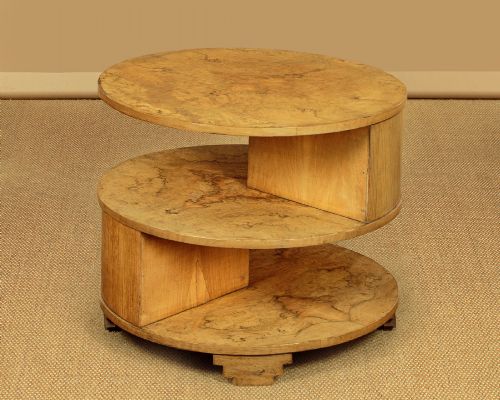


Blonde Wood Side Table
These blonde wood side tables span Art Deco and nineteenth-century periods, bringing pale timber and versatile utility to a room.
Blonde Wood Side Table
A blonde wood side table brings a pale, warm surface into a room, serving multiple domestic functions across different historical periods. When searching for a blonde wood side table, buyers encounter formats ranging from compact bedside cabinets and coffee tables to nests of tables and console tables.
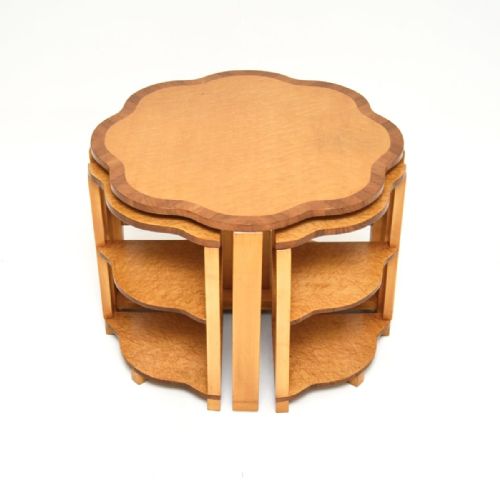
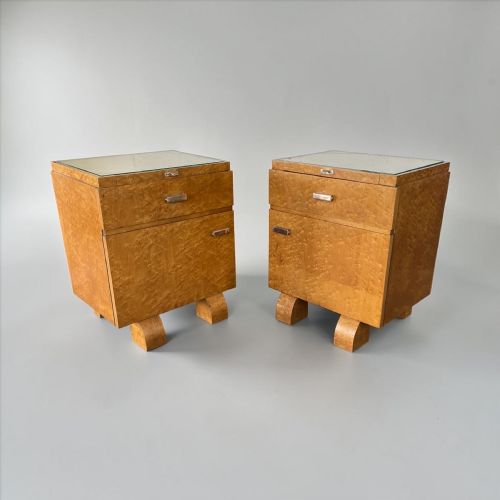
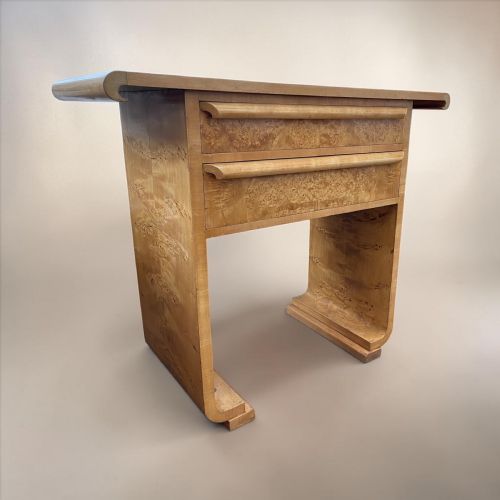
Forms vary from simple occasional tables with lyre or trestle bases to sophisticated nesting sets and pairs of bedside cupboards. Buyers most frequently meet Art Deco birds eye maple tables from the nineteen-thirties alongside nineteenth-century birch and mahogany examples.
Materials and construction
Cabinet makers utilised distinct pale timbers including birds eye maple, birch, satin birch, sycamore, burr birch, and ash. These native and exotic woods provided striking grain patterns that defined the aesthetic of each piece.
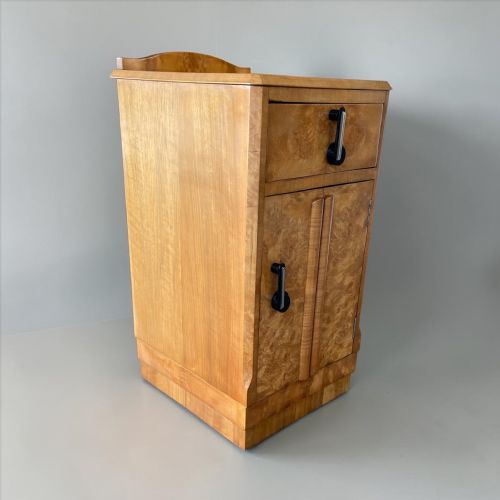
Makers occasionally combined these pale veneers and solids with contrasting ebonised wood, brass fittings, and glass elements. Construction techniques involved precise veneering over timber bases, creating smooth surfaces suited to both minimalist Art Deco lines and ornate nineteenth-century revivals.
Birds eye maple gets its playful name from tiny, dormant buds trapped beneath the bark that create circular knots resembling avian eyes.
Assessing quality in pale wood furniture
Quality rests upon the selection and matching of wood veneers, where symmetrical grain patterns and careful timber alignment elevate a piece above standard utility furniture. The integrity of the underlying construction and the crispness of inlaid details further distinguish finer examples.
The presence of documented workshop attribution or distinct regional styling, such as Swedish Biedermeier proportions or labelled Art Deco designs, separates standard domestic items from collector pieces. Condition of the pale polish and preservation of delicate veneers also dictate the standing of an individual table.
Fortnum and Mason·The Hille Furniture Company
The Blonde Wood Side Table Glossary
- Birds Eye Maple
- A figure in maple wood that resembles tiny swirling eyes, highly prized by cabinet makers for decorative veneer surfaces.
- Biedermeier
- A Central European style from the nineteenth century focusing on clean lines, utility, and the natural beauty of blonde veneers.
- Console Table
- A table designed to stand against a wall, frequently featuring a half-round or rectangular top supported by decorative legs.
- Nesting Tables
- A set of graduated tables designed to fit one beneath another to save space when not in use.
- Satin Birch
- A pale, lustrous timber with a fine grain, commonly utilised in Scandinavian and nineteenth-century European cabinet making.
Blonde Wood Side Table: Frequently Asked Questions
How do I style a blonde wood side table?
Pair these pale timber surfaces with darker interior elements to create visual contrast in a room. Their neutral tones allow them to sit comfortably beside both contemporary and antique seating.
Position a compact occasional table beside an armchair or utilise a nest of tables for flexible surface space during gatherings. Their varied nineteenth-century and Art Deco forms work well as bedside stands or hallway consoles.
What is the difference between birch and maple?
Birch generally presents a uniform, pale straw colour with a subtle, straight grain. It was widely utilised in Scandinavian and nineteenth-century pieces.
Maple, particularly birds eye variants, displays distinctive swirling figures and small knots across the surface. This timber yields a highly decorative finish favoured by Art Deco cabinet makers.
How do I care for antique blonde wood?
Protect pale wood surfaces from direct sunlight to prevent the timber from darkening or yellowing unevenly over time. Use coasters and mats to shield the polish from moisture and heat.
Apply a gentle, appropriate wax polish periodically to maintain the lustre of the wood. Avoid harsh chemical cleaners that can strip historical finishes.
Are these tables suitable for small spaces?
Compact forms such as bedside tables, lamp tables, and nesting sets provide functional surfaces without dominating a room. Their pale timber tones also visually lighten tight corners and narrow hallways.
Consider console tables or small occasional tables with slim legs to maintain an open feel in restricted floor plans. Versatile designs allow easy repositioning as room layouts change.