


Blonde Wood Commode
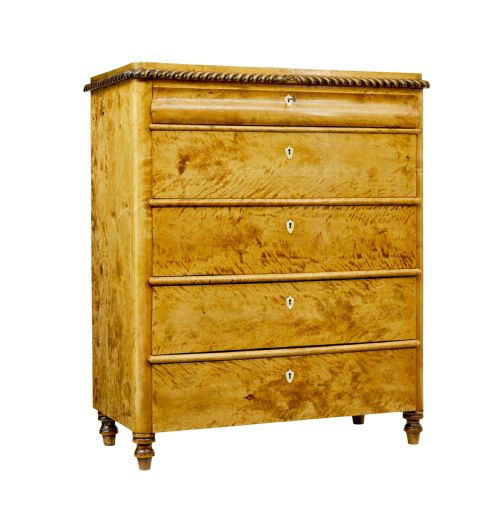
A blonde wood commode brings calm Scandinavian geometry into a room through pale, figured grain.
Identifying a Blonde Wood Commode
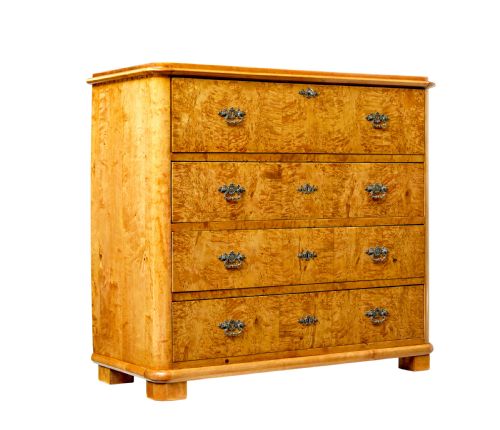
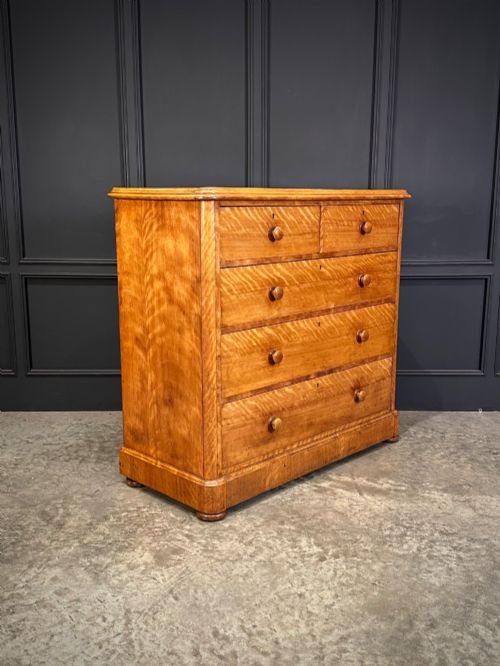
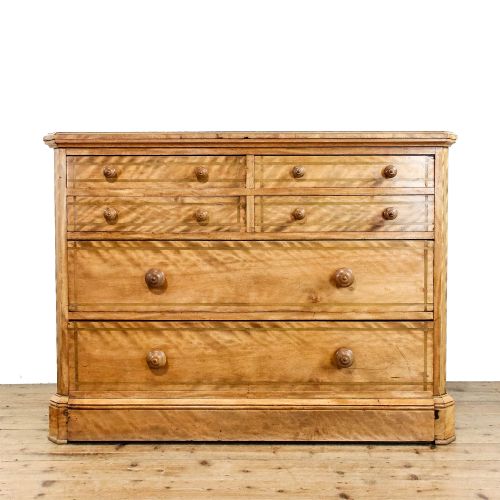
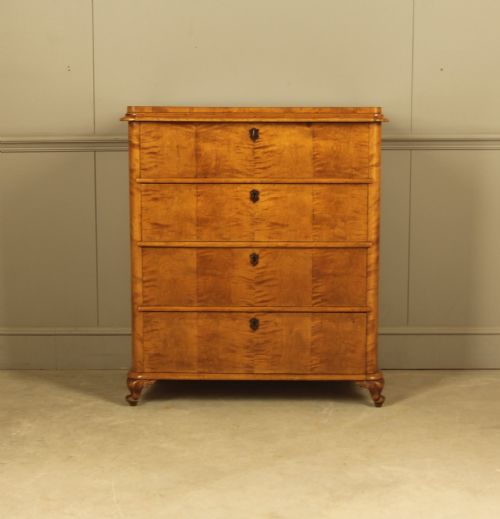
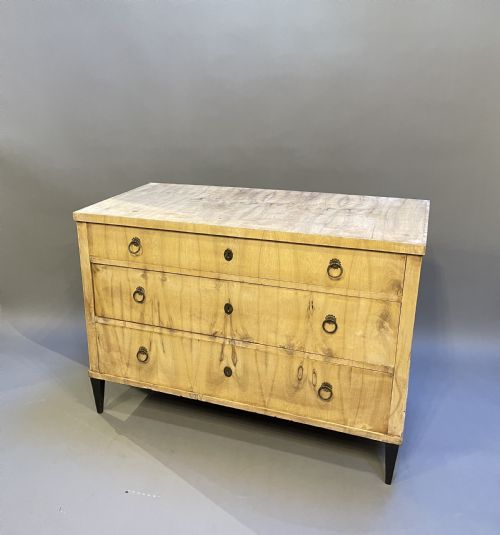
A blonde wood commode is a chest of drawers defined by pale timber surfaces and clean historical forms. The pieces available here consist entirely of nineteenth-century examples, predominantly originating from Sweden.
Buyers encounter nineteenth-century Swedish Biedermeier chests alongside Scandinavian country pieces and continental nineteenth-century commode chests. These items function primarily as bedroom or hallway storage while serving as strong visual anchors.
The dominant forms are case furniture featuring stacked drawer configurations built with sturdy timber carcases. Such chests rely on their timber's natural light colour rather than heavy dark stains or elaborate carvings.
Construction and Materials
Cabinetmakers constructed these chests using native northern timbers, most notably birch, flame birch, masur birch, satin birch, and pine. Iron and brass components appear in the hardware, while bone sometimes details the key escutcheons.
Surface figuring was achieved by selecting veneers with intense natural grain patterns like flame and masur. Carved elements and inlaid details occasionally decorate the carcase to accentuate the pale timber tones.
Retail Price Guide 2026
Typical UK retail prices for blonde wood commode, calculated from the Sellingantiques database of over a million retail prices indexed since 2003. This retail price guide relies exclusively on Sellingantiques data; no external sources or auction records are used, so the figures do not describe the wider market.
Cabinetmakers occasionally utilised bone to line keyhole escutcheons, adding a subtle ivory-white flash to the pale birch drawer fronts.
Judging Quality and Execution
Quality in these chests rests upon the selection and matching of timber veneer. Superior examples display symmetrical flame or masur birch grain across the drawer fronts, creating a cohesive visual pattern.
The refinement of the joinery and the subtlety of carved or inlaid details separate standard country pieces from high-style Biedermeier work. Integrated hardware like brass and bone details must sit flush and harmonise with the pale wood.
The Blonde Wood Commode Glossary
- Commode
- A chest of drawers or cabinet designed for domestic storage. In nineteenth-century continental and Scandinavian contexts, this term frequently describes a substantial drawer chest.
- Biedermeier
- A Central and Northern European style spanning the nineteenth century that prioritised utility and clean lines. This aesthetic stripped away excessive ornamentation in favour of unadorned polished wood.
- Flame Birch
- A distinctive birch veneer showing undulating, flame-like grain patterns. Cabinetmakers utilised this figured timber on prominent surfaces like drawer fronts.
- Masur Birch
- A decorative variation of birch featuring natural swirling knot clusters and dark inclusions. This prized timber creates a heavily mottled surface appearance.
- Escutcheon
- A protective plate surrounding a keyhole, often fashioned from brass or bone on these pieces. It prevents the wood surrounding the lock from sustaining wear.
Frequently Asked Questions
What is a blonde wood commode?
A blonde wood commode is a nineteenth-century chest of drawers built from pale northern European timbers like birch and pine. These pieces originate largely from Sweden and exhibit clean geometric forms.
The pale timber and restrained ornamentation give these chests a distinct look compared to darker mahogany or oak antiques. They provide practical storage while brightening domestic interiors with natural wood figures.
Where do these commodes come from?
The available evidence shows these commodes originate primarily from nineteenth-century Sweden and continental Europe. Swedish Biedermeier and Scandinavian country workshops produced the majority of these pieces.
Cabinetmakers in these regions utilised locally sourced birch and pine timbers. The resulting furniture reflects the distinct design priorities of nineteenth-century Scandinavian craftsmen.
How do I care for birch furniture?
Birch furniture requires stable indoor humidity levels to prevent timber movement and veneer lifting. Keep these pieces away from direct heat sources and strong sunlight.
Dust the surface gently with a dry or slightly damp cloth. Avoid harsh chemical polishes that can damage the historical finish of the wood.
What wood types are used?
These chests utilise pale northern timbers including standard birch, flame birch, masur birch, satin birch, and pine. Supporting internal structures often rely on pine.
Surface enrichment comes from highly figured veneers like flame and masur birch. Hardware elements incorporate brass, iron, and bone details.