


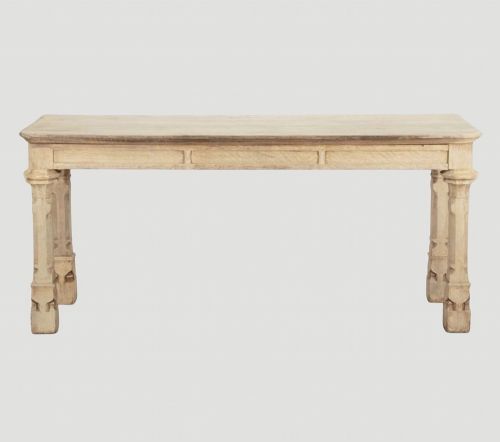
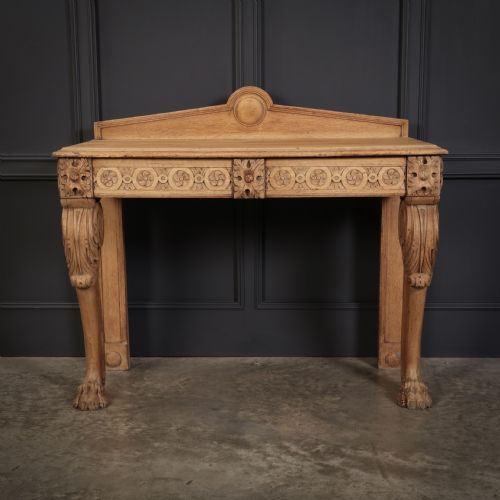


Bleached Oak Server Table
Bleached oak server table forms bring together pale timber surfaces and sturdy joinery, offering practical serving space and rustic character for dining areas.
Bleached Oak Server Table
A bleached oak server table sits within a selection of heavy timber furniture spanning the eighteenth and nineteenth centuries, alongside related forms such as console tables, sideboards, and dresser bases. These items often originate from English, French, and Spanish traditions, showing regional variations in carved detail and proportions.
Most pieces seen here adopt rustic styles including French country, English country, and Jacobean revival, constructed from solid oak with occasional secondary woods like pine. Buyers encounter console tables, serving tables, and drapers tables that have undergone the bleaching process to lighten the natural grain.
Materials and construction methods
Construction relies heavily on solid oak timber and structural pine, joined using traditional methods suited to heavy tables and sideboards. Ebonised wood and brass details appear occasionally as contrasting elements on specific forms.
The distinctive pale finish results from bleaching dark oak surfaces, a treatment that highlights the natural figuring of the timber while subduing the heavy orange or brown tones typical of untreated nineteenth-century and earlier furniture.
Bleached Oak Server Table Retail Price Guide 2026
Typical asking prices for bleached oak server table among the pieces listed under this phrase on Sellingantiques today, from the lower quarter to the upper quarter. They describe what is for sale here now, not the wider market.
Listings feature items from the eighteenth century, nineteenth century, and early twentieth century, including Georgian and Edwardian eras.
Assessing quality in antique servers
Quality depends upon the depth of the carving and the integrity of the solid timber construction rather than surface decoration alone. Pieces featuring French renaissance revival or detailed provincial carving show greater handwork by regional artisans.
The success of the bleaching process also dictates visual appeal, as uniform lightening without damaging the underlying grain preserves the character of the antique oak. Heavier proportions in Georgian and eighteenth-century examples generally reflect sturdier baseline construction.
The Bleached Oak Server Table Glossary
- Bleached oak
- Timber treated to lighten its natural tone. This process exposes the grain and creates a pale, contemporary-friendly finish on older furniture.
- Server
- A long table or low sideboard used for holding food or utensils during meals. These pieces stand lower than traditional storage cupboards.
- Dresser base
- The lower portion of a kitchen dresser featuring drawers or cupboards. These heavy bases frequently function as serving tables in modern dining spaces.
- Console table
- A table designed to stand against a wall, frequently supported by brackets or legs. Many antique examples serve narrow hallways and reception rooms.
- Potboard
- An open slatted lower shelf beneath a dresser base or serving table. This platform traditionally held pots and heavy kitchen utensils.
Bleached Oak Server Table: Frequently Asked Questions
What is a bleached oak server table?
A bleached oak server table is a solid wood furnishing designed for dining or hallway use, treated to lighten the natural timber. These pieces draw on eighteenth and nineteenth-century English, French, and Spanish traditions.
They appear in various styles ranging from simple country furniture to more ornate carved revival designs, providing functional surface area with a distinctive pale finish.
How do I style a server table?
These tables function well in dining rooms, kitchens, or wide hallways where surface space is required. Their neutral pale tones blend easily with both traditional and modern interiors.
Pair the piece with minimal ceramics or glassware to let the bleached wood grain remain the focal point of the room.
Are these tables solid oak?
Most pieces in this category are constructed from solid oak timber, though secondary woods like pine may appear in structural areas or internal drawer construction.
Makers utilised heavy timber to ensure the tables could support heavy serving dishes and daily domestic use over centuries.
How can I tell the period of a table?
Dating relies on observing construction techniques, hardware, and stylistic indicators such as French country or Georgian proportions. Eighteenth-century and early nineteenth-century examples often display hand-cut joinery and heavier overall mass.
Later Victorian and Edwardian revival pieces emulate these earlier forms while sometimes incorporating machine-processed timber elements or different handle styles.