




Black Wood Storage Box
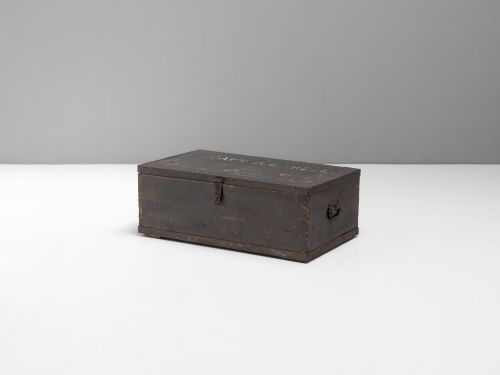
A black wood storage box brings dark timber and lacquer into a room, offering practical containment with centuries of regional craftsmanship behind it.
Black Wood Storage Box
When you search for a black wood storage box, you encounter pieces ranging from small tea caddies and trinket boxes to large blanket chests, travelling trunks, and coffers. The selection spans the seventeenth through the mid twentieth centuries, with nineteenth century items appearing most frequently across the current listings.
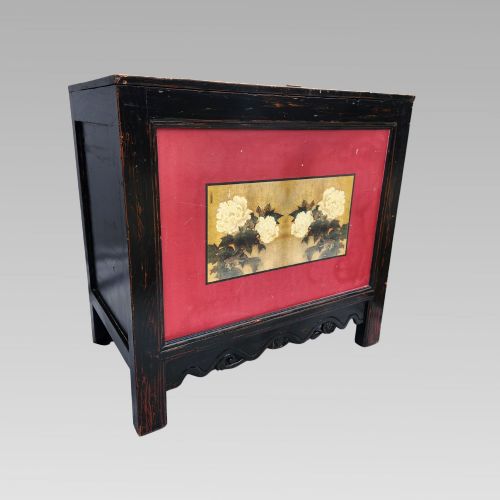
The regional origins of these dark wooden pieces are notably diverse, covering British colonial work, Chinese export production, Scandinavian folk art, and continental European workshops. Forms include camphor wood blanket chests, Japanese tansu chests, and painted pine boxes designed for utility or decorative display.
Buyers find that the functions of these dark storage pieces vary just as widely as their geographical sources, moving between maritime travel, domestic linen storage, and tabletop organisation. Each era leaves its mark on the proportions and internal fittings, whether in the form of tool compartments or tea canisters.
How they were made
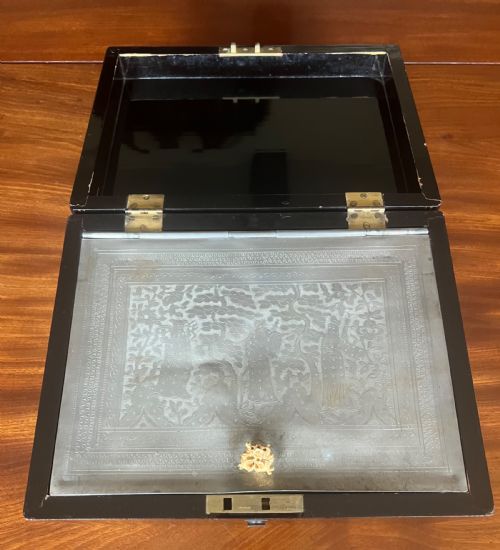
Makers utilised solid timbers such as pine, ebony, kingwood, and camphor wood, often finishing the surfaces with dark paint, wax, or oriental lacquer. The application of lacquer and penwork or pokerwork decoration provides the distinctive dark skin found on many of these trunks and caddies.
Metalwork plays a structural and decorative role, with brass corners, iron straps, and wrought iron locks fitted to secure the heavy lids of travel chests and strongboxes. Cabinet makers combined dovetail joinery with durable hardware to withstand the rigours of domestic use and long journeys.
Geographic origins represented on this page include Scandinavian country workshops, Flemish cabinets, Chinese export studios, and British maritime hubs.
What varies in quality
The standard of a dark wooden box rests upon the integrity of its timber, the depth of its finish, and the preservation of any surface art like Chinoiserie or folk painting. Pieces retaining their original brass or iron mounts and fitted interior compartments hold greater integrity than those altered over time.
Workmanship shows in the precision of the joinery and the skill applied to decorative techniques such as penwork, carving, or lacquering. Simpler rustic pine items rely on honest country construction, while Anglo-Indian and Chinese export pieces demonstrate intricate detailing in wood and finish.
The Black Wood Storage Box Glossary
- Chinoiserie
- European imitation of Chinese artistic styles, frequently seen on lacquered boxes and tea caddies decorated with motifs of figures and landscapes.
- Camphor wood
- A fragrant timber often utilised for maritime chests because its natural scent deters insects from stored textiles.
- Tea caddy
- A small lidded container designed to hold loose tea leaves, often fitted with internal compartments and a locking lid.
- Penwork
- A decorative technique using ink applied to wood or other surfaces to create fine, detailed line drawings before sealing.
- Tansu
- Traditional Japanese storage cabinetry and chests constructed for modular utility and domestic organisation.
Black Wood Storage Box: Frequently Asked Questions
What were camphor wood trunks used for?
Camphor wood trunks served as travelling luggage and household storage for garments and linens, particularly on long sea voyages.
The natural aromatic properties of the timber helped protect wool and cotton textiles from moths and dampness during transit.
How do I care for an antique lacquer box?
Antique lacquer surfaces require gentle treatment, avoiding direct sunlight, excessive heat, and moisture which can cause the finish to crack.
Dusting with a dry, soft cloth preserves the sheen without risking abrasion to the delicate dark layers beneath.
What is the difference between a coffer and a chest?
A coffer traditionally refers to a heavy, robust box with a flat lid, often utilised for storing valuables or church documents.
Chests generally served broader domestic purposes, housing blankets, clothing, or tools depending on the scale and internal fittings.
How do I identify a Victorian tool chest?
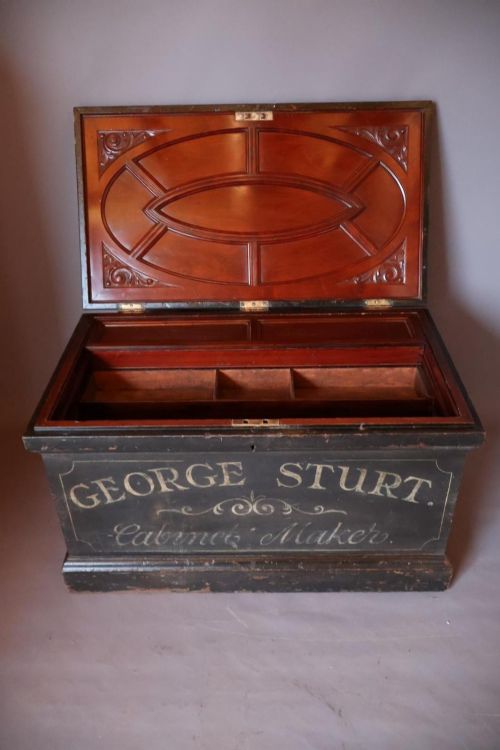
Victorian tool chests typically feature sturdy dovetail construction, heavy iron or brass lifting handles, and reinforced corners designed for durability.
Inside, you often find fitted wooden trays and partitions built specifically to organise hand tools safely.