



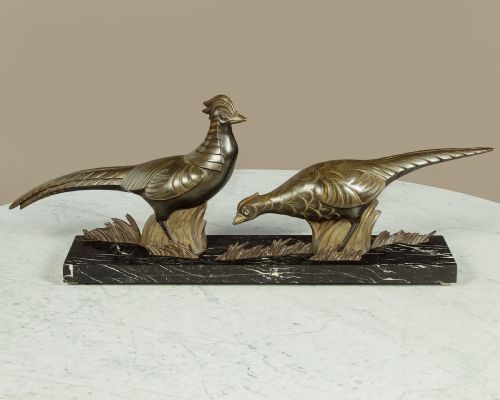





Black Patinated Figure
These black patinated figure works capture classical forms and dynamic animals in bronze and spelter, offering tactile presence and historical character.
Black Patinated Figure
When you search for a black patinated figure, you encounter sculptural works that use dark chemical treatments to accentuate form and detail. The pieces on this page span the nineteenth century through the Art Deco era, encompassing mythological subjects, human figures, and animal groups.
Most examples you will meet combine cast metal with bases of marble or onyx, often functioning as standalone sculptures, clock garnitures, or candelabras. The selection includes Grand Tour reductions of classical antiquities alongside African tribal art and European animalier studies.
How they were made
The makers of these objects utilised bronze or spelter, shaping the metal through traditional casting techniques before applying patination to achieve dark, matte surfaces. Many pieces incorporate secondary materials like marble or wood for structural support and visual contrast.
The listings on this page span the nineteenth century, the Edwardian period, and the 1930s, using materials such as bronze, spelter, marble, onyx, and patinated wood.
What varies in quality
Quality in these sculptures rests upon the crispness of the cast and the depth of the hand-finishing work. Finer castings preserve subtle musculature and facial expressions, whereas weaker examples lose definition in the secondary details.
The integrity of the patination and the quality of the mounting - such as fitted marble bases - distinguish standard commercial production from accomplished artistic output. Heavier bronze compositions generally demonstrate superior material density compared to lighter spelter alternatives.
Ferdinand Barbedienne·Demetre Chiparus·Franz Iffland·Geo Maxim
The Black Patinated Figure Glossary
- Spelter
- A zinc alloy commonly utilised as a less expensive alternative to bronze during the nineteenth and early twentieth centuries. It takes patination well but possesses a lighter weight.
- Patination
- The chemical or thermal treatment applied to metal surfaces to produce a specific colouration, such as deep black or dark brown. It protects the underlying metal while defining sculptural contours.
- Garniture set
- A decorative matching set typically comprising a clock flanked by candelabras or urns. These arrangements were popular centrepieces on nineteenth-century mantelpieces.
- Grand Tour
- The nineteenth-century practice where wealthy travellers collected small-scale bronze copies of classical antiquities and Renaissance sculptures. These souvenir bronzes formed cabinets of curiosity across Europe.
Black Patinated Figure: Frequently Asked Questions
What is a black patinated figure?
It is a cast metal sculpture treated with a chemical finish to create a dark, matte surface. These works range from classical Greek revivals to Art Deco animal studies.
They serve primarily as decorative mantel ornaments, desk sculptures, or architectural centrepieces.
How do I clean a bronze sculpture?
Dust the surface gently with a soft, dry brush to prevent particle buildup. Avoid chemical cleaners or water, which can strip the aged patination.
Applying a very light microcrystalline wax preserves the metal finish without leaving a residue.
What is the difference between bronze and spelter?
Bronze is an alloy of copper and tin that offers durability and sharp casting detail. Spelter is a zinc-based metal that is softer and lighter.
Bronze generally commands greater collector interest due to its material strength and historical status.
Where were these figures placed historically?
Nineteenth-century owners displayed them on mantelpieces, libraries, and drawing-room side tables. They functioned as conversation pieces reflecting classical learning and artistic taste.
Pairs of figures often anchored the ends of sideboards or framed decorative clocks.