
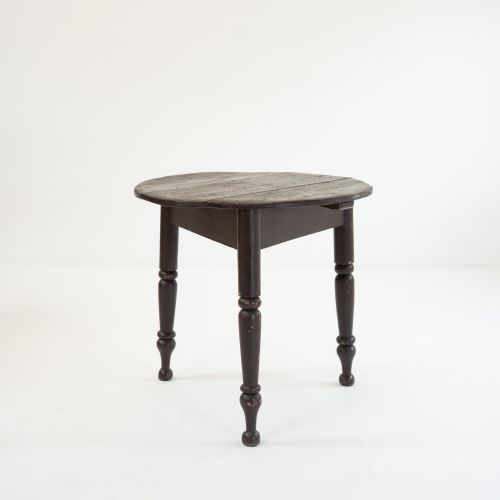
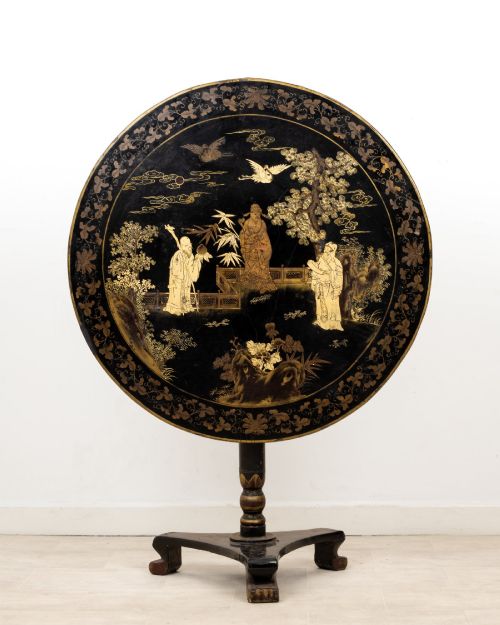
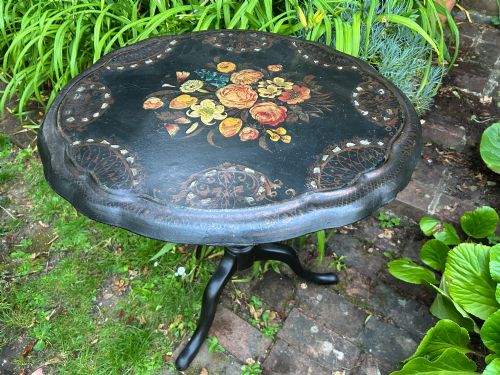
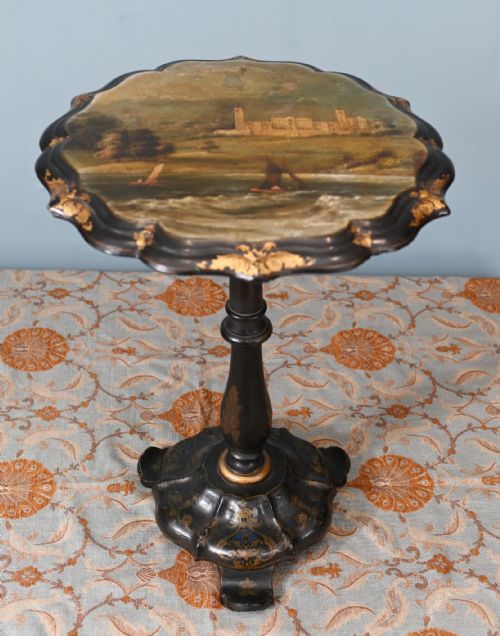
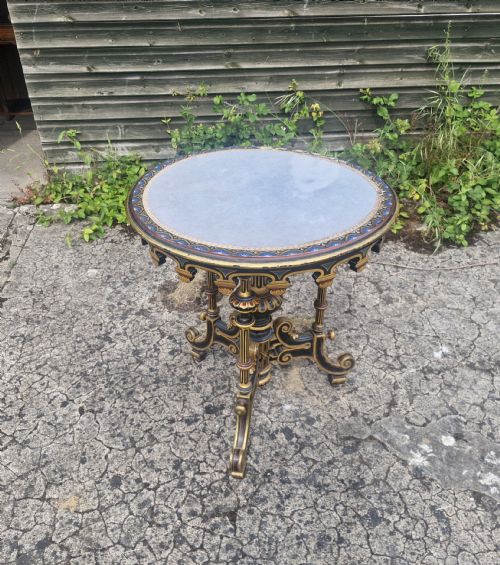
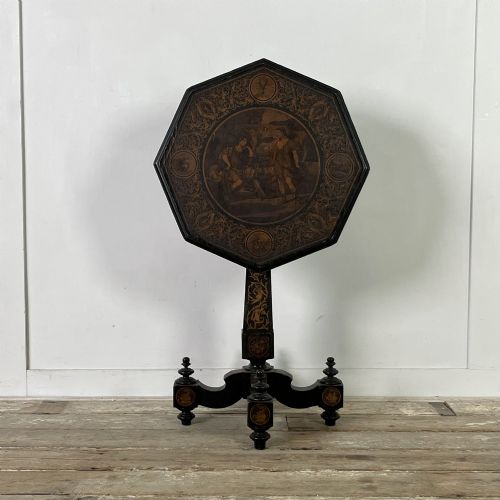


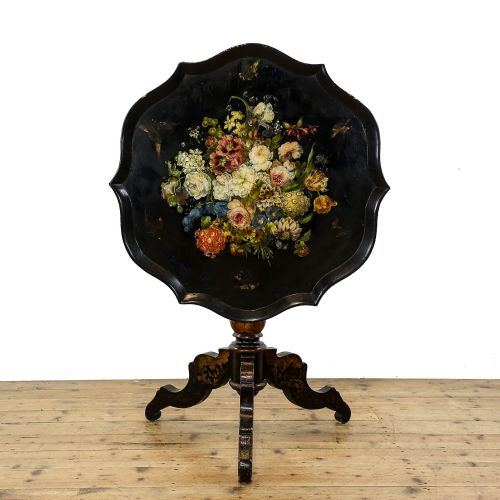
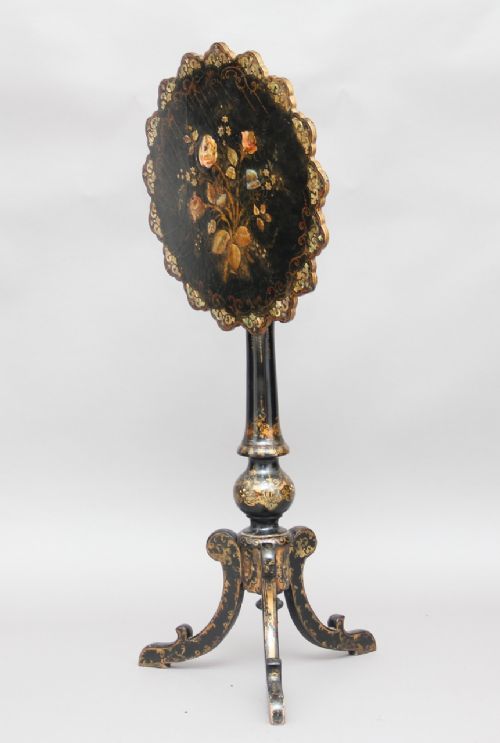


Black Painted Tripod Table
A black painted tripod table offers a compact surface raised on three legs, bringing dark painted elegance to any corner.
Black Painted Tripod Table
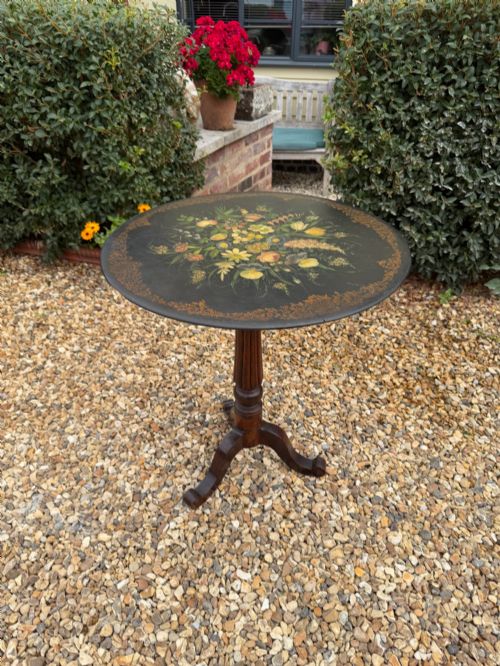
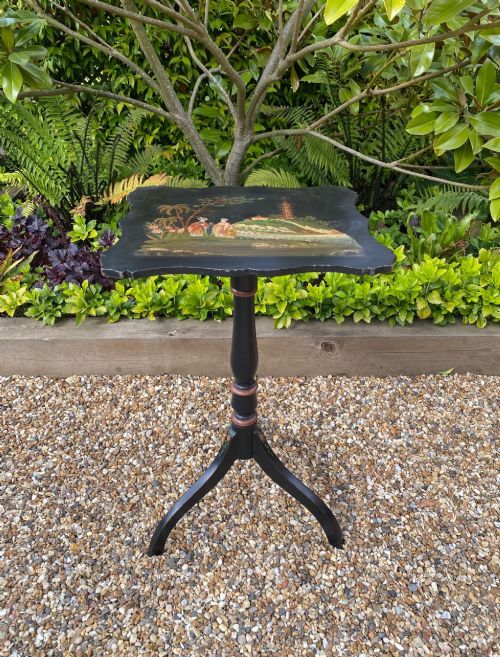
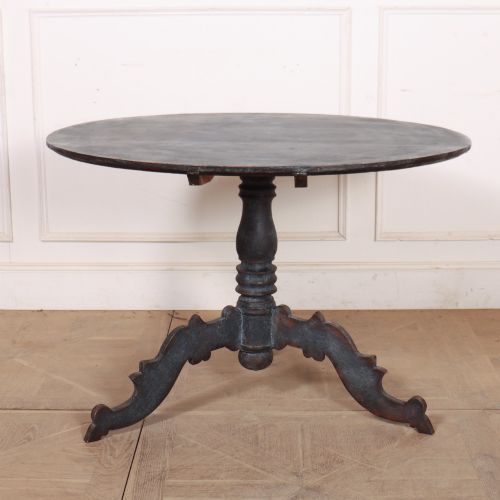
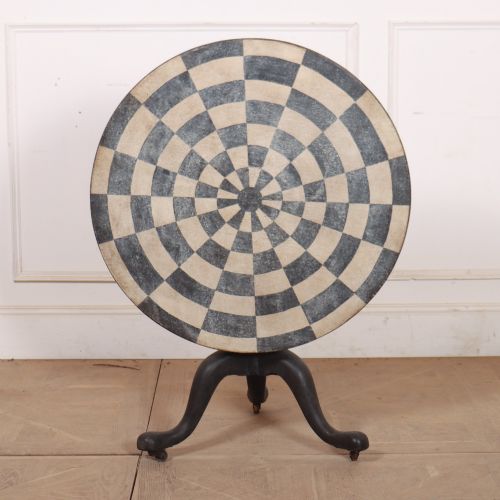
A black painted tripod table brings together a circular or shaped top supported by three legs, forming a stable stand designed for versatile placement around a room. These pieces appear across various historic eras, ranging from the Georgian and Victorian periods into the early twentieth century.
The selections span distinct stylistic traditions, including Chinoiserie decoration, Japanned finishes, and Scandinavian country vernacular. Buyers most frequently encounter occasional tables, tilt-top variants, and wine tables featuring dark paintwork or lacquer.
Origins stretch across English, French, Swedish, and Chinese workshops, demonstrating how widely makers adopted the three-legged format. Each piece serves primarily as a portable surface for display or modest use, balancing function with decorative painted schemes.
What varies in quality
The refinement of the painted or lacquered surface dictates the visual standing of the piece, distinguishing simple vernacular work from elaborate artistic output. Finer examples display meticulous hand-painted details, gilt highlights, or intricate mother-of-pearl inlay.
Structural integrity of the central pillar and the three-legged base governs durability, particularly in tilt-top mechanisms where tight joints matter. The selection of underlying timber, from modest pine to dense ebonised wood, also influences the heft and substance of the table.
Listings feature periods spanning the 18th century, the Victorian era, and the early 20th century.
The Black Painted Tripod Table Glossary
- Tripod table
- A small freestanding table supported by a central pillar resting on three legs. This format gained widespread popularity during the eighteenth century for serving tea or holding decorative objects.
- Tilt-top table
- A table featuring a hinged mechanism that allows the top to pivot into a vertical position. This design enabled compact storage against a wall when the surface was not in use.
- Japanned
- European furniture finished with imitation East Asian lacquerwork using dark varnishes and raised decorations. Artisans applied successive layers of varnish to mimic imported oriental screens and cabinets.
- Chinoiserie
- European artistic styles reflecting Chinese motifs and decorative techniques. The aesthetic appeared frequently on lacquered furniture throughout the eighteenth and nineteenth centuries.
- Papier-mâché
- A composite material made from paper pulp or layers of paper reinforced with glue, moulded and dried into firm shapes. Makers decorated these surfaces with lacquer, paint, and inlaid mother-of-pearl.
- Torchere
- A tall, slender stand designed to support a candle or light source. These elevated platforms later served as plant stands or decorative display surfaces.
Black Painted Tripod Table: Frequently Asked Questions
What is a black painted tripod table used for?
These tables function primarily as occasional surfaces for holding small items, drinks, or decorative objects. Their compact footprint allows them to fit easily beside seating or in corners.
Tilt-top versions additionally offer the convenience of folding flat when floor space is required for other activities.
How do I identify the period of a table?
Dating relies on observing construction methods, timber types, and decorative motifs characteristic of eras like the Georgian or Victorian periods. Examining the underside and the tilt mechanism often reveals the age of the hardware.
Stylistic cues such as Chinoiserie ornamentation or Gothic Revival touches further help place the piece within its historical context.
Where should I place it in a room?
A black painted tripod table works effectively beside an armchair or sofa as a convenient spot for a lamp or book. Their modest proportions also suit empty corners or hallways needing a decorative accent.
Because many feature finished surfaces on all sides, they can stand away from walls without disrupting the room layout.
What is the difference between japanned and painted finishes?
Japanning refers specifically to a European technique imitating Asian lacquer through layered varnishes and raised metallic designs. Standard painted finishes rely on opaque pigments applied directly to wood or papier-mâché.
Both treatments yield a dark, lustrous surface, but japanned pieces typically involve more complex build-up and curing processes.