




Black Oak Side Chair
A black oak side chair brings dark, figured grain and heavy historic presence straight into a modern room.
Black Oak Side Chair
A black oak side chair covers seating pieces finished in dark tones or built from dark timbers, spanning from early country examples to later revival periods. When you search for a black oak side chair, you encounter forms ranging from sparse seventeenth-century backstools to heavily carved Victorian Gothic revival pieces.
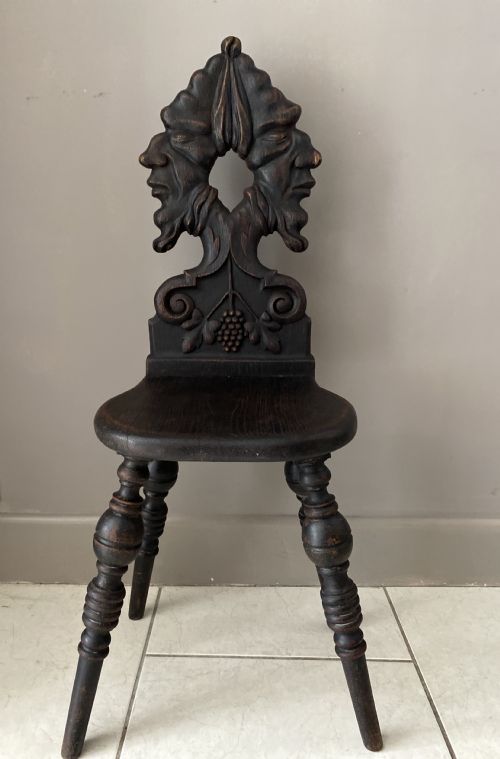
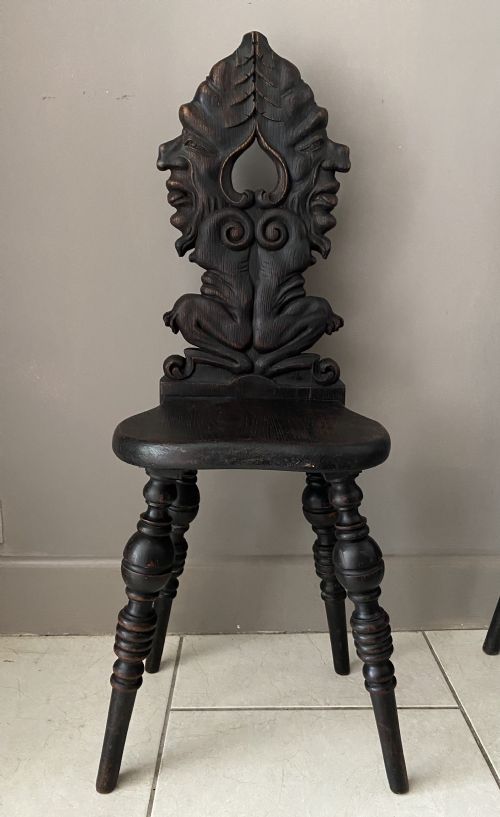
The selection on this page leans heavily toward nineteenth-century interpretations alongside earlier traditional forms. You will find hall chairs, dining chairs and whimsical carved pieces featuring motifs like bears and gargoyles alongside stricter Jacobean and Gothic styles.
Origins stretch across British, Swiss Alpine and American workshops, showing how different makers translated dark wood seating into local vernaculars. These chairs function primarily as accent pieces in hallways and studies where their dark finishes and carved details command attention.
Materials and construction methods
Construction relies heavily on solid oak, frequently augmented by ebonised wood surfaces or japanned finishes that achieve a deep, dark lustre. Artisans shaped these robust timbers using traditional joinery and hand-carving techniques.
Carving provides much of the character, seen in deep relief panels depicting figures, animals and Gothic tracery. Supplementary materials such as brass accents, leather seats and tapestry fabric appear on specific regional and period variants.
Listings feature oak, walnut, leather, brass, and tapestry fabric across centuries ranging from the 1700s through the Victorian era.
Distinctions in quality and execution
Quality in these pieces rests upon the crispness of the hand-carving and the integrity of the solid wood structure. Finer examples display deep, deliberate chisel work that brings figures and foliage into sharp relief, whereas lesser pieces rely on shallow surface stamping or machine finishing.
The choice of timber and the depth of the ebonisation or dark finish also dictate the tier of the piece. Timbers selected for rich medullary rays and stable construction elevate the stature of a chair above those built from utility-grade lumber.
The Black Oak Side Chair Glossary
- Backstool
- An early form of seat furniture resembling a chair without arms, typically featuring an upright wooden back and a solid seat. They preceded the widespread use of upholstered dining seating.
- Ebonised
- Wood treated with stain, paint or chemical processes to imitate costly ebony. This finish is common on Victorian revival furniture seeking a sombre, formal appearance.
- Escabelle
- A traditional type of wooden chair or stool often associated with Swiss Alpine or continental vernacular furniture. They frequently display robust proportions and distinctive regional carving.
- Japanned
- European furniture finished with a specific type of lacquered decoration imitating Asian export wares. It creates a dark, reflective surface that was popular around the turn of the eighteenth century.
- Gothic Revival
- An architectural and decorative style drawing inspiration from medieval design. In seating, it manifests as pointed arches, tracery and sombre dark finishes.
Black Oak Side Chair: Frequently Asked Questions
Where should I place a black oak side chair?
These dark chairs suit spaces needing architectural weight, such as hallways, landings or beside a fireplace in a study.
Because of their strong visual presence, they function well as standalone accent pieces rather than clustered around a standard dining table.
How do I distinguish seventeenth-century chairs from later revivals?
Examine the construction joints, tool marks and the manner of the timber ageing to determine the true period of manufacture.
Nineteenth-century revival pieces often display machine-assisted cuts or softer patination beneath the dark finish compared to authentic early items.
What is the difference between a side chair and a hall chair?
Side chairs are generally designed for occasional seating in living areas or around dining tables with relatively simple proportions.
Hall chairs tend to feature stiffer wooden seats, taller carved backs displaying crests or motifs, and were intended for brief seating in entranceways.
How do I care for ebonised and dark oak surfaces?
Dust regularly with a soft, dry cloth to prevent particulate accumulation from dulling the dark finish or wax polish.
Avoid placing these chairs in direct sunlight or near heat sources, which can cause the timber to dry out and split.