


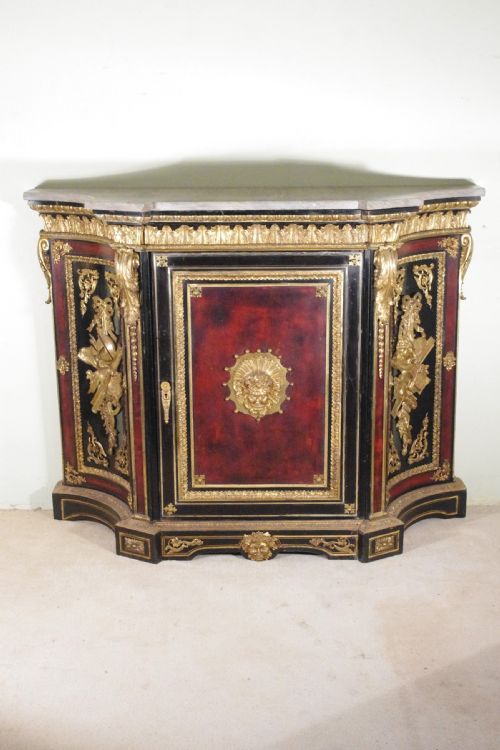
Black Marble Commode
A black marble commode brings weight and architectural severity to a room, grounding French case furniture with a cold, dark stone surface.
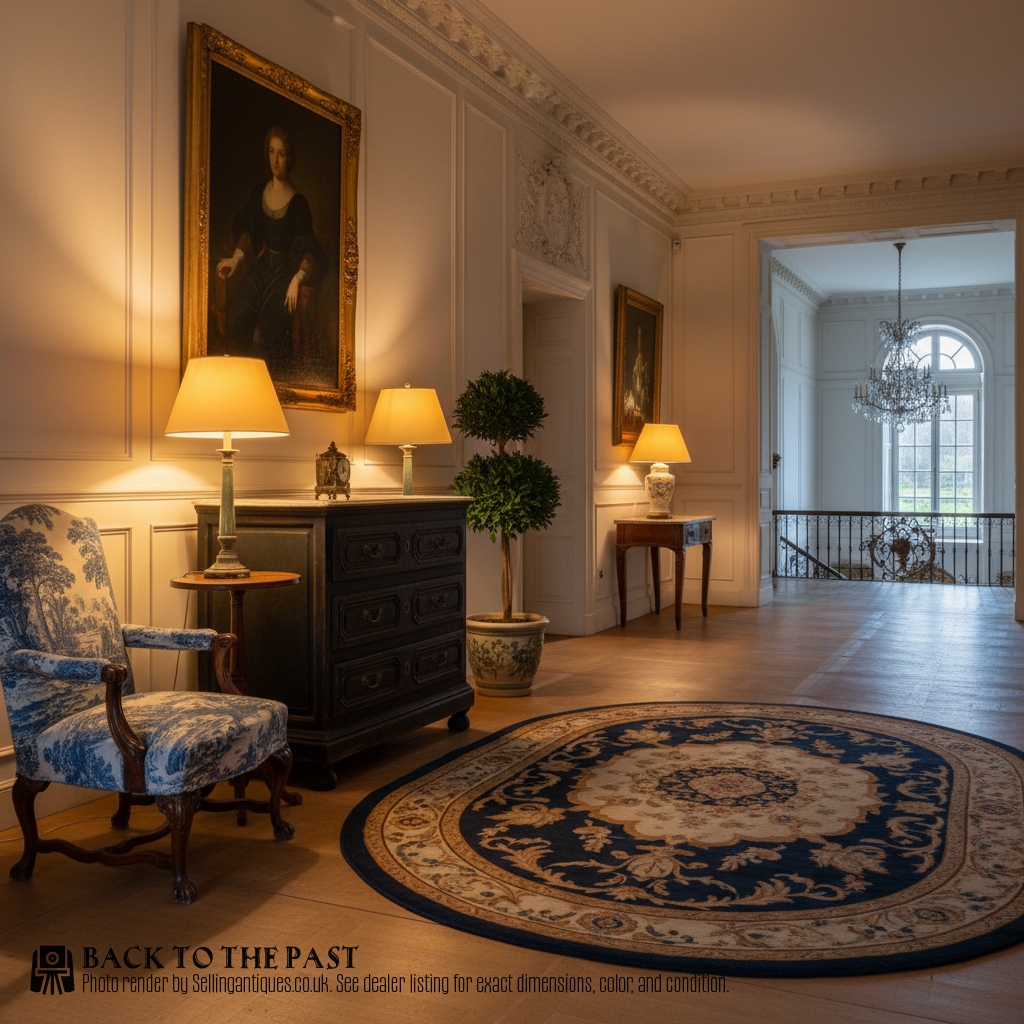
Black Marble Commode
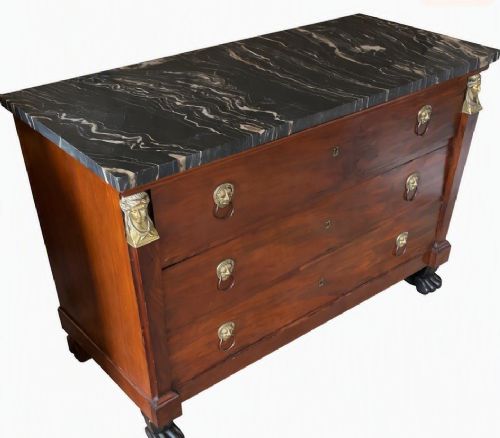
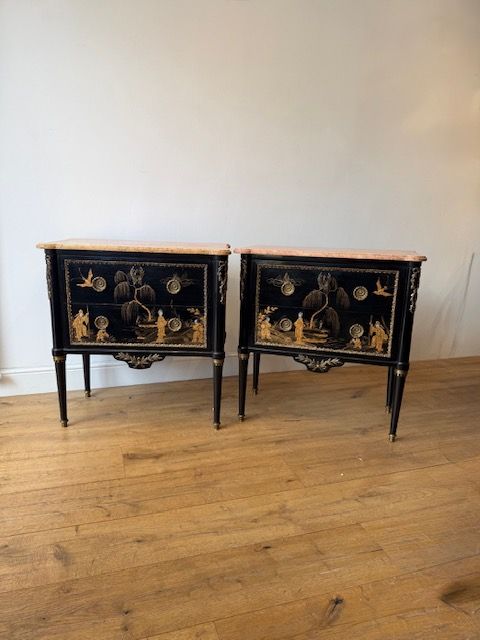
A black marble commode is a low storage chest designed with a heavy stone top, appearing most frequently in French ebonised, mahogany, and lacquered forms across the eighteenth and nineteenth centuries. These pieces function primarily as commanding storage units in salons and bedrooms, marrying the utility of deep drawers with the display surface of polished stone.
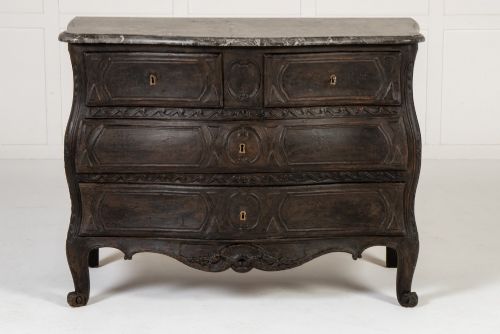
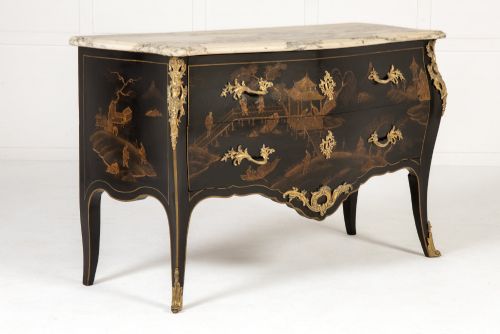
The versions met on this page range from severe early nineteenth-century Empire and Regency designs to opulent Napoleon III ebonised cabinets and eighteenth-century bombe shapes. Buyers encounter variations that span from bleached oak provincial styles to gilded Louis XV and Chinoiserie japanned lacquer finishes.
Makers and workshops construct these chests of drawers to anchor formal interiors, using the dark marble top to contrast against rich wood tones, gilt metal mounts, or bright lacquer. Each piece carries the distinct structural proportions of its period, whether through the curved swell of a bombe frame or the rigid symmetry of an Empire chest.
What varies in quality
Quality rests in the precision of the cabinet work and the integration of the stone top, where superior examples exhibit seamless joinery and perfectly fitted marble slabs without heavy shims. The depth of hand-carving in wooden frames and the crispness of cast bronze or ormolu mounts separate standard production from exceptional pieces.
The character of the materials dictates the upper tier of the range, visible in the richness of genuine japanned lacquer, finely figured mahogany, or deeply ebonised surfaces that retain their lustre. Refined proportions and authentic period hardware elevate a commode, ensuring the decorative elements enhance rather than crowd the architectural form.
Even a monumental silver mounted commode needs a steady floor to keep its heavy black marble top from eyeing you with suspicion.
The Black Marble Commode Glossary
- Ormolu
- Gilt bronze mounts applied to furniture for decorative accent. This technique involves gilding a bronze base with finely ground gold amalgam.
- Bombe
- A swollen, bulging contour characteristic of baroque and rococo furniture forms. The curved sides swell outward from the front to the flanks.
- Japanned
- European imitation of East Asian lacquerwork achieved through layered varnishes and metallic dust. Artisans cure each coat before polishing the surface to a high gloss.
- Ebonised
- Timber treated with chemical stains, dyes, or black paint to imitate expensive ebony wood. This dark finish gained popularity during the nineteenth century.
Black Marble Commode: Frequently Asked Questions
Where should I place a black marble commode?
These chests suit grand reception rooms, dining areas, or spacious hallways where their dark stone top and substantial frame can anchor the surrounding wall space.
Because the surface is heavy stone, avoid placing them in damp environments or narrow corridors where heavy traffic might risk striking the projecting corners.
How do I care for the black marble top?
Wipe the stone regularly with a soft, damp cloth and neutral soap, avoiding acidic cleaners like vinegar or citrus that etch polished marble surfaces.
Apply a specialist stone wax periodically to maintain the deep sheen and protect against minor scuffs from decorative objects placed on top.
How do I distinguish eighteenth-century pieces from later revivals?
Examine the interior drawer construction, hand-cut dovetails, and tool marks on the secondary timbers, which reveal period-specific manufacturing methods rather than twentieth-century machinery.
Later nineteenth-century revival pieces often feature heavier ebonised finishes and cast mounts that mimic earlier styles with a more uniform mechanical precision.
What is the difference between an Empire and a Louis XV commode?
Empire commodes display strict geometric symmetry, architectural columns, and restrained classical mounts that reflect the rigid tastes of the early nineteenth century.
Louis XV commodes favour asymmetrical curves, undulating bombe profiles, and elaborate rococo floral or scrollwork ornamentation across the frame.