





Black Library Bookcase
A black library bookcase brings deep ebonised finishes and painted architectural forms to a room, offering both presence and practical book storage.
Black Library Bookcase
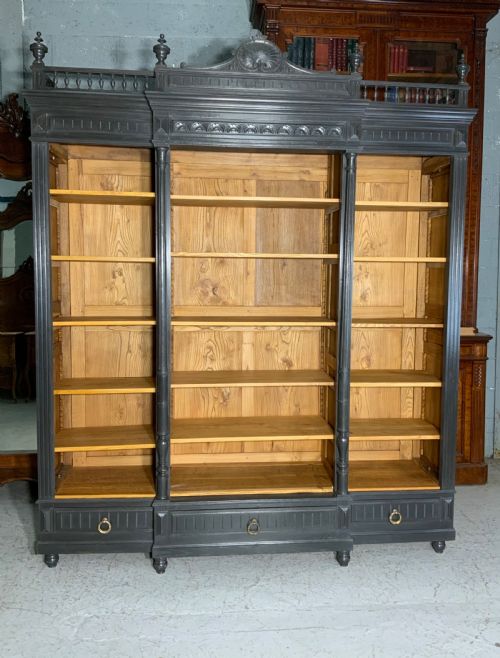
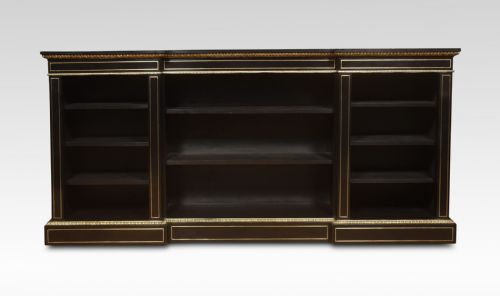
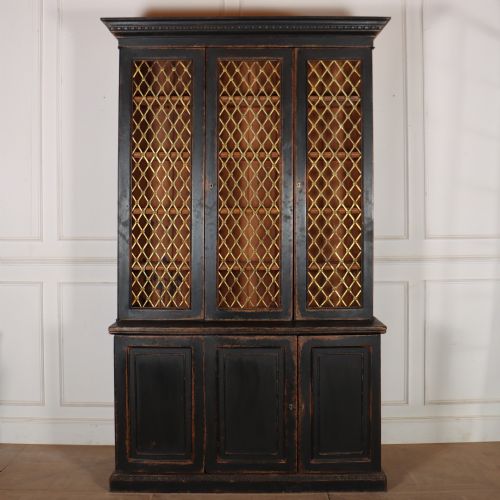
A black library bookcase is defined primarily by its dark ebonised or painted wooden finish, housing rows of books in formats ranging from low open dwarf shelves to large architectural cabinets. These pieces span the nineteenth century into the early twentieth century, taking forms influenced by Victorian, French Empire, and Napoleon III styles.
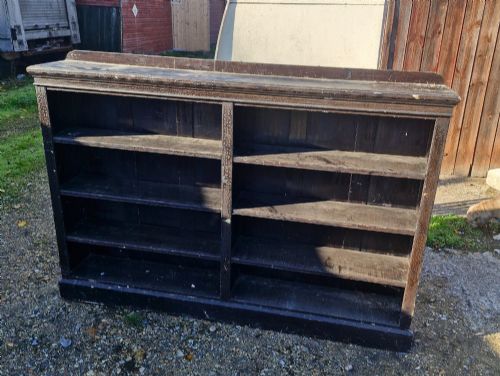
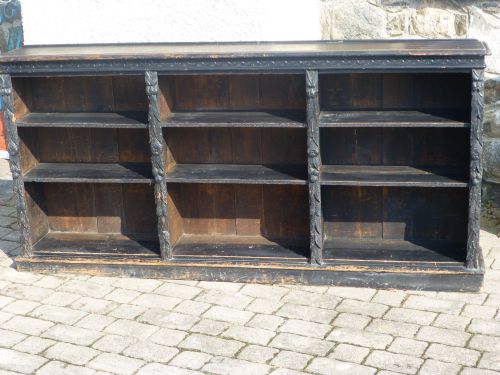
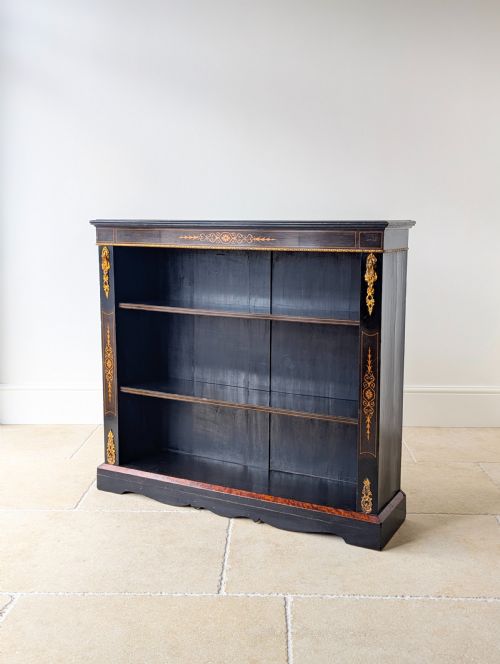
The most common versions met on this page are ebonised open bookcases featuring adjustable shelves, brass mounts, and occasional carved details such as green man motifs. Alongside these ebonised pieces appear painted library bookcases originating from English, Irish, and Scottish workshops.
Materials and construction
Makers utilised pine, oak, and solid timber frames finished with ebonisation to simulate costly ebony, or coated them in layered paint. Ormolu and brass mounts provide structural highlights and decorative contrast against the dark timber surfaces.
Glass panels appear in glazed cabinet doors where fitted, while internal arrangements rely on adjustable wooden shelving supported by traditional cabinetry techniques.
Black Library Bookcase Retail Price Guide 2026
Typical asking prices for black library bookcase among the pieces listed under this phrase on Sellingantiques today, from the lower quarter to the upper quarter. They describe what is for sale here now, not the wider market.
Keep an eye out for the occasional carved green man peering out from the shelves to guard your books.
Distinguishing quality
The distinction between standard utility and finer craftsmanship lies in the execution of architectural details, such as breakfront proportions and crisply carved ornaments like green man masks. Ormolu and brass mounts that are finely chased rather than cast simply elevate the decorative ambition of the piece.
The integrity of the ebonised or painted surface finish and the precision of the adjustable shelf mechanisms indicate the level of care invested by the original maker.
The Black Library Bookcase Glossary
- Ebonised wood
- Timber treated with a dark stain or finish to imitate ebony. This technique was widely utilised during the Victorian era.
- Breakfront
- A piece of furniture having a central section that projects forward from the flanking sections. It adds architectural depth to large bookcases.
- Ormolu
- Gilt bronze mounts applied to furniture for decorative effect. It contrasts sharply with ebonised wood.
- Green man
- A sculptural face carved from foliage or branches. It appears occasionally on nineteenth-century carved bookcase designs.
- Dwarf bookcase
- A low bookcase standing beneath standard table height. These pieces keep upper wall space clear.
Black Library Bookcase: Frequently Asked Questions
What is a black library bookcase?
A black library bookcase is a storage unit finished in ebonised wood or dark paint, designed to hold collections of books. They appear in styles ranging from Victorian open shelves to French Empire cabinets.
These pieces function as both practical storage and focal points within a room, combining dark wood surfaces with brass mounts or carved details.
How do I date a black library bookcase?
Dating relies on observing construction methods, timber choices, and stylistic markers such as Victorian Gothic or Napoleon III brass mounts. Nineteenth-century examples often feature hand-cut joints and specific finishing techniques.
Comparing the decorative hardware, such as ormolu mounts and shelf adjustment systems, helps narrow down the period of manufacture.
Are these bookcases open or enclosed?
The selection includes both open bookshelves and pieces with glazed cabinet doors. Open formats provide immediate access to volumes.
Enclosed versions protect bindings behind glass panels while maintaining visibility of the library contents.
Where were these bookcases made?
Origin workshops span English, French, Irish, and Scottish makers working through the nineteenth and early twentieth centuries. Regional variations appear in painted finishes and architectural proportions.
French pieces often incorporate Napoleon III and Empire style brass mounts, whereas British examples frequently utilise ebonised oak or pine.