


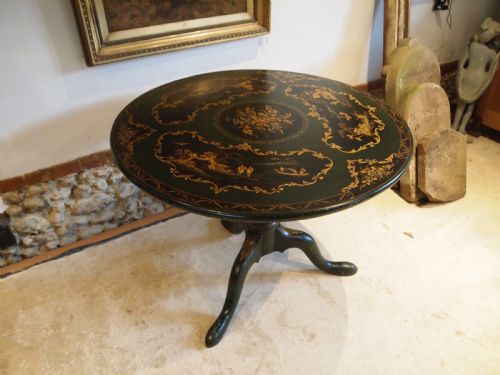


Black Lacquered Pedestal
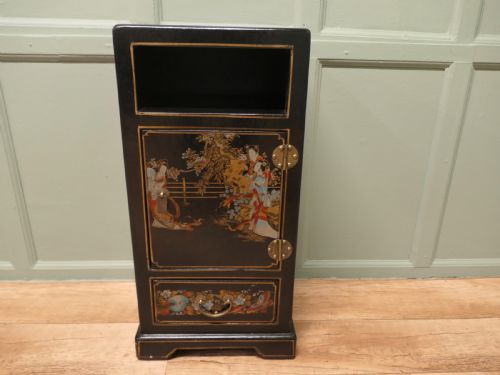
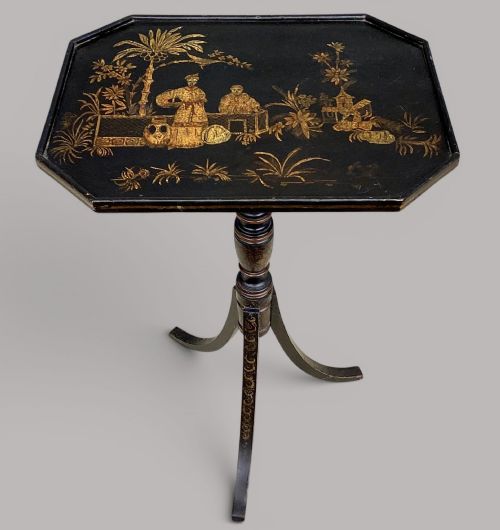
These black lacquered pedestal pieces bring hand-painted motifs and rich black finishes to any interior.
Black Lacquered Pedestal
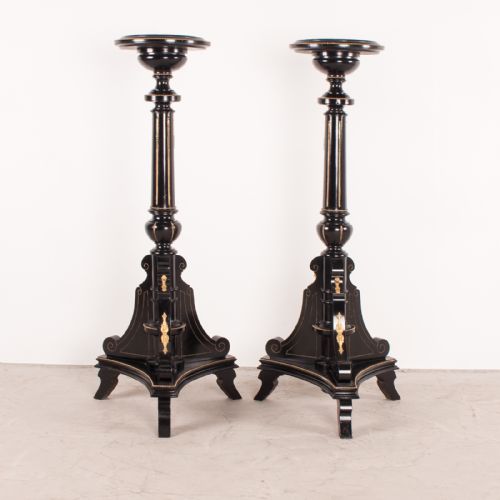
A black lacquered pedestal takes the form of torchere stands, plant stands, and display tables designed to elevate objects or fill corners with dark, reflective surfaces. These pieces emerge across periods spanning the Georgian, Regency, and Victorian eras, often incorporating decorative columns or tripartite bases.
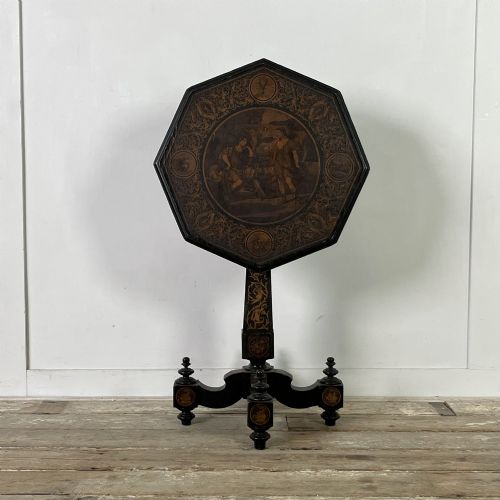
Buyers meet variations influenced by Chinoiserie tastes, Aesthetic Movement ideals, and Chinese export traditions. The selection includes tilt-top tables, work tables, and taller floor-standing display items finished in deep dark tones.
Originating from English workshops and Asian export centres alike, each black lacquered pedestal reflects historical shifts in taste from 18th-century European imitation lacquer to genuine imported craft.
Materials and construction methods
The underlying structure relies on woods such as papier-mâché or solid timber, prepared to receive successive coats of dark lacquer or ebonised finishes. Craftsmen applied these layers to build a hard, smooth surface capable of taking intricate painted decoration.
Gilt, gold leaf, and hand-applied paint feature heavily across the surfaces, rendering delicate figures, floral scenes, and geometric borders. Brass components appear on select mountings and fittings, adding structural contrast to the dark lacquer.
Techniques range from traditional European japanning - simulating Asian lacquer using varnish and heat - to genuine export lacquerwork imported from China and Japan during the 19th century.
The inventory records occasional tables, torcheres, plant stands, and monumental temple vases finished in black lacquer.
Distinctions in craftsmanship and finish
The sophistication of the hand-painted and gilt detail distinguishes standard production from finer examples. Superior pieces display crisp brushwork, depth in the lacquer layers, and well-preserved pictorial scenes without excessive surface clouding.
Structural integrity of the pedestal base and column dictates longevity, particularly on tilt-top mechanisms and slender torchere shafts. Examples retaining original mounts, stable ebonised timber, and undisturbed lacquer surfaces hold greater integrity.
The Black Lacquered Pedestal Glossary
- Japanning
- European imitation of East Asian lacquerwork, developed in the 17th and 18th centuries. Craftsmen applied layers of varnish and heat-cured them to produce a dark, glossy finish.
- Chinoiserie
- European artistic style reflecting Chinese and East Asian motifs. This aesthetic heavily influences the painted scenes found on many black lacquered pedestal surfaces.
- Torchere
- A tall, slender stand designed to support a candle, lamp, or decorative object. These vertical forms frequently utilise pedestal bases.
- Papier-mâché
- A composite material made from paper pulp or layers of paper bound with adhesive. Moulded and lacquered, it forms lightweight tables and trays.
- Ebonised
- Wood treated with stain, dye, or paint to imitate ebony. This dark finish provides a uniform black surface without requiring expensive tropical hardwoods.
Black Lacquered Pedestal: Frequently Asked Questions
How do I clean a black lacquered pedestal?
Dust the surface regularly with a soft, dry cloth to prevent particulate accumulation. Avoid chemical sprays, abrasive cloths, or excessive moisture, which can damage the delicate lacquer finish.
For stubborn grime, use a slightly damp cloth followed immediately by dry buffing. Keep the piece away from direct sunlight and heat sources to prevent the lacquer from cracking.
Where should I place a torchere stand?
A torchere stand suits dark corners, hallways, or beside seating areas where vertical height adds balance to a room. They function effectively as display platforms for small sculptures, plants, or decorative vases.
Ensure the stand rests on a level floor to maintain stability, especially on slender or tripartite bases. High-traffic walkways should be avoided to prevent accidental knocks against the tall shaft.
What is the difference between japanning and lacquer?
True lacquer utilises the processed sap of the lacquer tree native to East Asia, applied in numerous thin layers and cured in high humidity. Japanning is a European technique substituting resin varnishes to mimic the glossy Asian finish.
Both methods produce a dark, reflective surface, but genuine export pieces often display greater depth and resilience in the lacquer layers. European japanned items frequently show characteristic craquelure as the varnish ages.
How do I date an antique pedestal?
Examine the underlying timber, construction joints, and fastener types used in the pedestal base. Hand-cut screws, pegged joints, and specific wood species point toward Georgian or Regency production periods.
Stylistic cues such as Aesthetic Movement motifs or Victorian papier-mâché cores help narrow the decade of manufacture. Comparing painted details against known historical design books confirms the era.