




Black Lacquered Furniture
Black lacquered furniture brings deep gloss, gold details, and centuries of cabinetmaking tradition into domestic rooms.
Black Lacquered Furniture
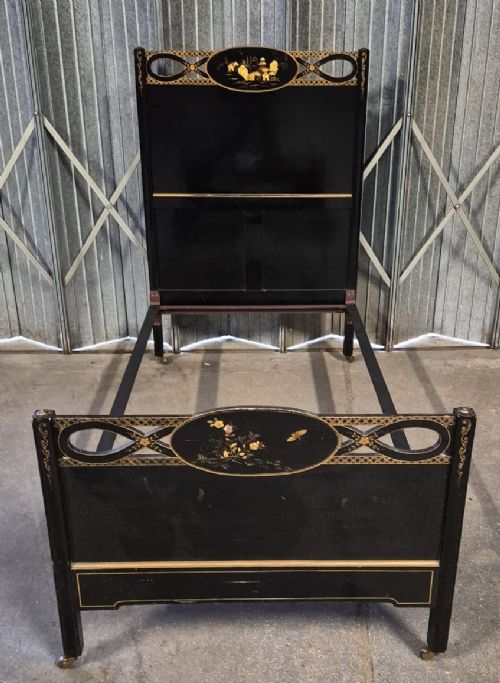
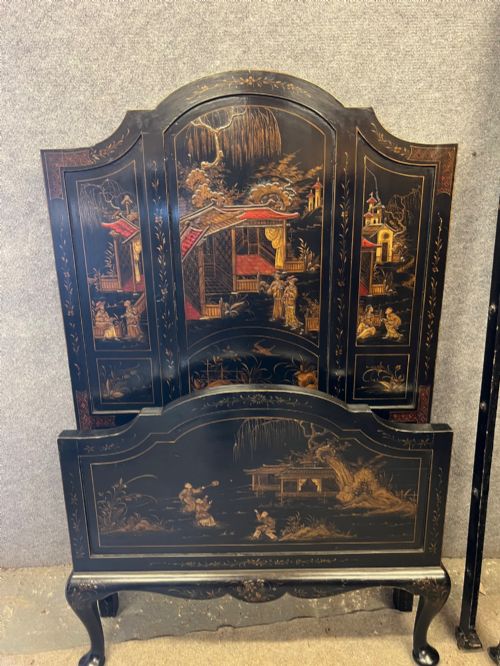
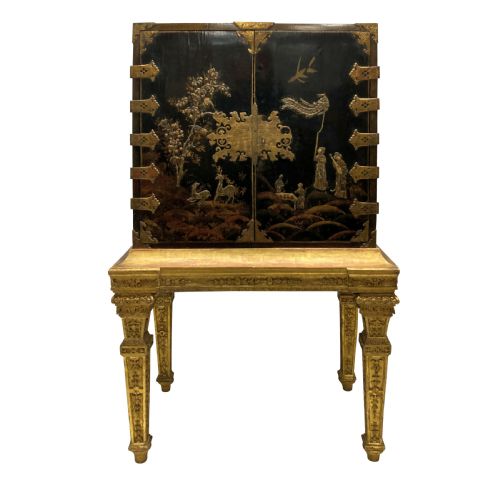
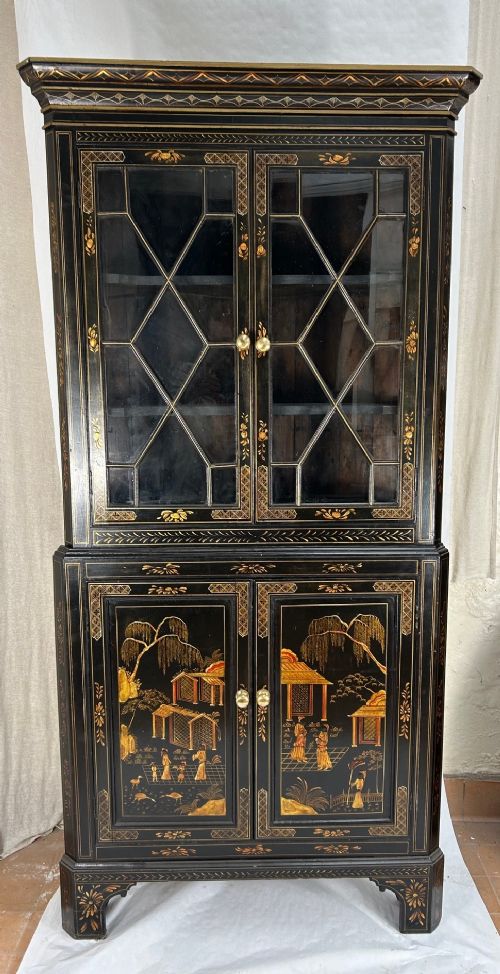
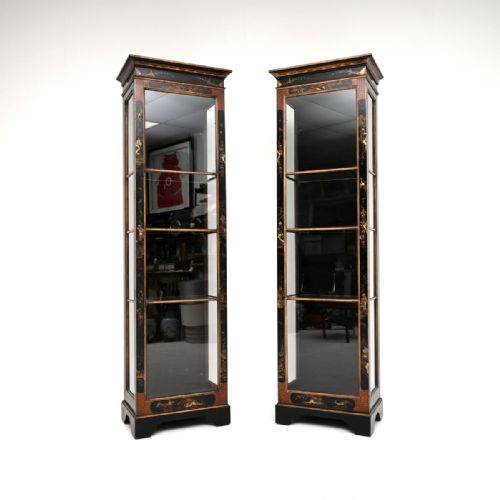
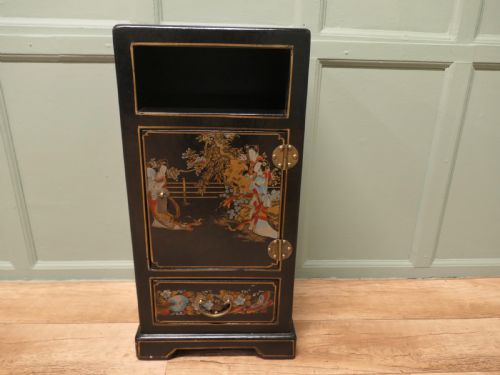
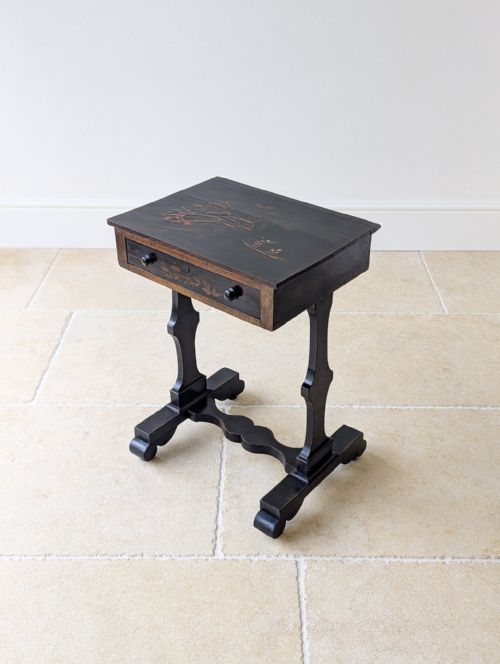
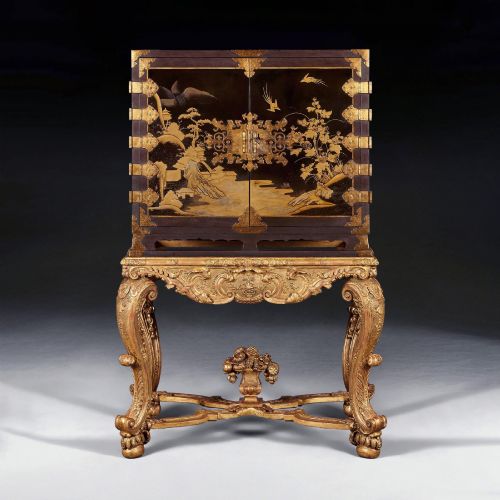
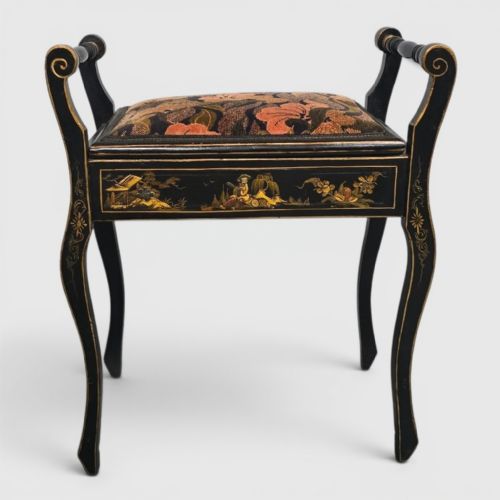
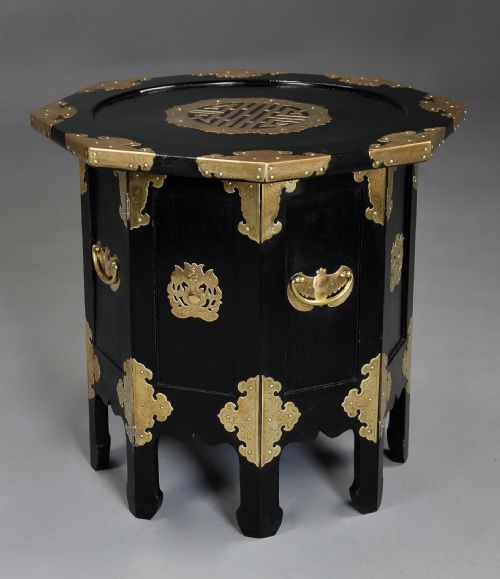
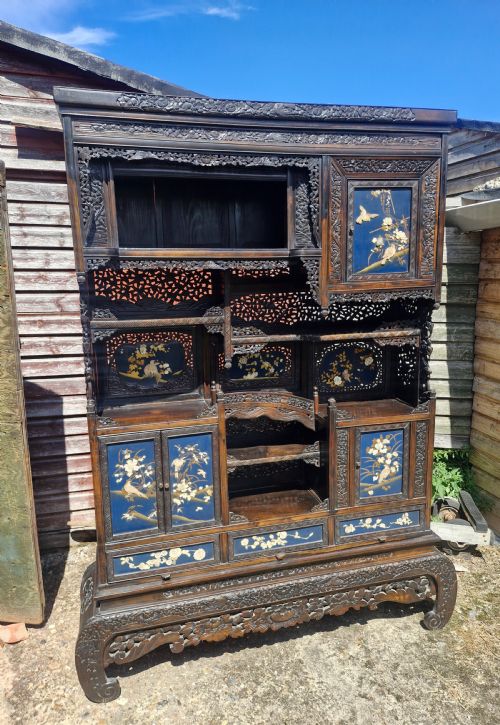
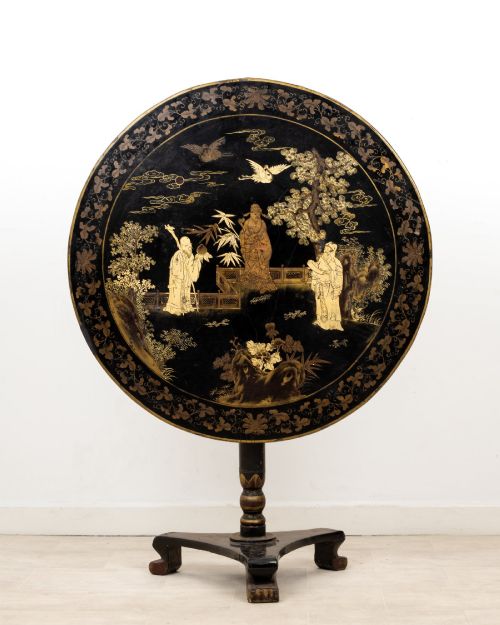
Black lacquered furniture spans centuries of production, appearing in forms such as cabinets on stand, side tables, corner cupboards, and occasional tables. Buyers seeking black lacquered furniture encounter pieces ranging from 17th-century Chinese export works and William and Mary cabinets to Victorian papier-mâché wine tables and Edwardian Chinoiserie display pieces.
The aesthetic frequently draws on Chinoiserie design, incorporating Oriental motifs, figures, and landscapes rendered in gold leaf and gilt upon dark surfaces. Examples include tray tables, side cabinets, and chests produced across the Georgian, Regency, Victorian, and early 20th-century periods.
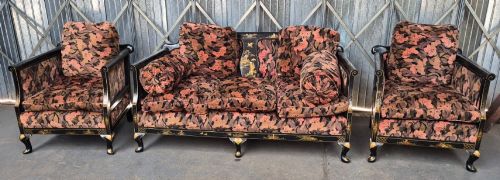
Formations extend beyond traditional cabinetry to encompass work tables, piano stools, dumb waiters, and upholstered suites finished in ebonised wood or dark lacquer. These items bridge European cabinet forms with Asian decorative techniques, reflecting global trade and stylistic exchange over generations.
Materials and construction methods
Construction relies on wood substrates, papier-mâché, and bamboo, finished with layers of lacquer or ebonisation to create a deep, reflective black ground. Artisans applied successive coats of varnish, sanding between applications to achieve a smooth finish before adding pictorial elements.
Decoration often employs gold leaf, gilt, and brass mounts, building intricate pictorial scenes or geometric borders across surfaces. Cabinetry from various periods combines traditional joinery with specialised surface finishing techniques such as Japanning and Asian lacquerwork.
Black Lacquered Furniture Retail Price Guide 2026
Typical asking prices for black lacquered furniture among the pieces listed under this phrase on Sellingantiques today, from the lower quarter to the upper quarter. They describe what is for sale here now, not the wider market.
Certain early tea tables likely witnessed heated parlour gossip about lost fortunes and secret court romances while holding porcelain cups.
Distinctions in quality
Quality rests upon the depth of the lacquer finish, the precision of the underlying wood or papier-mâché structure, and the finesse of the hand-painted or gilt decoration. Superior pieces exhibit crisp detail in figures and landscapes, maintaining a durable, luminous surface over centuries.
Earlier examples, such as 17th and 18th-century pieces, demonstrate high standards of cabinetmaking combined with authentic Asian export or European Japanning techniques. Later reproductions or provincial items may show simpler pictorial work and less intricate joinery, altering the overall visual impact.
Mallets
The Black Lacquered Furniture Glossary
- Chinoiserie
- European decorative style reflecting Chinese artistic influences, popular in furniture and interior design during the 17th and 18th centuries and revived in later periods.
- Japanning
- European imitation of East Asian lacquerwork, created by applying layers of varnish and metallic dust to wood surfaces.
- Ebonised
- Wood treated with stain or paint to resemble dense, dark ebony, often utilised in Victorian and Aesthetic Movement pieces.
- Cabinet on stand
- A freestanding storage compartment elevated on a dedicated supporting base or frame, common in 17th and 18th-century designs.
- Papier-mâché
- Composite material made from paper pulp or layers of paper bound with glue, pressed and dried to form sturdy table tops and small furnishings.
Black Lacquered Furniture: Frequently Asked Questions
How do I clean black lacquered furniture?
Dust surfaces gently with a soft, dry microfibre cloth to prevent scratching the delicate finish. Avoid using water, chemical sprays, or abrasive polishes that can damage the lacquer or lift the gilt decoration.
For stubborn marks, use a barely damp cloth followed immediately by a dry one. Preserving the original sheen requires minimal intervention and gentle handling.
Are these pieces suitable for daily use?
Many items, such as side tables, games tables, and desks, were built for functional domestic interiors and remain sturdy. Placing them away from direct sunlight and excessive moisture protects the lacquer and gold leaf from deterioration.
Using coasters and mats on table surfaces helps prevent ring marks and surface wear. With sensible placement, these items integrate smoothly into modern living spaces.
How can I tell different periods apart?
Dating relies on examining the underlying cabinet construction, joinery methods, and the style of the painted decoration. Eighteenth-century pieces often feature distinct export cabinet forms, while Victorian items frequently utilise papier-mâché or ebonised wood.
Edwardian and 1920s revivals typically blend traditional Chinoiserie motifs with early 20th-century furniture proportions. Comparing hardware, hinges, and secondary woods helps clarify the era of manufacture.
What is the difference between lacquer and ebonised wood?
True lacquer involves applying specialised resin or varnish coatings to build up a deep, glossy, protective surface layer. Ebonised wood is simply timber stained or painted black to imitate ebony without the layered resin buildup.
Lacquer surfaces often display intricate hand-painted Chinoiserie or gilt artwork. Ebonised finishes frequently highlight the natural grain or smooth texture of the underlying wood without pictorial decoration.