



Black Lacquer Jewellery Box
A black lacquer jewellery box brings together deep dark surfaces and intricate gilt or painted detail to hold small treasures.
Black Lacquer Jewellery Box
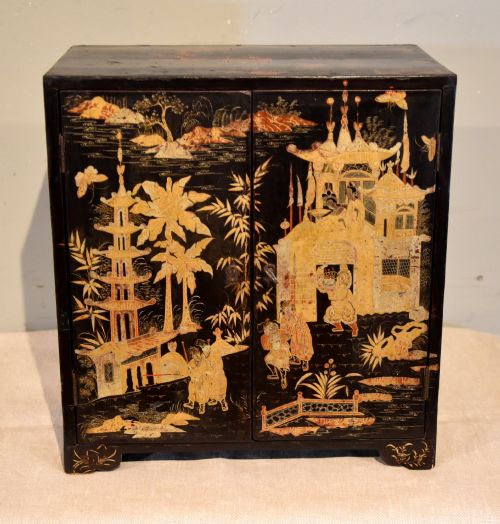
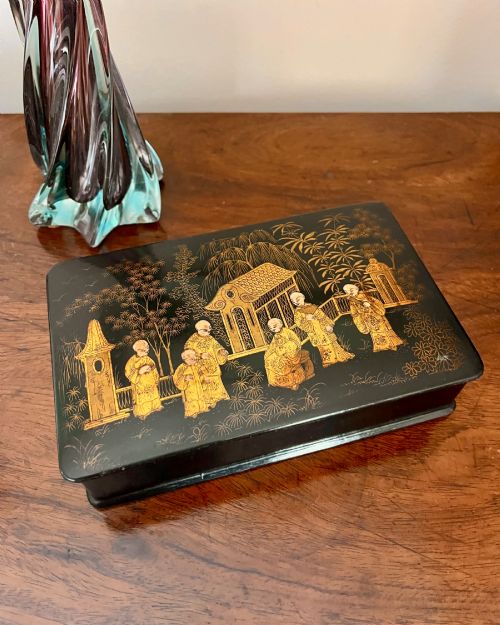
A black lacquer jewellery box encompasses an array of decorative boxes, table cabinets, and trinket cases originating from diverse periods and regional traditions. When exploring this selection, buyers encounter English Regency penwork pieces, Victorian papier-mâché caskets, and intricate Japanese or Chinese export lacquer cabinets.
The forms range from compact tabletop trinket boxes designed for dressing tables to larger table cabinets featuring multiple internal drawers and compartments. These objects serve both a practical storage function for valuables and a striking decorative role within an interior.
How they were made
The construction relies heavily on wood, papier-mâché, and metal foundations, which receive successive applications of lacquer and varnish to create a smooth, durable dark ground. Artisans then embellish these surfaces using techniques such as hand painting, penwork, and gold leaf application.
Many Eastern examples employ layered lacquer techniques alongside delicate gilding to depict traditional scenes, whilst English Regency and Victorian pieces frequently utilise penwork or inlaid papier-mâché to achieve their distinctive surface patterns.
Black Lacquer Jewellery Box Retail Price Guide 2026
Typical asking prices for black lacquer jewellery box among the pieces listed under this phrase on Sellingantiques today, from the lower quarter to the upper quarter. They describe what is for sale here now, not the wider market.
Listings feature items spanning the Georgian, Regency, and Victorian periods, alongside early twentieth-century Japanese and Chinese export pieces.
What varies in quality
The refinement of the surface decoration largely dictates the distinction between standard examples and finer pieces, with delicate hand-painted portraits or intricate Chinoiserie detailing showing superior artistry. The complexity of the internal arrangement, such as fitted drawers and original brass hardware, also influences the overall standard.
Preservation of the original lacquer and varnish finish remains central to the integrity of each piece, distinguishing items with well-maintained surfaces from those with extensive modern intervention.
The Black Lacquer Jewellery Box Glossary
- Lacquer
- A durable resin finish applied in multiple layers to a wooden or papier-mâché base. It creates a smooth, lustrous surface that protects the material beneath.
- Penwork
- A decorative technique using fine ink lines to create intricate monochrome designs resembling engravings. It appears frequently on Regency boxes.
- Papier-mâché
- A composite material made from paper pulp or layers of paper bound with glue, then pressed and dried. It forms a sturdy base for painted and lacquered boxes.
- Chinoiserie
- European artistic style reflecting Chinese motifs and motifs inspired by East Asian art. It manifests in gold and coloured decoration on black grounds.
Black Lacquer Jewellery Box: Frequently Asked Questions
What is a penwork box?
A penwork box is a decorative container embellished with meticulous ink drawings rather than paint or inlay. Artists used fine pen nibs to apply detailed motifs directly onto the prepared surface before varnishing.
These pieces typically date from the Regency and Georgian eras. They showcase elaborate architectural scenes, floral patterns, or geometric borders executed in monochrome.
How do I care for lacquer?
Lacquer requires gentle handling to preserve its delicate surface and varnish layers. Keep pieces away from direct sunlight, extreme heat, and high humidity to prevent cracking or fading.
Dust the surface softly with a dry, lint-free cloth. Avoid chemical cleaning products, polishes, or abrasive materials that might damage the historical finish.
Are papier mâché boxes durable?
Papier-mâché offers surprising strength and rigidity due to the layered construction method used by nineteenth-century makers. It withstands normal handling when treated with care.
However, moisture poses a significant risk to the paper core and the overlying lacquer. Keep these items in stable indoor environments away from damp conditions.
Where were table cabinets made?
Table cabinets originate from various global workshops, spanning English Regency centres to Japanese Meiji and Taisho period makers. Chinese export workshops also produced specialised cabinets for Western markets.
Each region employed distinct construction methods and decorative styles, allowing collectors to identify Japanese lacquerwork or English penwork through specific visual characteristics.