



Black Lacquer Desk
A black lacquer desk brings depth and gilt detail to a room, offering a polished writing surface grounded in Asian or European decorative traditions.
Black Lacquer Desk
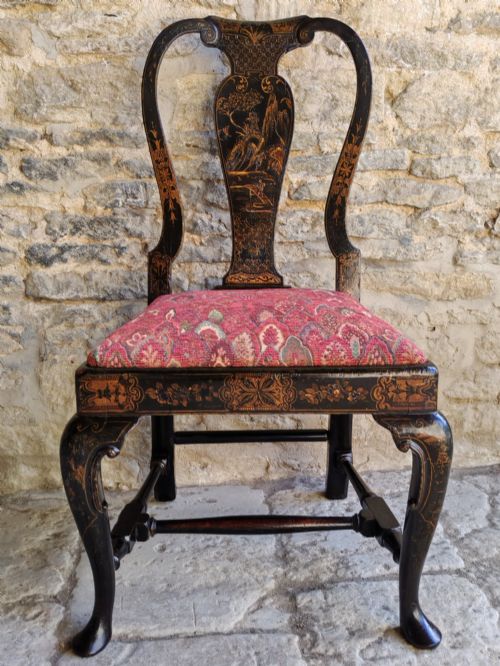
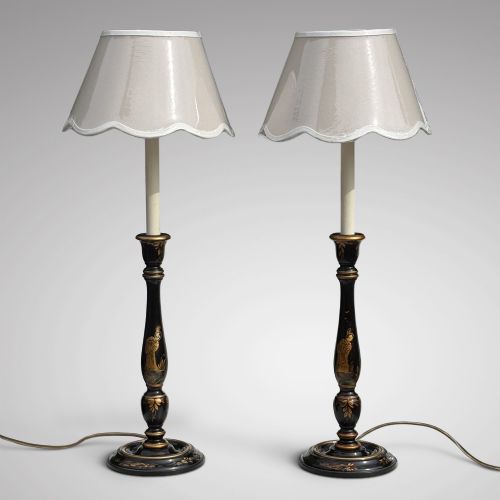
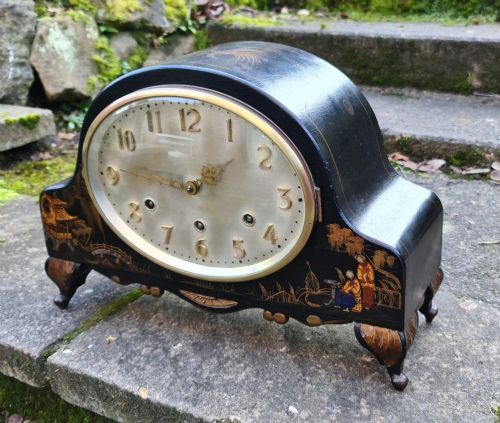
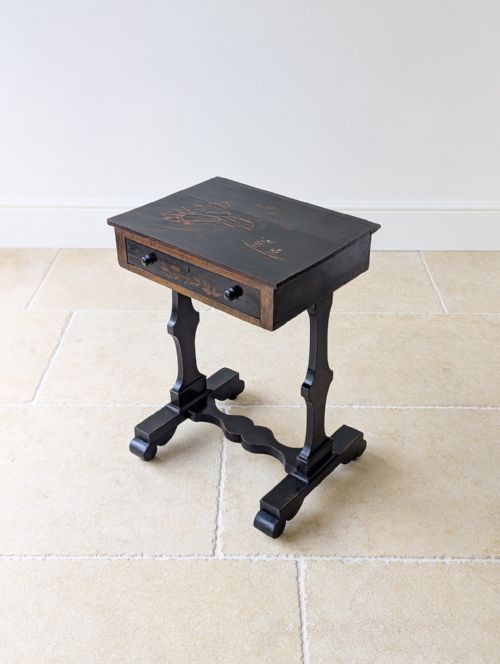
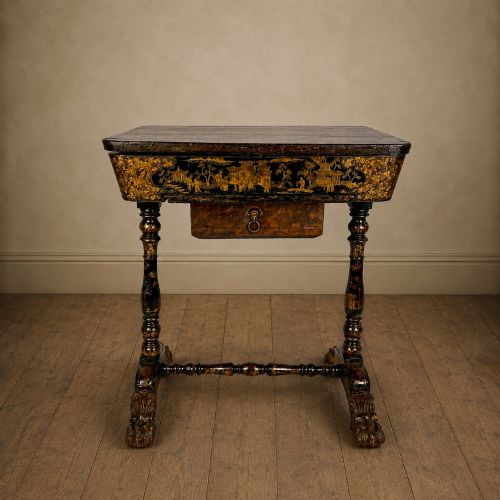
When searching for a black lacquer desk, buyers encounter forms ranging from nineteenth-century Chinese scholar tables and nineteenth-century bureau bookcases to Edwardian ladies writing desks and kidney-shaped writing tables. These pieces combine traditional cabinetmaking with dark lacquer finishes, often enriched by gilt decoration or Chinoiserie motifs.
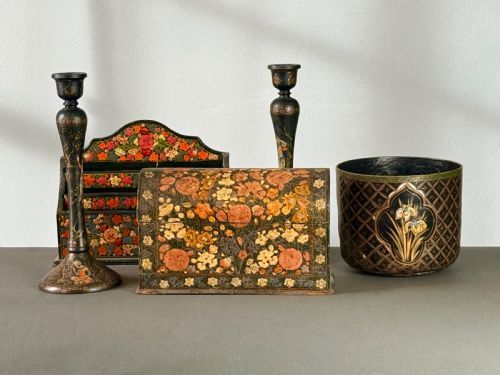
The material palette spans wood, lacquered wood, and papier-mâché, paired with brass fittings and glass elements. Pieces arrive from periods including the eighteenth century, the Victorian era, and the early twentieth century, reflecting varied interpretations of Anglo-Indian, Regency, and Chinese Export styles.
How they were made
Construction relies on timber foundations, including elm, palmwood, and bamboo, built into forms such as kneehole desks, bureau bookcases, and writing boxes. Artisans applied layers of lacquer to these wooden or papier-mâché carcases, building up a smooth ground suited to detailed hand painting.
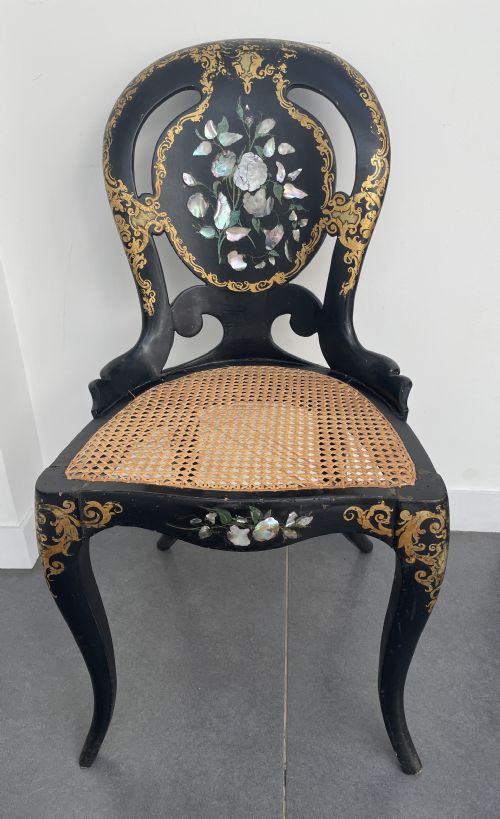
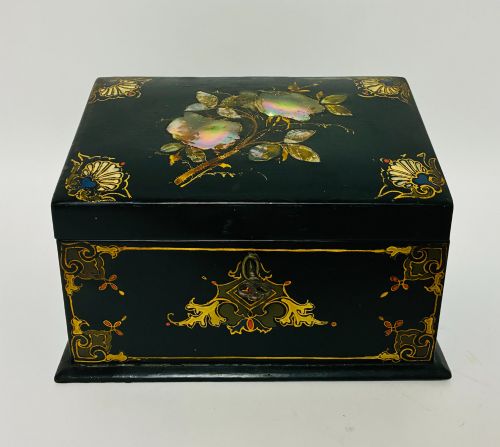
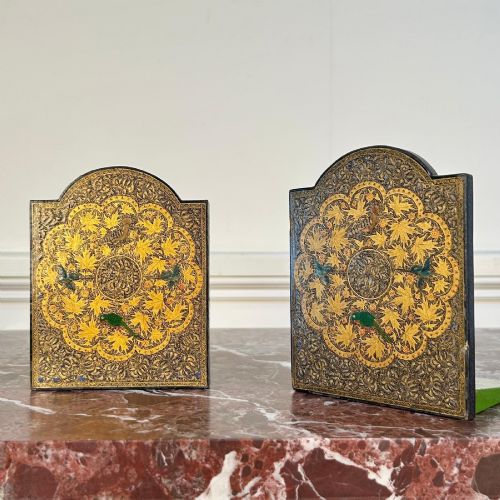
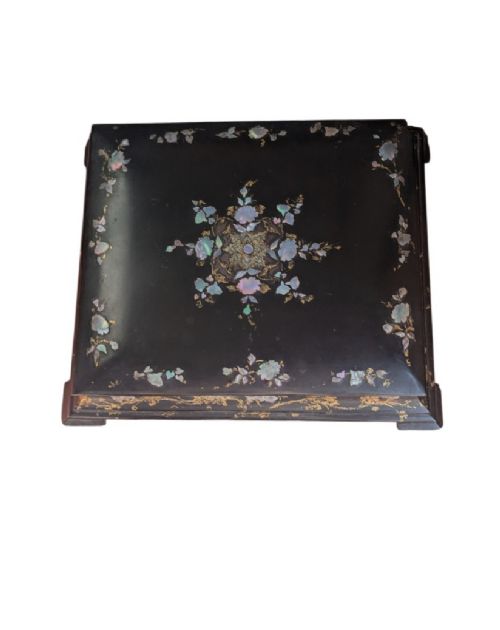
Decoration involved gilt work and polychrome pigments applied directly to the dark surface, alongside inlaid mother of pearl in certain Victorian examples. Brass mounts, hinges, and handles provided structural reinforcement and functional contrast to the glossy finish.
Scholars occasionally stored writing brushes inside secret compartments of nineteenth-century lacquer boxes, hiding ink from curious eyes.
What varies in quality
The standard of a black lacquer desk depends largely on the depth of the finish and the intricacy of the hand-painted or gilt decoration. Finer pieces demonstrate precise brushwork in Chinoiserie scenes and stable integration of lacquer over wood or papier-mâché bases.
Structural integrity of the underlying timber frame and the preservation of original hardware separate superior examples from heavily restored or later decorative reinterpretations. The crispness of carved details and the preservation of layered surface depths dictate overall execution.
The Black Lacquer Desk Glossary
- Chinoiserie
- European decorative style inspired by Chinese artistic traditions, featuring motifs of figures, landscapes, and pavilions rendered in gilt and lacquer. This aesthetic dominates much of the ornamentation found on black lacquer furniture.
- Papier-mâché
- Composite material made from paper pulp mixed with glue and resin, pressed into moulds and dried to form rigid boxes, trays, and desk accessories. It provides a smooth base for lacquer and inlay.
- Gilt
- Application of gold leaf or gold paint onto a prepared surface to create highlights and decorative details. It stands out sharply against dark lacquer backgrounds.
- Bureau Plat
- Freestanding writing table with drawers in the frieze, developed in France during the seventeenth century. These desks provide a finished appearance on all sides.
- Kneehole desk
- Form of writing table featuring a central recess for the user's legs, flanked by pedestals of drawers. This layout organises storage efficiently beneath the writing surface.
Black Lacquer Desk: Frequently Asked Questions
How do I clean a black lacquer desk?
Dust gently with a soft, dry microfibre cloth to prevent scratching the polished surface. Avoid abrasive cleaners, moisture, and direct sunlight, which can damage the delicate lacquer layers.
For stubborn marks, use a slightly damp cloth with mild soap, drying the area immediately. Regular gentle care preserves the integrity of both the lacquer and any accompanying gilt decoration.
Are these desks suitable for daily writing?
Many historical desks accommodate modern writing tasks, though antique surfaces benefit from protective desk pads. Papier-mâché and delicate lacquer finishes require caution to prevent scratching or moisture rings.
Selecting a sturdy wooden construction provides greater resilience for frequent daily use. Placement away from direct heat sources prevents the timber and lacquer from cracking over time.
What periods do these desks date from?
Surviving examples originate primarily from the eighteenth century through to the early twentieth century, encompassing Victorian and Edwardian interpretations. Earlier pieces often reflect Chinese Export craftsmanship.
Later Victorian and Edwardian pieces frequently showcase European adaptations of Chinoiserie and related styles. Examining construction methods and hardware helps clarify the specific period of manufacture.