

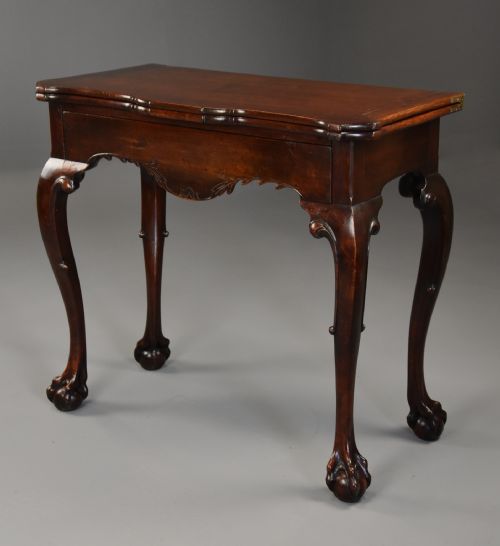


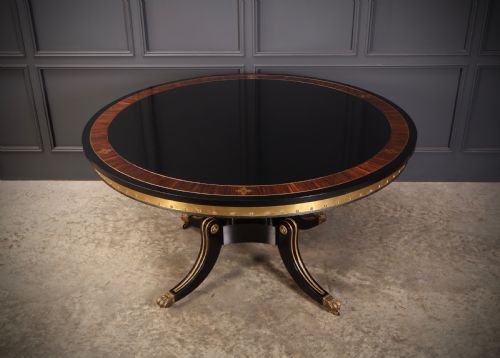


Black Inlay Table
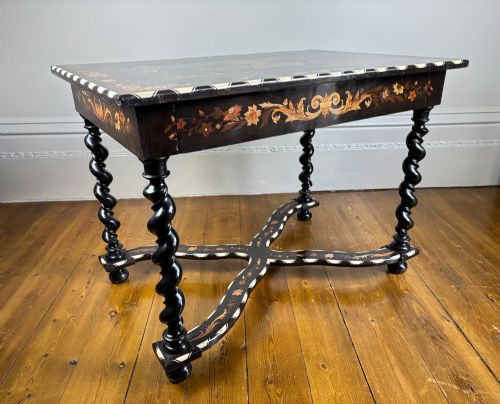
A black inlay table brings together dark wood or marble and contrasting detail, offering a striking centrepiece for any room.
Black Inlay Table
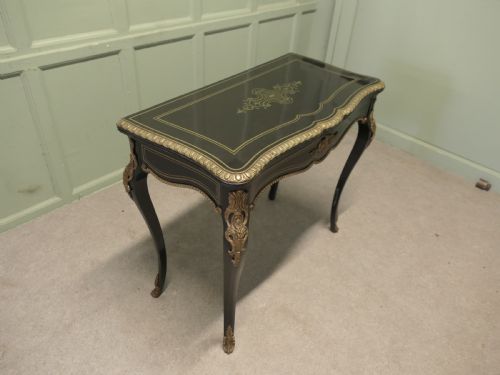
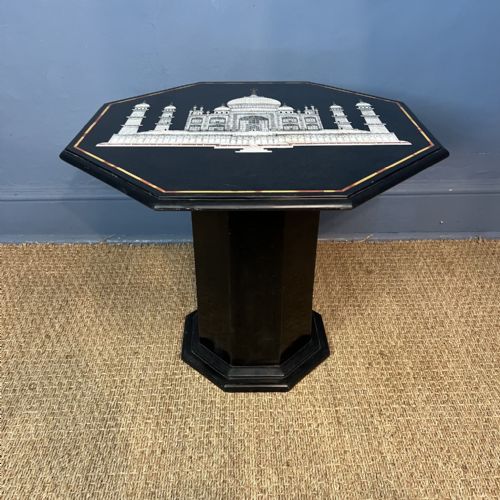
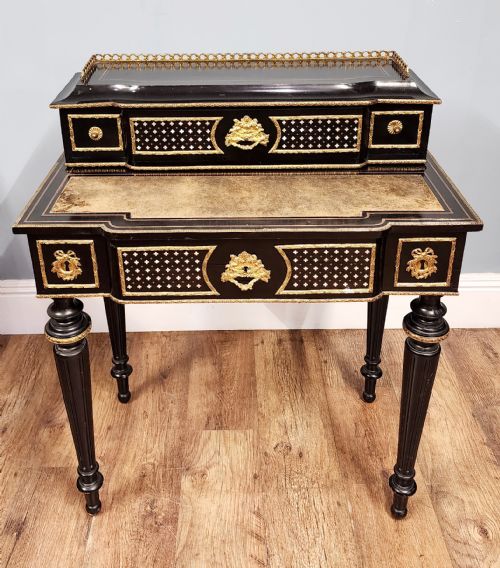
When you search for a black inlay table, you encounter pieces defined by dark surfaces paired with contrasting materials. These objects span occasional tables, centre tables, games tables, and desks.
The versions you meet most often on this page date from the nineteenth century, including Victorian and Napoleon III examples, alongside earlier eighteenth-century forms.
Makers utilised ebonised wood, black marble, and dark walnut as dark grounds, setting them against lighter materials to create distinct visual contrast.
Materials and Construction
The construction relies on dark foundations, primarily ebonised wood, walnut, papier-mâché, or black marble, which provide the sombre background needed for the design.
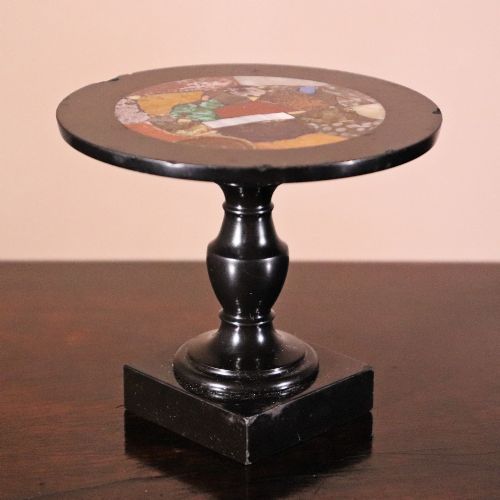
Artisans applied inlays of brass, bone, mother-of-pearl, and specimen marbles, often using marquetry techniques to form intricate floral or geometric motifs into the surface.
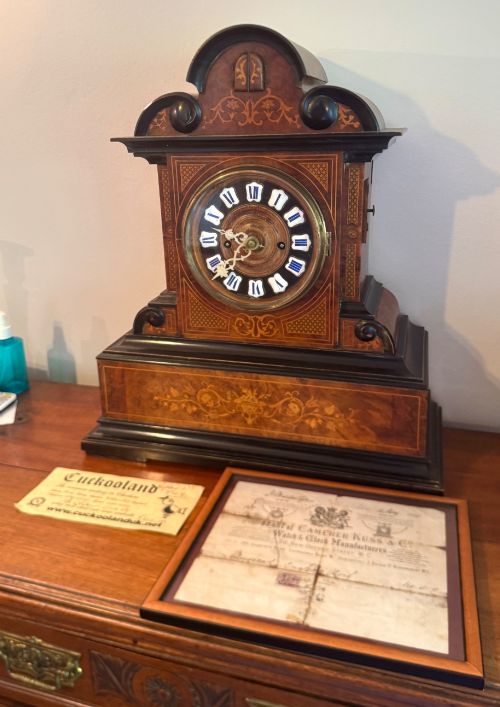
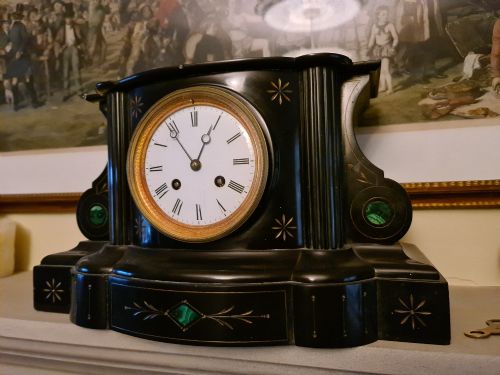
Several items combine dark surfaces with unexpected touches of mother-of-pearl and cuckoo clocks.
Distinctions in Quality
Quality rests upon the precision of the inlay work and the integrity of the materials, where tight joints and flush surfaces distinguish finer work from simpler production.
The depth of the decorative scheme, whether delicate brass lines or elaborate pictorial marquetry involving bone and various woods, marks the distinction between standard items and exceptional pieces.
John Bull of Bedford·Maison Millet·Baby and Jannings·Thomas A Paris
The Black Inlay Table Glossary
- Ebonised
- Wood treated with a finish to imitate ebony. This dark staining creates a uniform black ground for inlaid decoration.
- Marquetry
- Inlay work forming pictures or patterns by fitting together small pieces of veneer. Artisans employed various woods, bone, and metal to achieve pictorial depth.
- Pietra dura
- Inlaid work using cut and fitted polished coloured stones to create images. This technique frequently appears on nineteenth-century marble table tops.
- Occasional table
- A small, movable table designed for specific, intermittent uses rather than a permanent position. These forms range from plant stands to small tea tables.
Black Inlay Table: Frequently Asked Questions
What periods do these tables represent?
The listings span several centuries, with a strong representation of nineteenth-century Victorian and Napoleon III examples.
You also encounter eighteenth-century designs alongside later pieces from the early twentieth century.
How do I care for ebonised wood?
Ebonised surfaces require gentle dusting with a soft cloth to protect the dark finish from scratching.
Keep these pieces away from direct sunlight and excessive moisture to preserve the polished appearance.
What materials make up the inlays?
Makers incorporated brass, bone, mother-of-pearl, and various natural stones into the dark wooden or marble grounds.
These contrasting materials create the characteristic patterns seen across the table tops.
Where should I place a centre table?
A centre table stands freely in a room, designed to be viewed from all sides rather than pushed against a wall.
These pieces work well in large hallways or principal reception rooms as focal points.