


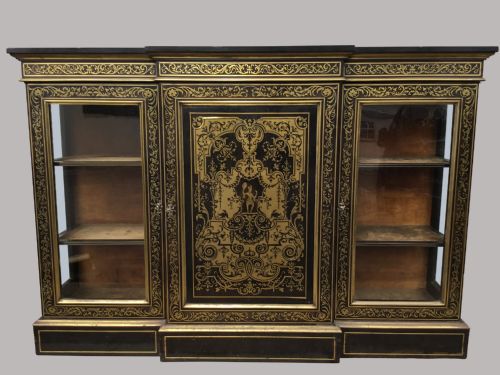


Black Inlaid Cabinet
A black inlaid cabinet brings dark surfaces and meticulous marquetry together, offering a striking focal point for a formal interior.
Black Inlaid Cabinet
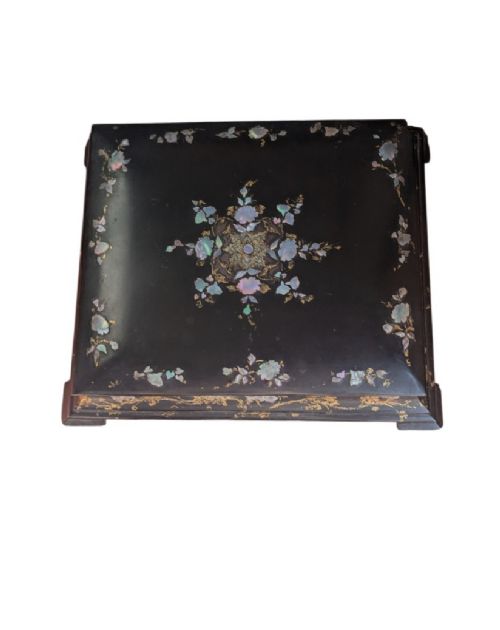
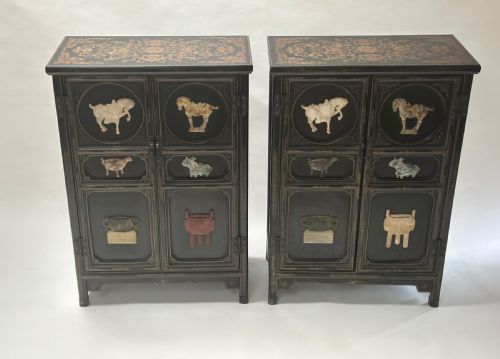
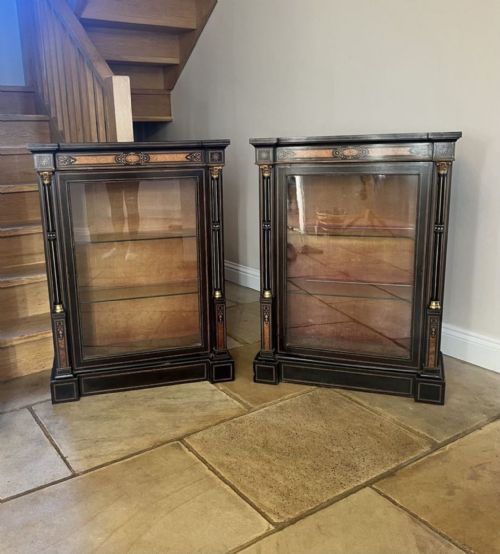
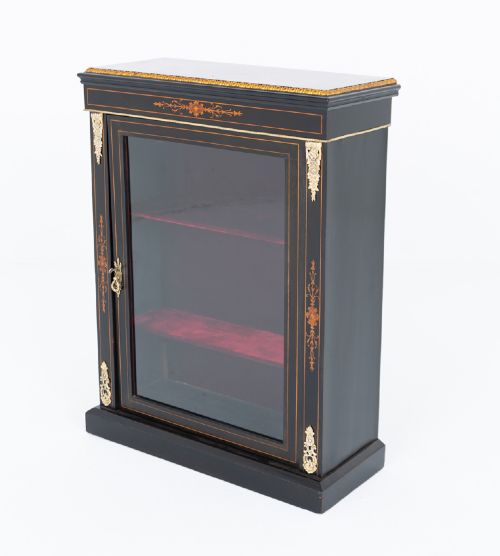
A black inlaid cabinet encompasses a range of dark-ground storage forms, most frequently encountered in nineteenth-century Victorian and French Napoleon III designs. These pieces appear as credenzas, pier cabinets, breakfront bookcases, and side cabinets intended for display and formal organisation. Makers deployed ebonised timber and dark lacquers to create a dramatic contrast with lighter inlay materials.
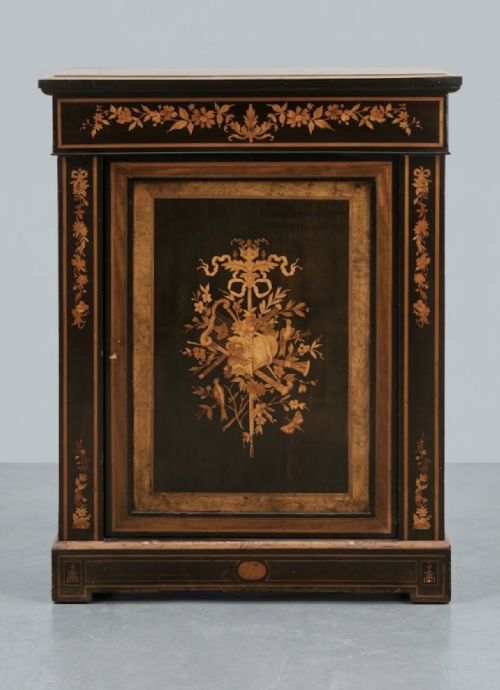
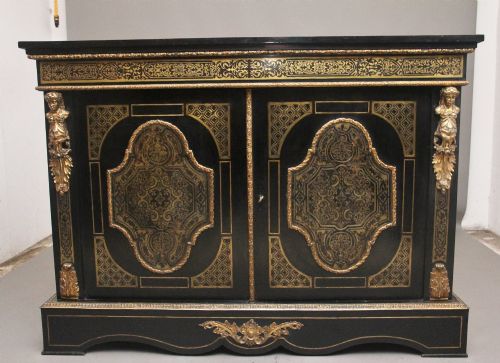
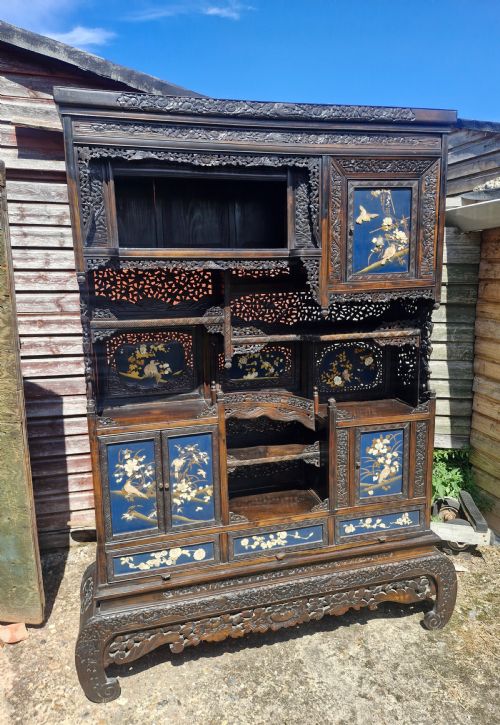
Victorian examples dominate the selection, often pairing ebonised surfaces with intricate floral marquetry, amboyna, or burr walnut panels. Alongside these, French boullework and Asian black lacquer pieces bring tortoiseshell, brass, and hand-painted motifs into the category. The common thread remains the dark foundational tone set against precise decorative ornamentation.
How They Were Made
Craftsmen built these cabinets using foundational woods like walnut or pine, which were subsequently ebonised, painted, or finished with dark lacquer. Surfaces received meticulous inlays of brass, tortoiseshell, porcelain, and exotic timbers, secured precisely into routed channels within the wood. Ormolu mounts and gilt bronze accents were then applied to frame doors, corners, and crests.
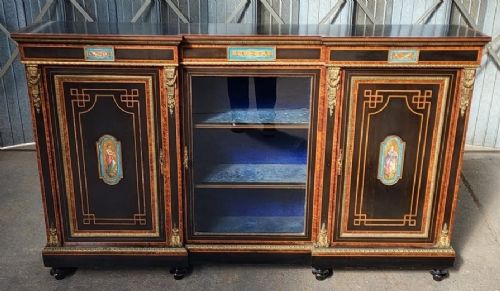
French and English workshops utilised tortoiseshell and brass marquetry, known as boulle work, requiring immense precision in cutting and fitting the thin metal and shell together. Pietra dura panels set into stone or slate were also integrated into cabinet doors and friezes. Glazed doors utilised shaped glass panels fitted carefully into wooden rebates.
Listings feature periods spanning from 1850 through the late nineteenth century into 1920, incorporating Victorian, Aesthetic Movement, and Chinoiserie styles.
What Varies In Quality
The distinction between standard production and exceptional work lies in the depth and intricacy of the marquetry and the quality of the primary timber. Superior pieces display complex floral marquetry utilising varied wood tones and engraved details rather than simple stencilled motifs. The crispness of the brass ormolu mounts and the weight of the underlying ebonised carcase indicate workshop standards.
Interior construction also separates grades of manufacture, with finer cabinets offering polished mahogany or walnut linings, adjustable shelving, and original working locks. The integration of specialty panels, such as hand-painted porcelain plaques or genuine pietre dure hardstone inlays, elevates a piece within the hierarchy of nineteenth-century design.
The Black Inlaid Cabinet Glossary
- Ebonised
- Wood treated with a dark stain or pigment to simulate the appearance of ebony. This finish provides a uniform black background that accentuates brass and marquetry details.
- Boulle
- A form of marquetry consisting of tortoiseshell and brass inlay, popularised in seventeenth-century France and revived during the nineteenth century. The technique creates a shimmering contrast of dark shell and polished metal.
- Ormolu
- Gilt bronze mounts used as decorative trim on furniture. These cast metal ornaments frame doors, corners, and feet.
- Credenza
- A low cabinet, often featuring three doors, used historically for serving or display. Victorian and French examples frequently include curved glazed side panels and mirrored backs.
- Pietra dura
- Inlay work using cut and fitted polished coloured stones to create pictorial designs. These hardstone panels appear on high-status nineteenth-century cabinet doors.
Black Inlaid Cabinet: Frequently Asked Questions
What is a black inlaid cabinet?
A black inlaid cabinet is a piece of furniture featuring an ebonised or dark lacquered wood surface decorated with contrasting marquetry, metal, or stone. These items include credenzas, pier cabinets, and bookcases designed for display.
Originating largely in the nineteenth century, these pieces reflect Victorian, French Napoleon III, and Asian design traditions. The dark finish serves to highlight intricate details in brass, mother-of-pearl, or exotic woods.
How were these cabinets used?
These cabinets served primarily to display porcelain, glassware, and decorative objects in formal nineteenth-century drawing rooms and reception spaces. Enclosed lower cupboards provided secure storage for documents or linens.
Tabletop surfaces and glazed shelving allowed owners to curate and exhibit prized possessions. Writing variations combined display functions with integrated desks and stationery compartments.
How do I style a black inlaid cabinet?
A dark cabinet works effectively against lighter neutral walls, where the ebonised finish and metallic inlays can stand out. Use the interior shelving to display ceramics or glass to catch the light.
Allow the piece space to function as a focal point within a room. Avoid overcrowding the top surface to maintain the balance of the furniture's decorative silhouette.
How do I distinguish Victorian from French styles?
Victorian examples often favour ebonised wood combined with floral marquetry or amboyna panels, adhering to English aesthetic tastes. French Napoleon III pieces frequently incorporate elaborate boulle work with extensive brass and tortoiseshell inlay. Nomenclature and hardware details further separate regional workshops. French cabinets tend to feature heavier ormolu mounts and curved breakfront profiles.