





Black Gilt Picture Frame
A black gilt picture frame brings depth and contrast to works on paper and oil paintings from the eighteenth and nineteenth centuries.
Black Gilt Picture Frame
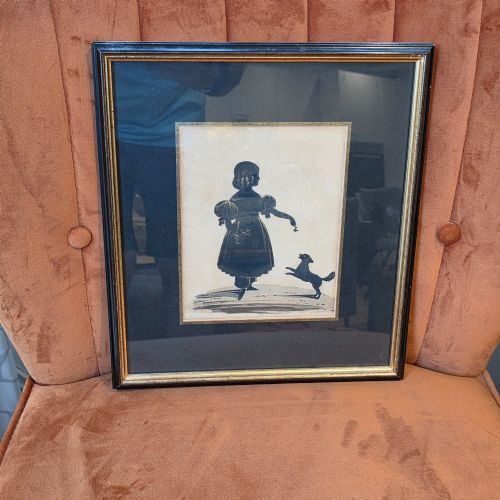
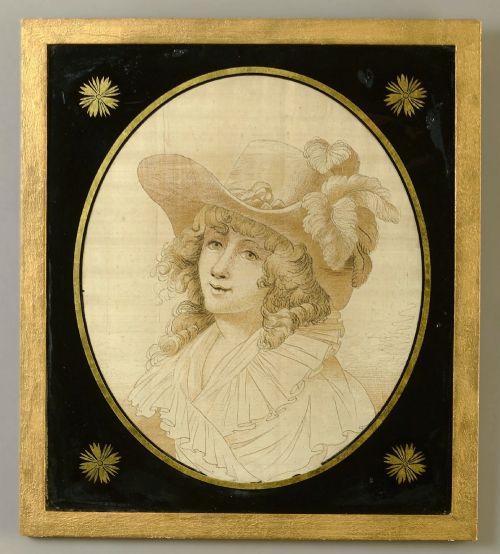
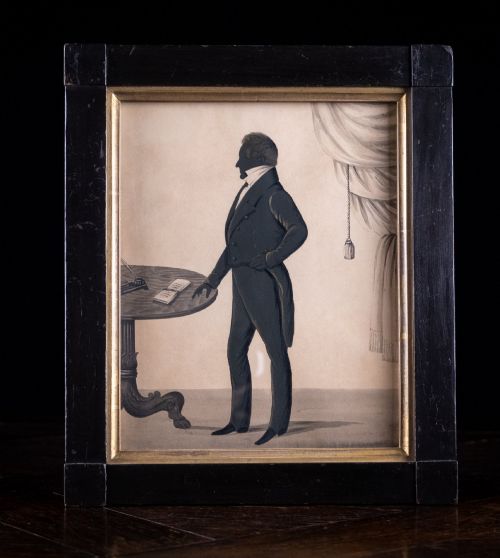
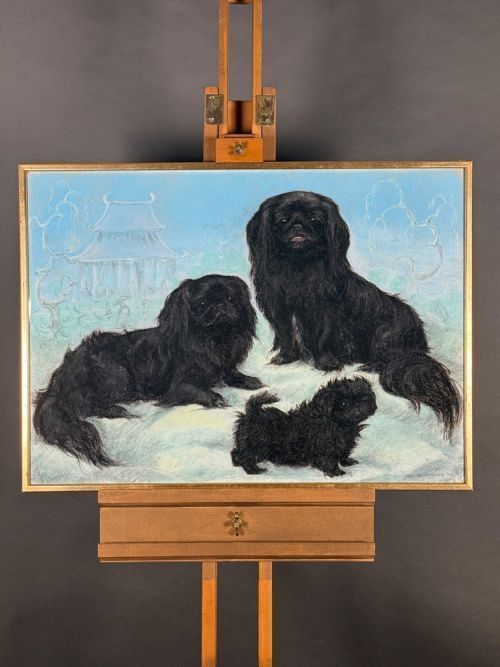
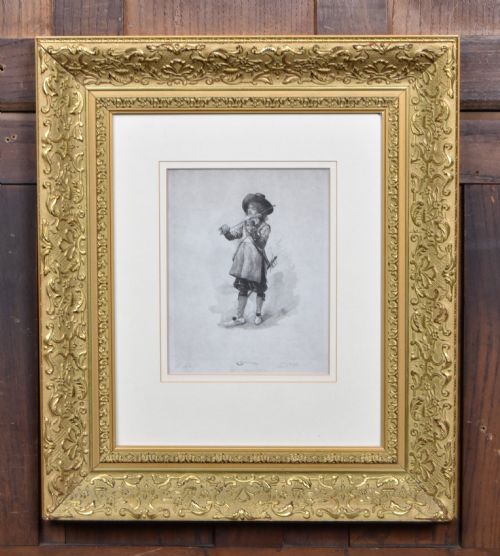
When you search for a black gilt picture frame, you encounter surrounds designed to house silhouettes, engravings, and oil paintings originating from the Georgian, Regency, and Victorian periods. The selection on this page relies heavily on ebonised wood and dark moulding highlighted with gold leaf, often framing portraits, marine scenes, and silkwork pictures.
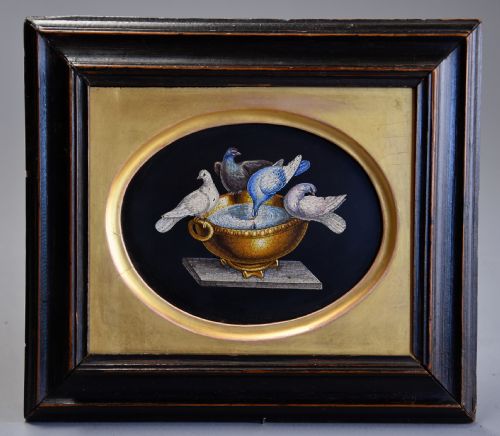
The objects span from eighteenth-century engravings to mid-nineteenth-century Italian micromosaics and woolwork pictures. These dark frames provide a heavy visual boundary that draws the eye directly toward the tonal contrasts of the artwork contained within.
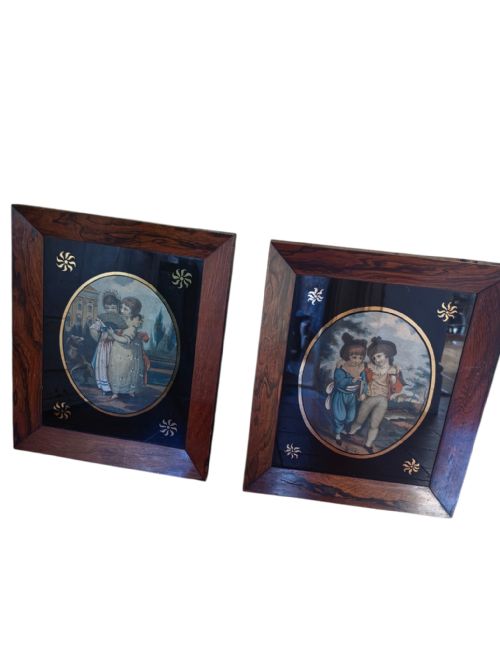
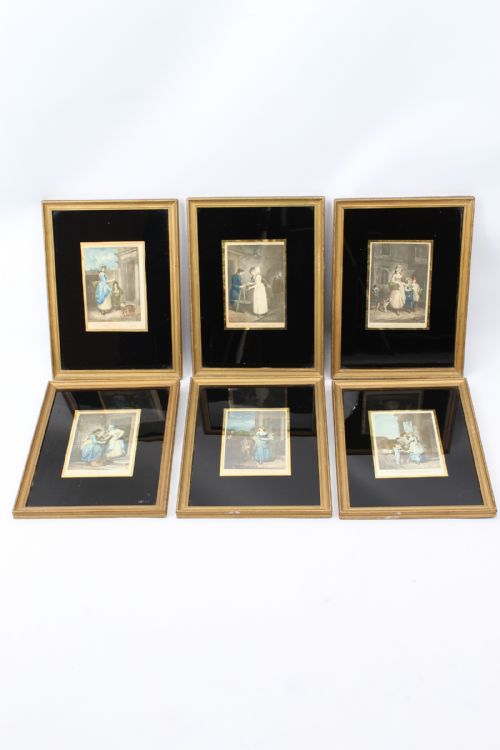
Buyers frequently find these frames housing specific period works such as cut paper silhouettes, reverse glass mezzotints, and hand-coloured prints. The integration of dark wood and gold accents reflects interior decoration trends spanning several centuries of British and European craftsmanship.
Materials and construction methods
The construction of these pieces relies on timber such as ebonised wood, rosewood, and general hardwoods shaped into linear mouldings. Craftsmen applied dark stains or black finishes before introducing highlights of gold leaf or gilt detailing along the inner and outer edges.
Many period examples incorporate glass elements, including Verre Églomisé panels with gilded borders on glass to protect delicate paper works and silhouettes. Brass fittings and hanging loops frequently secure the backboards and artwork within the assembled wooden structure.
Listings feature items spanning the 18th century through to the 1920s, constructed from materials including ebonised wood, glass, and gold leaf.
Determinants of quality
Quality rests in the crispness of the moulding profile and the integrity of the original gilt application rather than modern touch-ups. Hand-carved decorative elements and authentic period joinery separate standard utility mouldings from pieces made for fine art.
The survival of original surface finishes, such as unpolished ebonised timber and genuine gold leaf showing natural oxidation, dictates the desirability of the piece. Superior examples maintain structural stability while displaying the genuine patina accumulated over centuries.
William James Hubard·J Deacon·Charles Hunt·Francis Calcroft Turner·Adolphe Pannemaker
The Black Gilt Picture Frame Glossary
- Ebonised wood
- Timber treated with a chemical stain or pigment to imitate heavy, dense ebony. This dark finish provides a stark contrast against gilt highlights.
- Giltwood
- Wood carved and prepared with a layer of gesso before the application of gold leaf. This material offers a reflective border to frame detailed artworks.
- Verre Églomisé
- A cold decoration technique involving gilding on the reverse side of glass. It frequently appears as a decorative mat surrounding historical silhouettes and prints.
- Hogarth frame
- A specific moulding profile featuring a stepped or ogee shape with a dark finish and a thin inner gilt slip. Named after the painter William Hogarth, it dominated eighteenth-century framing.
- Silhouette
- A cut paper, painted, or inked profile portrait popular during the Georgian and Regency eras. These small works required compact, contrasting frames.
Black Gilt Picture Frame: Frequently Asked Questions
What goes inside a black gilt picture frame?
These frames typically house historical works on paper, including silhouette portraits, hand-coloured engravings, and botanical prints. They also complement small oil paintings, silkwork embroideries, and reverse glass pictures.
The dark and gold mouldings provide a strong visual boundary that suits monochromatic prints, sepia drawings, and detailed portrait miniatures from the eighteenth and nineteenth centuries.
How do I date a black gilt frame?
Dating relies on examining the timber construction, joinery methods at the corners, and the preparation layers beneath the gold leaf. Georgian and Regency frames often use specific moulding profiles like the Hogarth style, while Victorian pieces incorporate broader ebonised sections.
The backing materials, hand-blown glass panes, and historical fixings also offer clues to the manufacturing decade, aligning the frame with the era of the art it contains.
Are these frames suitable for modern art?
The stark contrast of dark wood and gold leaf makes these historical frames adaptable for contemporary prints and modern drawings. The traditional aesthetic creates a deliberate juxtaposition when paired with minimalist or abstract works.
Buyers often select antique frames to give contemporary pieces a sense of depth, weight, and historical grounding within a room.
How should I care for ebonised and gilt surfaces?
Maintenance requires dry dusting with a soft, lint-free cloth to prevent the accumulation of particles on the delicate gold leaf and dark wood. Moisture and chemical cleaning agents should be avoided entirely to protect the historical finish.
Placing the frame away from direct sunlight and fluctuating humidity levels prevents the timber from warping and protects the underlying gesso from cracking.