

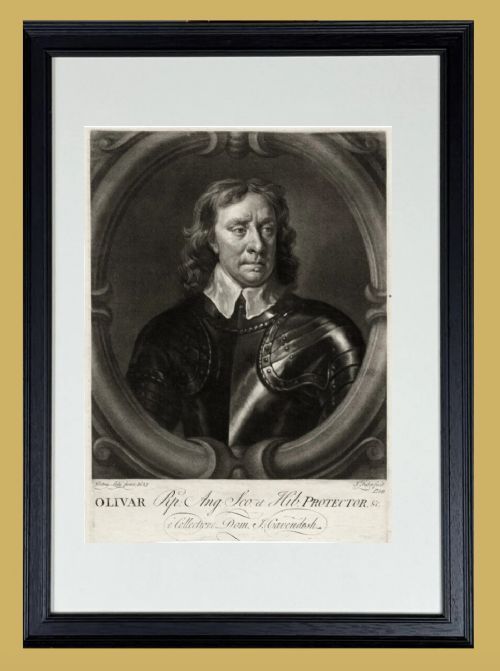
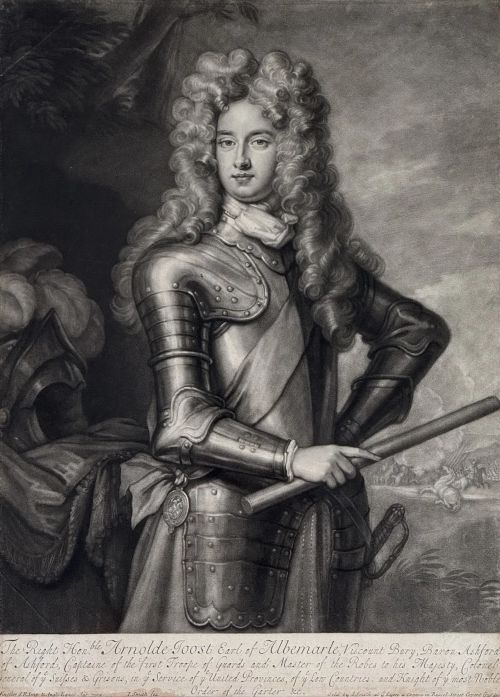


Black Framed Military Print
A black framed military print brings together historical figures, battle scenes and portraits in paper, ink and wood.
Black Framed Military Print
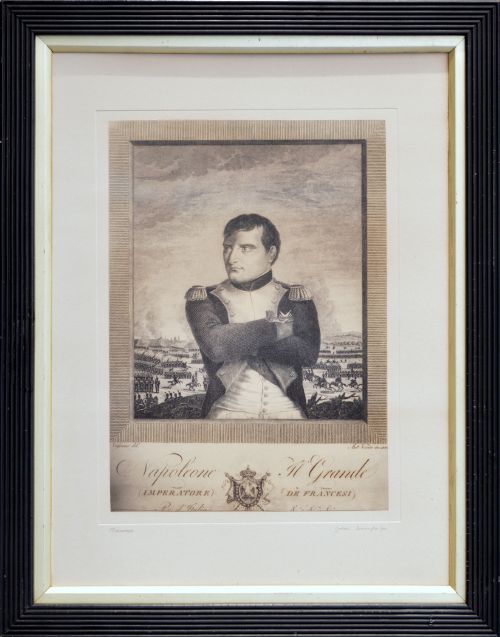
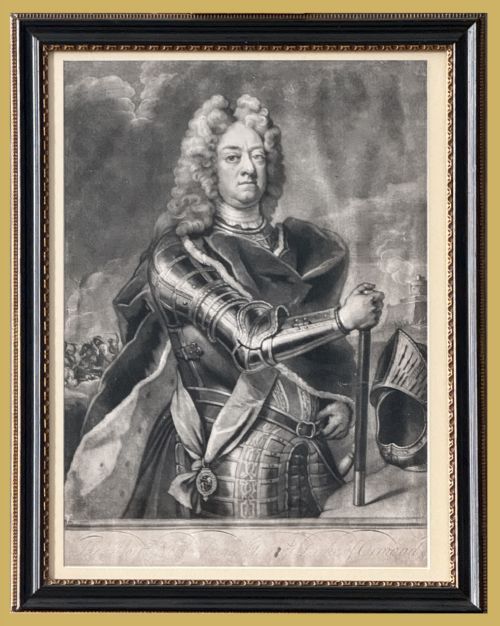
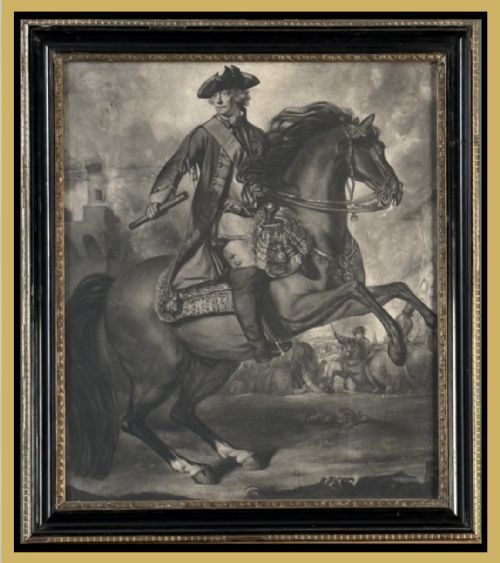
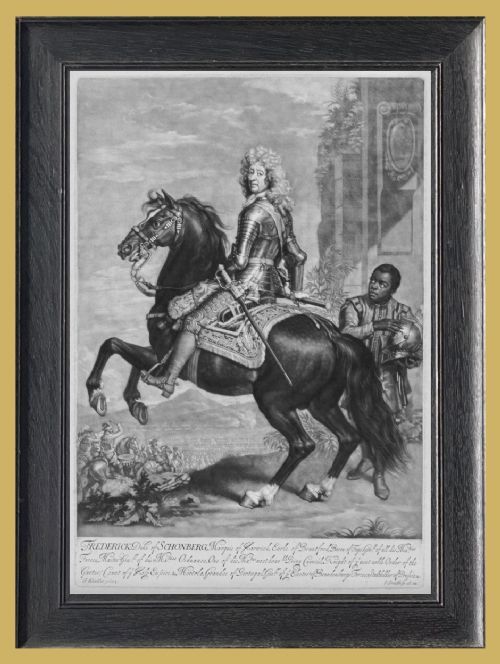
A black framed military print spans centuries of British history, featuring notable figures and battle scenes from the seventeenth century through to the mid-twentieth century. Collectors encounter mezzotint portraits, engravings, etchings and reverse glass prints housed in traditional dark frames.
The subjects range from commanders and noblemen executed by period printmakers to battle scenes and garrison life captured by artists such as Snaffles and David Wilkie. These works document military history through contemporary prints, watercolours and printed cards.
Originating from periods including the seventeenth and eighteenth centuries, the Regency era, and the early twentieth century, these framed artworks offer a direct visual record of historical military personnel and events.
How they were made
Makers utilised paper, ink and pigment to create mezzotints, engravings and etchings, often working after paintings by prominent artists like Sir Joshua Reynolds and Sir Godfrey Kneller. Master printmakers transferred these compositions using traditional intaglio techniques.
Some pieces employ reverse glass printing methods, fixing the pigment directly onto glass during the Regency period. Watercolour and original printed cards also appear among the listed materials.
Frames combine wood, glass and gilt, providing a dark border that isolates and protects the paper works. Giltwood accents occasionally complement the primary wooden mouldings.
Listings span periods from the seventeenth century to the twentieth century, incorporating paper, glass, wood, ink and watercolour.
What varies in quality
The distinction between tiers rests upon the association between the printmaker and the original painter, alongside the clarity of the impression on the paper. Early impressions preserve the fine tonal gradations of the mezzotint plate.
The condition of the paper and the integrity of the ink determine the visual impact of the portrait or battle scene. Retained pigmentation and minimal fading distinguish well-preserved examples.
The framing materials, including period wood and glass, contribute to the overall authenticity and historical cohesion of the piece.
John Simon·Edward Fisher·John Smith·Joseph Sympson
The Black Framed Military Print Glossary
- Mezzotint
- A printmaking process where the copper plate is roughened to achieve rich dark tones and subtle gradations of light. This technique became popular for reproducing formal portraits.
- Etching
- A process where acid bites lines into a metal plate protected by a wax ground. Artists utilise this method for expressive freedom in line work.
- Reverse glass print
- An image painted or printed directly onto the reverse side of a glass panel to be viewed from the front. This technique creates a glossy surface finish.
- Giltwood
- Wood carved and coated with gold leaf or a gold-coloured preparation. It frequently frames works from the Regency and earlier periods.
Black Framed Military Print: Frequently Asked Questions
How old are these military prints?
The pieces span from the seventeenth century through to the mid-twentieth century. Earlier examples date to the seventeenth and eighteenth centuries, while others stem from the Regency period and the early twentieth century.
Each work reflects the artistic techniques and historical documentation methods of its specific era.
What materials are used in the framing?
The frames predominantly consist of wood, often finished in black, paired with glass to protect the delicate paper surfaces inside. Some iterations incorporate giltwood or subtle metallic detailing.
These dark surrounds are selected to complement the monochrome tones of mezzotints and engravings.
Who are the subjects of the portraits?
The portraits depict prominent historical figures, including military commanders, noblemen and notable officers such as Oliver Cromwell and various earls and generals. Many were originally painted by master artists and subsequently translated into print.
These likenesses preserve the appearance and regalia of significant historical personages.
What is a reverse glass print?
A reverse glass print involves applying pigment directly to the back of a glass panel so the finished image is viewed through the front. This method imparts a distinctive glossy appearance to Regency-era pieces.
Such items require careful handling to protect the pigment layer behind the glass.