
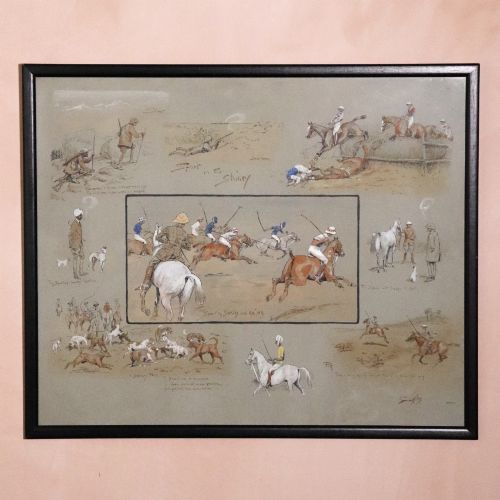
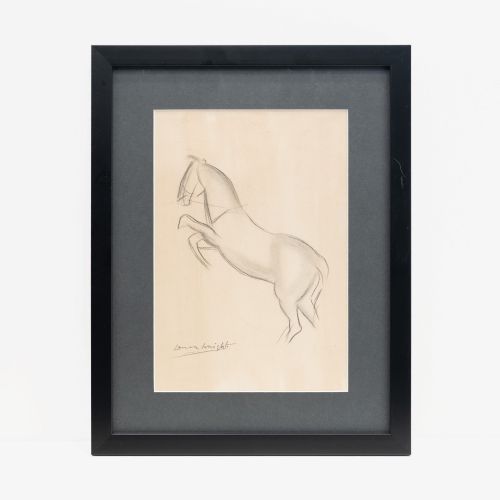
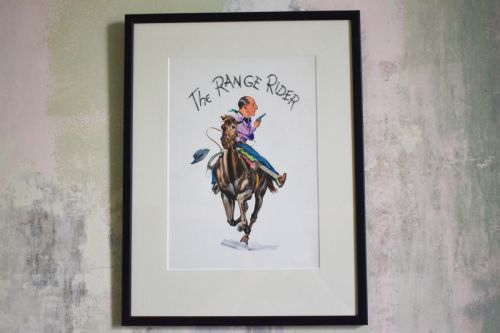


Black Framed Equestrian Art
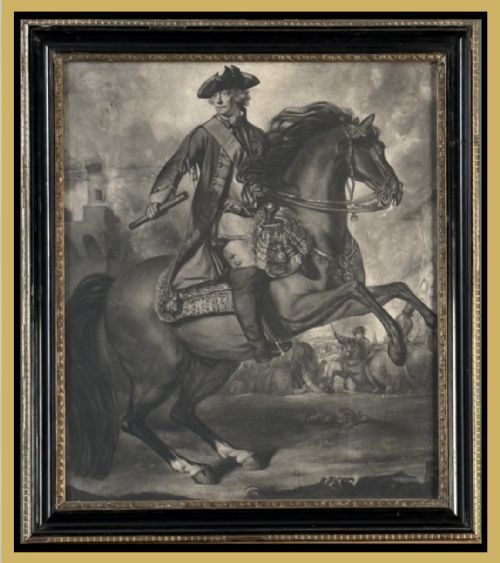
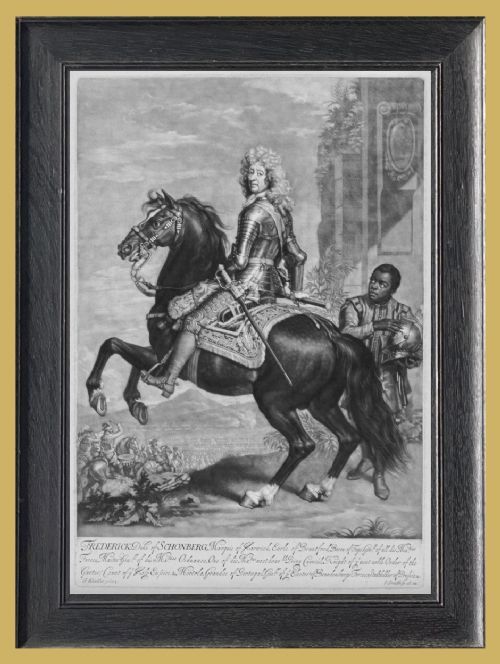
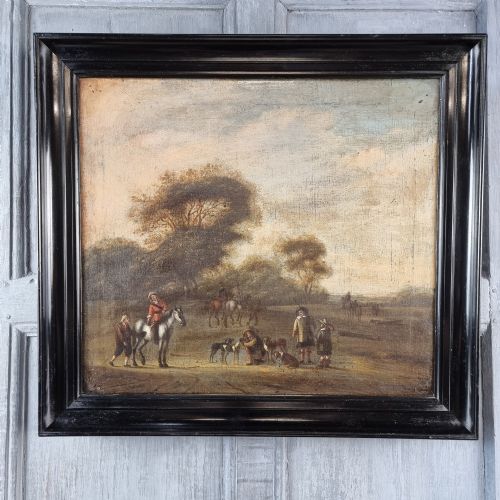
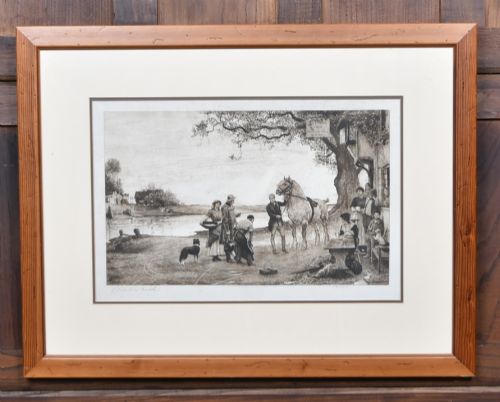
Black framed equestrian art brings together centuries of sporting subjects, horse portraits, and hunt scenes held securely behind dark borders.
Black Framed Equestrian Art
When buyers search for black framed equestrian art, they find a selection dominated by British sporting art, prints, and original works spanning from the seventeenth century through to the mid-twentieth century.
The objects take the form of framed prints, engravings, etchings, and oil paintings that capture horses, riders, and racing scenes.
Most pieces date from the Victorian, Edwardian, and Georgian periods, alongside early twentieth-century works by notable military and sporting illustrators.
Materials and Techniques
Makers utilised traditional mediums including oil on canvas, watercolour, ink, graphite, chalk, and paper for the primary images.
Engravings and mezzotints form a large portion of the works, often paired with hand-colouring or monochrome ink applications.
Protective glass covers paper and canvas works, mounted within timber frames finished in dark tones.
A horse print once kept the draft out of a garrison room before finding its way behind glass.
Assessing Quality and Execution
Quality rests upon the skill of the original artist or engraver, where defined linework and accurate animal anatomy distinguish master works from standard reproductions.
The condition of the paper, canvas, and ink dictates the longevity and visual clarity of the piece.
Period framing matching the age of the artwork elevates the integrity of the object compared to modern replacements.
Edward Fisher·Sir Joshua Reynolds·John Smith·Sir Godfrey Kneller·Robert W. Macbeth·Dame Laura Knight·Herbert Dicksee·Anne Goldthwaite·Gabriel Dauchot·Abraham Cooper·Michael Lyne·John Nost Sartorius·Charles Hunt·Francis Calcroft Turner·John Atkinson
The Black Framed Equestrian Art Glossary
- Mezzotint
- A printmaking process of the intaglio family where the plate is roughened to achieve rich tonal gradations. It allows for subtle shifts in shadow and light.
- Etching
- A method of making incisions in metal with acid, allowing the un-coated parts of the metal to be etched away. The resulting plate holds ink for printing.
- Engraving
- The practice of incising a design onto a hard, usually flat surface by cutting grooves into it. Lines remain crisp and precise under magnification.
- Eglomise
- A process of applying gold or silver leaf to the rear side of glass matched with a design. This creates a reflective, mirror-like finish surrounding the artwork.
Black Framed Equestrian Art: Frequently Asked Questions
What periods do these pieces date from?
The works span multiple centuries, originating from the seventeenth, eighteenth, and nineteenth centuries, as well as the Edwardian era and early twentieth century.
Georgian and Victorian pieces sit alongside later twentieth-century interpretations.
What mediums are used in these works?
Artists employed oil on canvas, watercolour, graphite, chalk, and ink upon paper.
Many examples are printed works, including engravings, etchings, and mezzotints, occasionally enhanced by hand colouring.
How should I hang these pieces?
The dark framing suits traditional studies, libraries, and hallways with neutral wall colours.
Keep pieces away from direct sunlight to protect vulnerable watercolours and paper from fading over time.
Are the frames original to the art?
Some pieces retain their period frames, while others feature complementary black mouldings added later to unify the collection.
Checking the backing and joinery helps determine the age of the wooden surround relative to the artwork.