
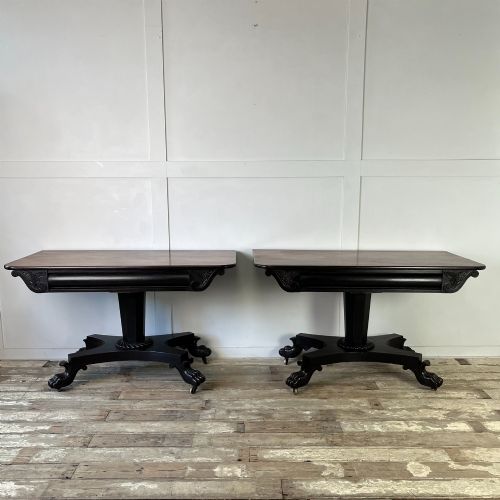


Black Ebonised Console
A black ebonised console is a dark statement surface that brings immediate drama and architectural weight to a hallway or drawing room.
Black Ebonised Console
When you search for a black ebonised console, you are looking at dark, polished tables designed to stand flat against a wall or float as a centrepiece in a room.
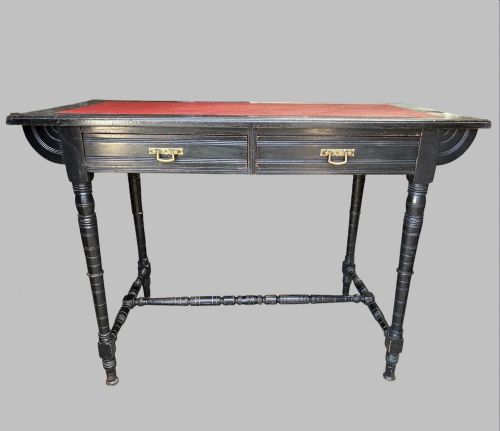
The pieces on this page span the nineteenth century, taking in Regency, Victorian, and Aesthetic Movement forms alongside continental styles.
You will encounter console tables, side tables, and writing desks sharing a dark finished wood surface, often enriched with contrasting brass or marquetry.
How they were made
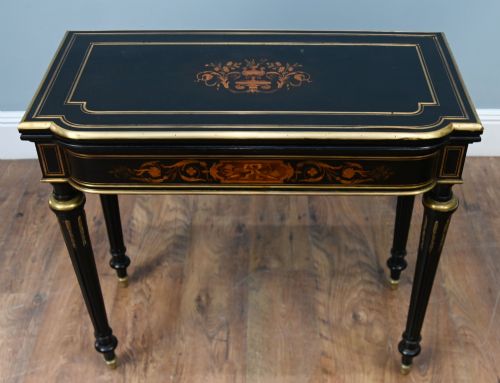
Carpeneters used timbers such as mahogany, ebony, or satinwood, applying a dense black ebonising finish to mimic the weight and cost of solid ebony.
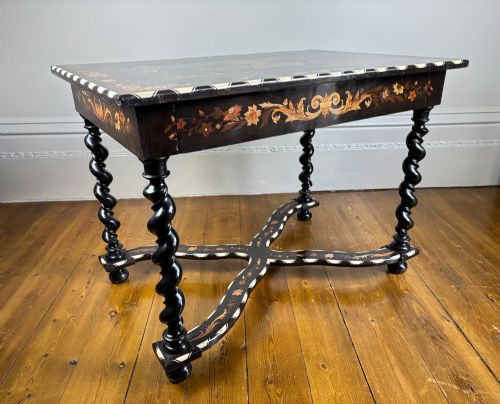
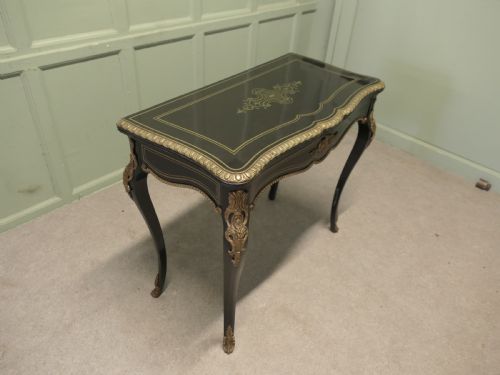
Surface ornament relied on meticulous brass inlay, giltwood highlights, and parcel gilding to catch the light against the dark ground.
Inlaid bone, burr thuya, and ormolu mounts were added to elevate specific writing and games tables.
One listed table carries the coat of arms for the Clifton family of Lytham Hall, adding a touch of country house provenance.
What varies in quality
Quality rests in the depth of the ebonised finish and the precision of the brass or marquetry inlay set into the timber.
Subtlety of carved details and the integration of secondary woods like satinwood or mahogany separate standard workshop production from finer studio pieces.
The crispness of ormolu mounts and the stability of joint work determine how well a console has aged through the decades.
Jenks & Woods·Henri Dasson
The Black Ebonised Console Glossary
- Ebonised
- Wood treated with stain, paint, or polish to imitate the deep black appearance of ebony.
- Ormolu
- Gilded bronze mounts applied as decorative accents to furniture frames and legs.
- Marquetry
- Decorative patterns formed by inserting pieces of contrasting wood, bone, or brass into a veneered surface.
- Demi-lune
- A half-moon shape, typically describing a console table designed to fit flush against a wall.
- Parcel gilt
- Portions of an object highlighted with thin layers of gold leaf over the dark ground.
Black Ebonised Console: Frequently Asked Questions
Where should I place a console table?
Console tables sit comfortably in entrance halls, narrow corridors, or against living room walls beneath a mirror or painting. Their flat backs allow them to anchor a space without projecting too far into the room.
Because many examples function as writing or side tables, they also adapt well to quiet corners or studies where surface space is needed.
How do I clean ebonised wood?
Dust ebonised surfaces regularly with a soft, dry cloth to prevent particles from settling into the grain or dulling the polish. Avoid harsh chemical sprays or excess water.
If the finish requires nourishment, apply a sparing amount of appropriate wax polish and buff gently with a clean cloth.
Are these tables sturdy enough for daily use?
Nineteenth-century console and writing tables were built to support books, lamps, and decorative objects. Their structural integrity depends on the original joinery and how well they have been maintained.
While robust, heavy leaning or overloading should be avoided, particularly on delicate demi-lune or inlaid card tables.
What is the Aesthetic Movement style?
The Aesthetic Movement emerged in the late nineteenth century, promoting art for art's sake and clean, often Japanese-inspired lines. Furniture from this period favours ebonised surfaces with minimal gilding.
These pieces prioritise form and tonal harmony over heavy Victorian ornamentation, making them distinct from earlier revival styles.