
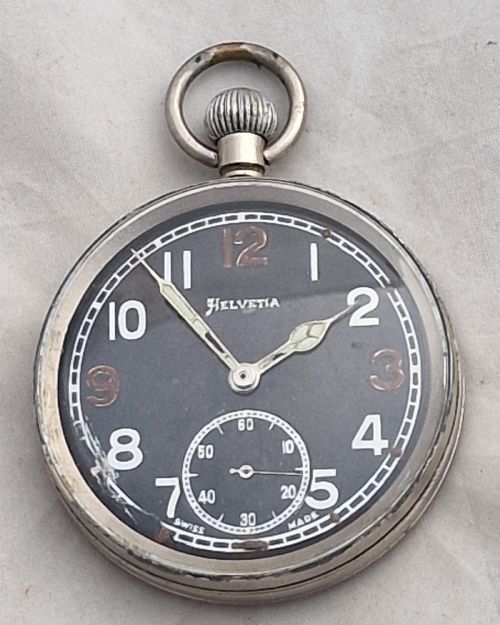


Black Dial Pocket Watch
A black dial pocket watch is a rugged utility piece built for readability, making it a distinct choice for collectors of mid-century military kit.
What these pieces are
When searching for a black dial pocket watch, collectors encounter robust military and naval timepieces from the early to mid-twentieth century. The selection typically includes pieces from the nineteen-forties alongside earlier examples from the nineteen-fourteen period.
The dominant aesthetic across these items is mid-century military, reflecting their origins as issued equipment for armed forces and naval artillery units. These forms prioritise functional legibility over ornamental design, featuring stark dark faces designed to reduce glare in the field.
How they were made
The casings of these watches utilise durable industrial metals such as nickel, chrome, and steel to withstand harsh operational environments. Each piece incorporates fitted glass crystals to protect the dark dials beneath.
Manufacturing methods focus on precision timekeeping and mechanical resilience, often integrating chronograph functions for specialist artillery use. The construction relies on sturdy metal housings designed to protect the internal movements from dust and moisture.
What varies in quality
Quality differences often hinge on the specific military branch or service issue, with specialised naval artillery chronographs representing a higher technical tier than standard issue pieces. The precision of the movement and the complexity of complications separate standard utility items from top-tier instruments.
Preservation of the original components, from the casing metals to the legibility of the dark face, dictates the standing of an individual piece. Original military markings and issue numbers further elevate the authenticity and historical value of the watch.
Helvetia·Williamson
The Black Dial Pocket Watch Glossary
- Chronograph
- A watch with a display function for elapsed time, often used in artillery timing. This mechanism allows the user to measure specific intervals.
- Kriegsmarine
- The naval warfare branch of the German armed forces during the mid-twentieth century. Pieces issued to this service carry specific military markings.
- Nickel
- A silvery-white metal utilised for robust watch casings. It offers strong resistance to corrosion in field conditions.
- Military watch
- A timepiece issued directly to armed forces personnel for operational use. These items adhere to strict government service specifications.
Frequently Asked Questions
Why did military watches have dark faces?
A black dial pocket watch reduced unwanted light reflections during active military operations. This design choice ensured that personnel could check the time without revealing their position.
Dark faces also provided higher contrast against white hands and numerals under low-light conditions. Military specifications prioritised this practical legibility above all decorative concerns.
What is a naval artillery pocket watch?
These specialised timepieces were issued to naval gunnery units for precise operational timing. They frequently incorporated chronograph complications to calculate firing distances and speeds.
Such watches required higher mechanical precision than standard infantry issues. Their robust steel or chrome housings protected the complex inner movements from sea air and heavy shocks.
How do I date a military pocket watch?
Dating relies on service issue numbers, maker signatures, and distinct casing styles from specific eras. Pieces from the nineteen-forties often feature stark utilitarian markings unique to wartime production.
Archival records for makers like Williamson and Helvetia help narrow down the year of manufacture. Examining the movement serial numbers inside the back cover provides further chronological evidence.
Are these watches suitable for daily wear?
While built for rugged service, these vintage pieces require careful handling compared to modern timepieces. Their mechanical movements and glass crystals lack contemporary shockproofing and water resistance.
Collectors generally wear them on special occasions or display them as historical artefacts. Regular servicing by a specialist ensures the delicate internal gears continue to function accurately.