



Black Chinoiserie Lamp
A black chinoiserie lamp brings depth and narrative decoration to a room through painted motifs upon a dark lacquered surface.
Black Chinoiserie Lamp
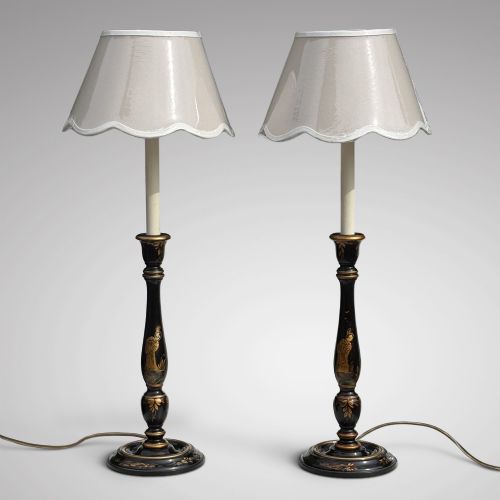
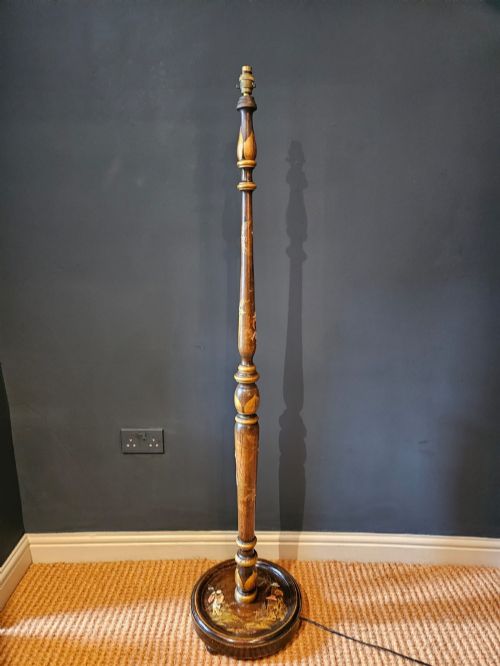
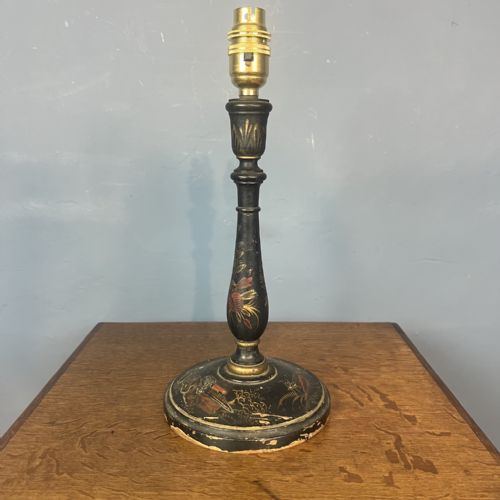
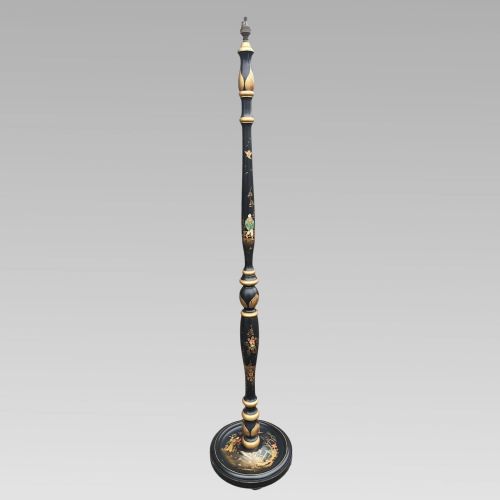
A black chinoiserie lamp stands as a distinct piece of decorative lighting, most frequently encountered in floor-standing standard lamp forms or compact table versions dating from the Edwardian period and the 1920s and 1930s. These fixtures adapt traditional decorative aesthetics onto functional home illumination, using dark lacquered wooden bodies to showcase orientalist painted scenes.
The selection ranges from tall floor standards intended for corner placement to smaller occasional pieces designed for tabletops. Many examples incorporate painted figural or landscape details in gold, gilt paint, and red tones upon the black ground, reflecting broader periods of revival interest in nineteenth and early twentieth-century British interiors.
How they were made
Construction relies primarily on wood turned or shaped into standards and table bodies, finished with layered black lacquer or japanning. Artisans applied successive coats of dark finish before executing detailed surface painting, often utilising gilt or gold leaf alongside contrasting hues like red to define the ornamental motifs.
Many survivors show adaptation over time, particularly electrical rewiring to meet modern safety standards while retaining the original wooden structures, fabric components, and hand-painted or silk shades recorded in the archive.
Listings demonstrate that these lamps span the Edwardian era, the 1920s, and the 1930s, constructed predominantly from lacquered wood with fabric shades.
What varies in quality
Quality rests upon the crispness of the hand-painted decoration and the depth of the lacquered finish on the wooden body. Finer examples display meticulous brushwork with sharp detail in the gilt and polychrome scenes, whereas lesser pieces show simplified or faded ornamentation.
The structural integrity of the turned timber and the originality of the decorative surface further distinguish superior pieces. Those retaining intact black, red, and gold schemes without heavy modern intervention command stronger interest.
The Black Chinoiserie Lamp Glossary
- Chinoiserie
- European artistic style reflecting Chinese motifs and decorative techniques. It appears frequently on furniture and lighting from the eighteenth through the early twentieth century.
- Japanning
- European imitation of East Asian lacquerwork using hard varnishes and heat drying. This technique created the glossy dark surfaces seen on standard and table lamps.
- Standard Lamp
- A tall floor-standing lamp designed to illuminate a room from a fixed vertical position. These items often feature heavy bases for stability.
- Toleware
- Painted or enamelled sheet metal utilised for decorative vessels and lamp bodies. It provides a smooth metallic ground for dark lacquer finishes.
Black Chinoiserie Lamp: Frequently Asked Questions
How do I date a black chinoiserie lamp?
Dating relies upon examining the turned form of the wooden standard, the wiring methods, and the style of the lacquer decoration. Edwardian and 1920s examples often feature specific turned profiles and distinct hand-painted gilt motifs.
Earlier nineteenth-century pieces display heavier timber construction and different ageing patterns in the lacquer finish. Comparing the surface wear and construction details helps clarify the period of manufacture.
Where should I place a standard lamp?
A standard lamp works best in corners or beside seating areas where the height can provide ambient downward light. The tall vertical form makes use of unallocated vertical space in a room.
Ensuring stability is important when positioning taller floor pieces, particularly on wooden flooring or rugs. Pairing them with side tables creates a cohesive arrangement within a period interior.
Are these lamps rewired for modern use?
Many surviving lamps receive updated internal wiring to comply with current safety standards while preserving the exterior aesthetic. This allows historical wooden bodies to function safely in contemporary homes.
Buyers should inspect the lampholder and flex to confirm the standard of any recent electrical updates. Original components are sometimes retained for display value rather than active use.
How do I care for lacquered wood?
Maintenance requires gentle dusting with a soft, dry cloth to protect the delicate surface layer of lacquer or japanning. Moisture and direct sunlight should be avoided to prevent fading of the painted gold and red details.
Harsh chemical polishes can damage the vintage finish, so minimal intervention is recommended. Keeping the pieces away from extreme temperature fluctuations preserves the integrity of the wood and lacquer.