
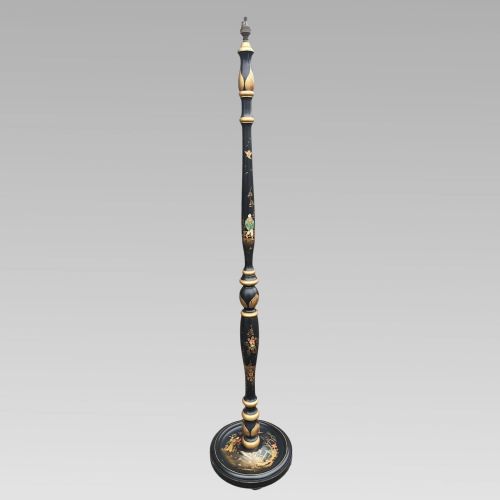


Traditional Black Lacquer Lamp
These traditional black lacquer lamp designs bring rich hand-painted detail and depth to a room through centuries-old decorative traditions.
Traditional Black Lacquer Lamp
A traditional black lacquer lamp combines functional illumination with decorative artistry, appearing across table and standard floor-standing formats. The pieces on this page span the Victorian and Edwardian eras through to the 1920s and 1930s.
Most examples follow Chinoiserie or Anglo-Indian aesthetics, featuring dark surfaces adorned with hand-painted motifs. Buyers frequently encounter floor-standing standard lamps alongside smaller table lamps designed for side placement.
How traditional black lacquer lamp bodies were constructed
Construction relies on wood and papier-mâché substrates built up with layers of lacquer to create a deep, glossy dark finish. Artisans then apply paint, gilt, and gold leaf details by hand.
Metal components such as brass appear in mountings and fittings, while fabric shades often complete the standard lamp and table lamp configurations.
Materials recorded across the selection include brass, wood, lacquer, fabric, gilt, gold leaf, and papier-mâché.
What separates fine examples from standard ones
Quality rests in the precision and complexity of the hand-painted decoration across the lacquer surface. Pieces featuring detailed Chinoiserie work and refined gilt application stand above plain finishes.
The choice of underlying material also defines the tier, with solid wood and papier-mâché bases offering greater depth than simpler alternatives.
The Traditional Black Lacquer Lamp Glossary
- Chinoiserie
- European interpretation and imitation of Chinese and East Asian artistic traditions, prominent in the decoration of these lamps. This style defines the painted motifs seen across Victorian and Edwardian examples.
- Standard Lamp
- A tall floor-standing lamp designed to illuminate a room from a vertical position. These pieces often feature painted wooden columns.
- Lacquer
- A durable resin finish applied in multiple coats to wood or papier-mâché to create a smooth, glossy protective surface. It forms the dark background for gold leaf details.
- Gold Leaf
- Hammered gold beaten into extremely thin sheets used for gilding decorative highlights. It provides the bright contrast against the dark background.
Traditional Black Lacquer Lamp: Frequently Asked Questions
How do I date a lacquer lamp?
Dating relies on examining the materials, construction methods, and stylistic cues present in the base. Victorian and Edwardian examples show distinct decorative traits compared to pieces from the 1920s and 1930s.
Examining the wiring and interior fittings also helps determine the period of manufacture, alongside the specific style of Chinoiserie painting used on the lacquer surface.
Are these lamps stable enough for daily use?
Floor-standing standard lamps and table lamps are built from sturdy wood or papier-mâché bases designed to support upright use. Many vintage examples have been rewired for modern electrical standards.
Placing them on level surfaces ensures safety, while gentle cleaning preserves the delicate painted lacquer finish over time.
What is the difference between standard lamps and table lamps?
Standard lamps are tall floor-standing pieces intended to stand directly on the floor to illuminate a wider space. Table lamps are smaller and designed to sit on furniture such as side tables.
Both formats utilise the same traditional black lacquer and Chinoiserie decorative techniques found in this collection.
How should I care for lacquered wood?
Lacquered surfaces require gentle dusting with a soft, dry cloth to prevent scratching the glossy finish. Avoid harsh chemical cleaners and keep the pieces away from direct sunlight and excessive moisture.
Proper placement ensures the gold leaf and painted details remain vibrant for years to come.