



Black Carved Desk
When you want a black carved desk, you are looking for dark timber and hand-chiselled detail that anchors a study with presence.
Black Carved Desk
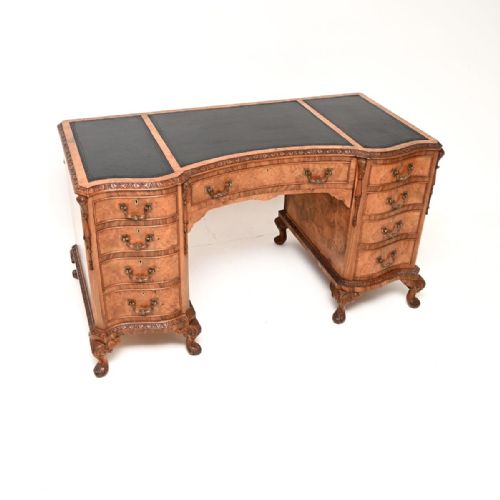
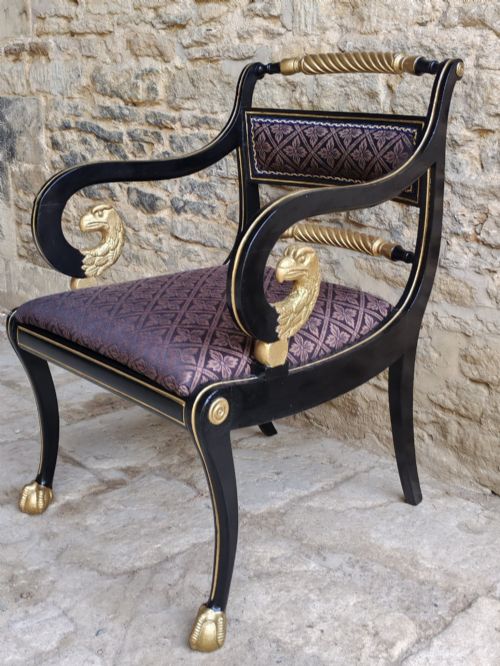
A black carved desk brings together dark woods, ebonised surfaces, and sculptural depth for a workspace with distinct character. The selection on this page draws on periods spanning the nineteenth century and the early twentieth century, incorporating styles such as Victorian, Regency, and Black Forest.
While the search term highlights desks, the evidence also captures smaller writing boxes, partners tables, and library tables alongside seating and accessories. Buyers encounter pieces fashioned from ebony, linden wood, and carved wood, reflecting both European workshops and Anglo-Indian traditions.
How they were made
Craftsmen utilised solid hardwoods like oak, walnut, and linden wood, applying deep relief carving by hand to bring out naturalistic animal and foliage motifs. Surfaces were frequently ebonised or finished with black lacquer to achieve a uniform, dark tone.
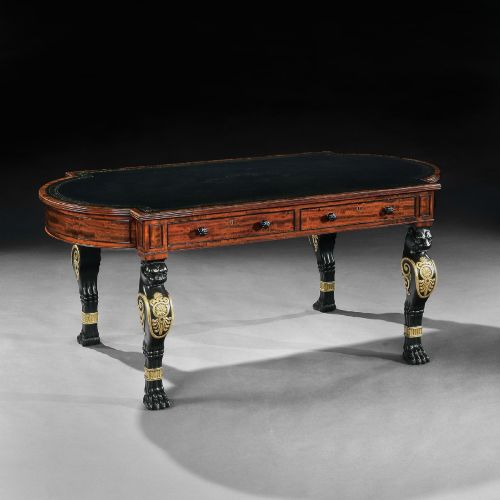
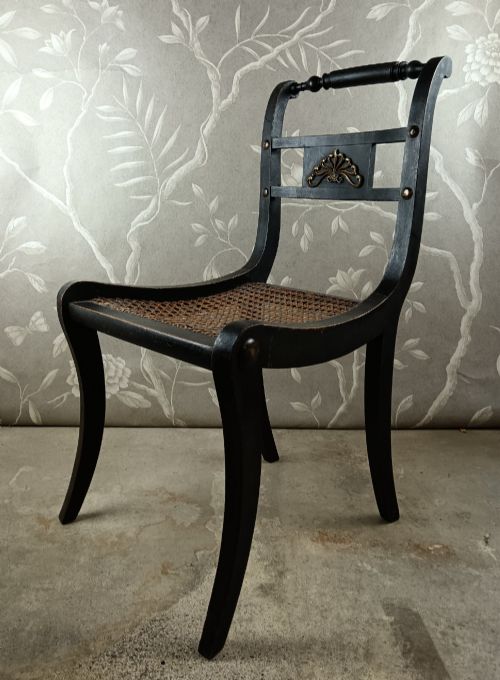
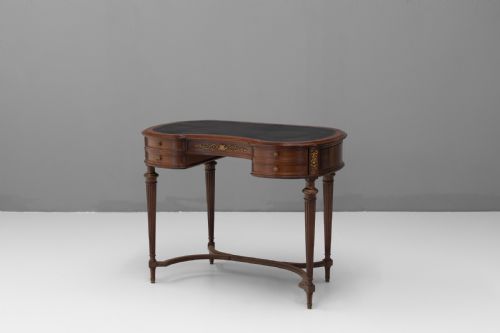
Writing surfaces often incorporate inset leather tops, while structural elements rely on traditional joinery, turned supports, and sabre legs. Details such as reeded decoration and applied mouldings add texture to the dense timber.
Black Carved Desk Retail Price Guide 2026
Typical asking prices for black carved desk among the pieces listed under this phrase on Sellingantiques today, from the lower quarter to the upper quarter. They describe what is for sale here now, not the wider market.
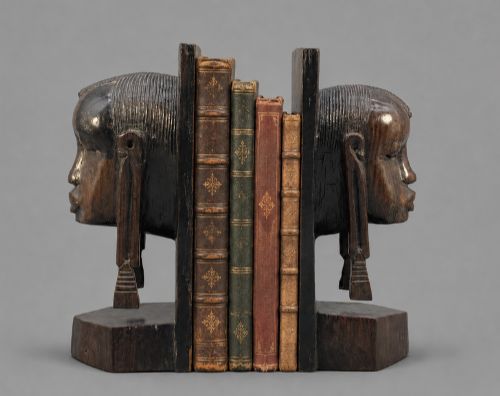
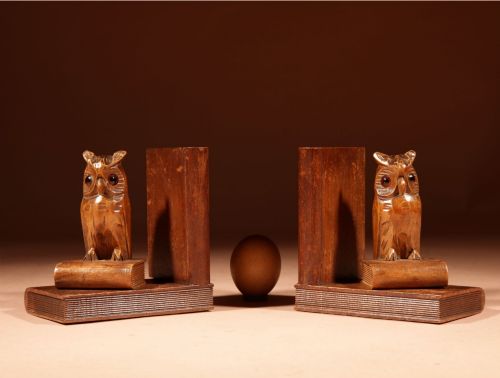
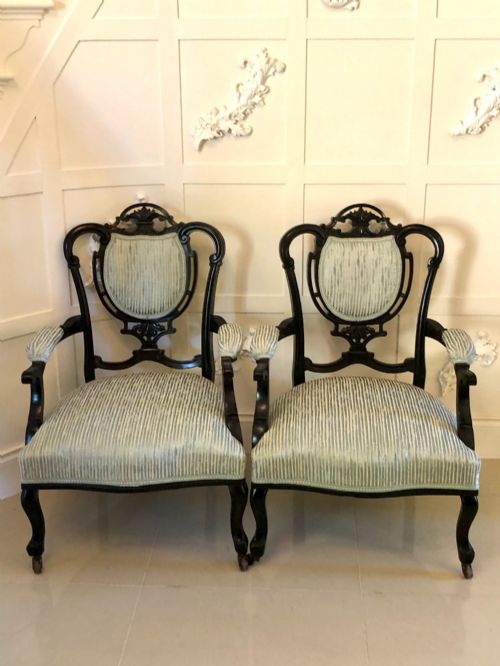
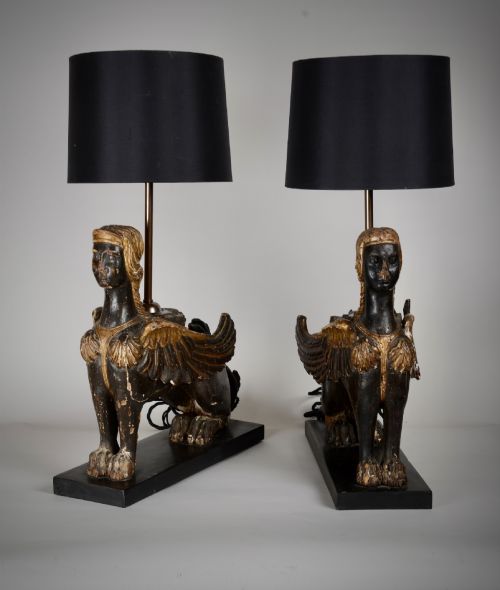
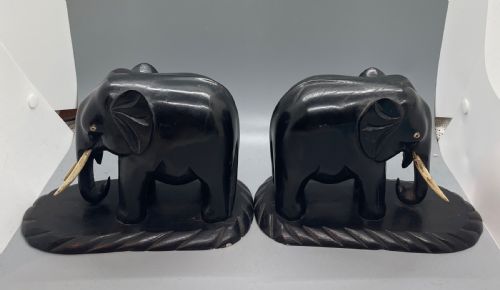
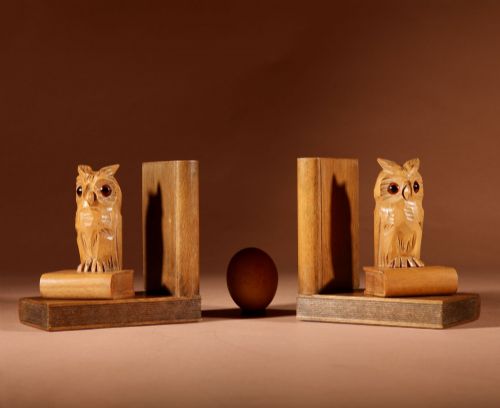
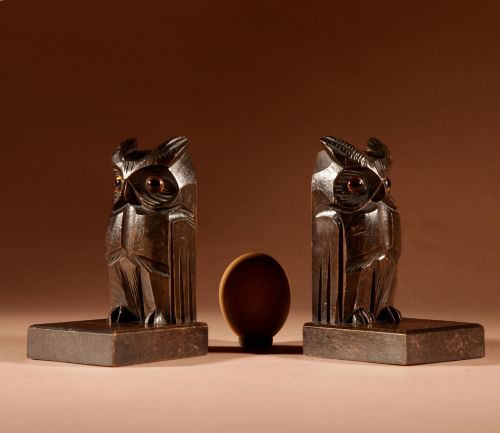
The furniture and accessories on this page include desks, armchairs, inkstands, mantel clocks, and carved bookends.
What varies in quality
The distinction between standard examples and superior pieces rests on the crispness of the hand-carved details and the depth of the timber's grain. Work from known makers or established workshops demonstrates sharper relief and more balanced proportions.
Condition of the ebonised surface and the integrity of the original wood dictate the overall standard. Pieces retaining their original leather inserts and unblemished carved elements command greater attention from collectors.
Maple and Co·Hindley and Sons·Bergen and Co·George Smith
The Black Carved Desk Glossary
- Ebonised Wood
- Timber treated with stain, dye, or polish to simulate expensive ebony. This technique was popular in the nineteenth century for achieving a sleek, dark finish on furniture.
- Partners Desk
- A large double-sided writing table designed for two people to work opposite one another. These frequently feature drawers and cupboards on both flanks.
- Linden Wood
- A pale timber favoured by Black Forest carvers for its softness and fine grain. It accepts intricate, deep-relief chisel work without splitting.
- Writing Box
- A portable slant-topped or flat box containing compartments for ink, pens, and paper. They were essential for correspondence before fitted studies became standard.
Black Carved Desk: Frequently Asked Questions
How do I care for a carved wooden desk?
Dust regularly with a soft, dry brush to prevent dirt from settling in the recesses of the carving. Avoid chemical polishes that can build up in the textured grain.
Keep the piece away from direct sunlight and heat sources to prevent the timber from drying out and splitting over time. Feed the wood occasionally with a suitable wax to maintain its lustre.
Where were Black Forest carvings made?
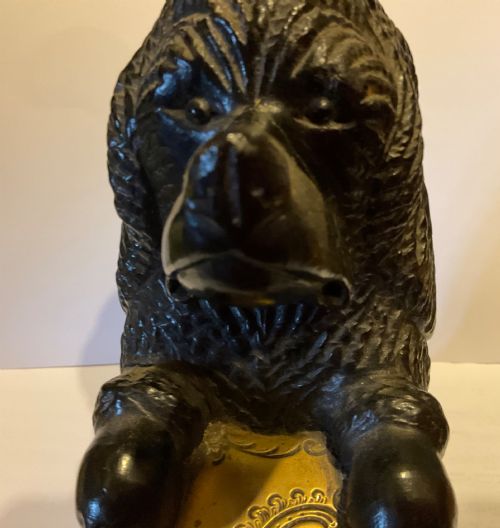
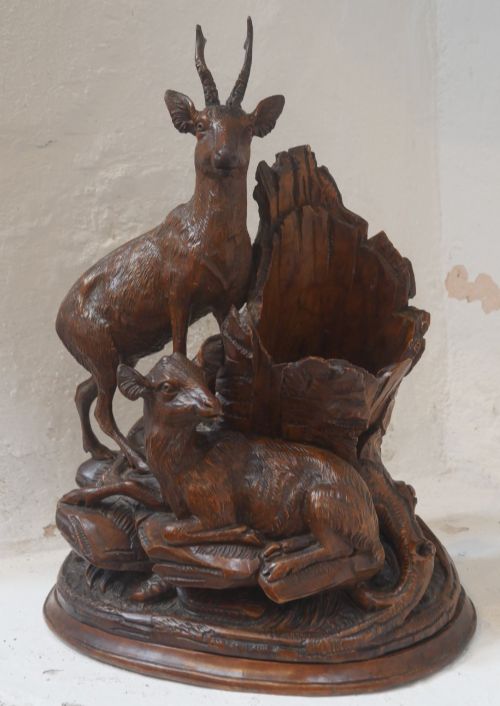
Black Forest carvings originated in the mountainous regions of Switzerland and Germany, particularly around Brienz. Local woodcarvers produced animal figures, clocks, and desk accessories for travellers.
These pieces often depict bears, dogs, owls, and forest foliage, carved from linden wood or walnut. The tradition flourished through the nineteenth and early twentieth centuries.
What is a partners desk used for?
A partners desk provides workspace on both sides, allowing two people to sit opposite each other. They were traditionally used by business partners, bankers, or spouses sharing a study.
These large desks typically include banks of drawers and cabinets accessible from both seating positions, making them central furniture pieces in large rooms.
How can I date a nineteenth century desk?
Examine the construction methods, secondary woods used in drawer linings, and the style of the hardware. Hand-cut dovetails and patinated timber surfaces often indicate nineteenth-century or earlier origins.
Compare the decorative motifs, such as Gothic revival tracery or Regency reeding, with known period styles. Makers' stamps or signatures inside drawers can also provide specific chronological markers.