


Black Brass Table Clock
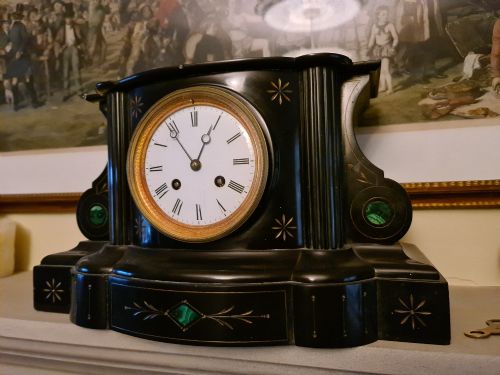
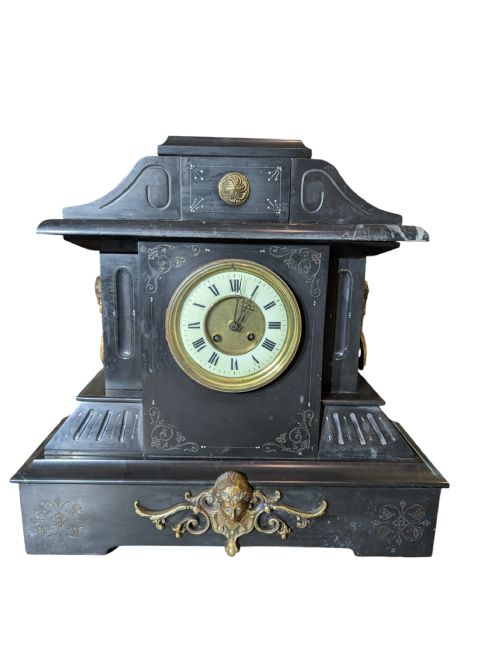
A black brass table clock brings a striking architectural presence to a room, combining dark stone or ebonised timber with bright metallic mounts.
Black Brass Table Clock
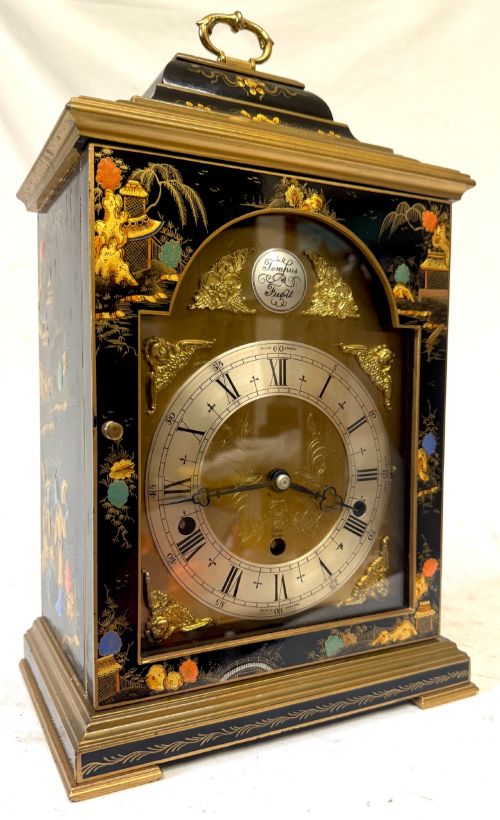
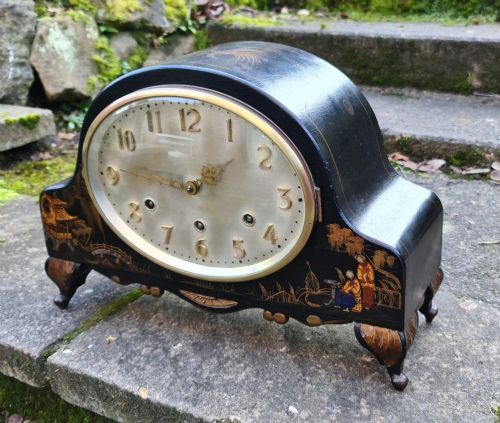
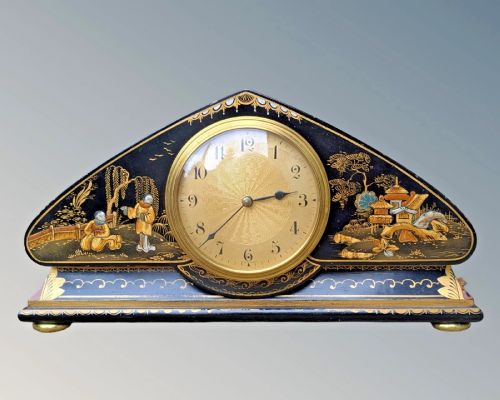
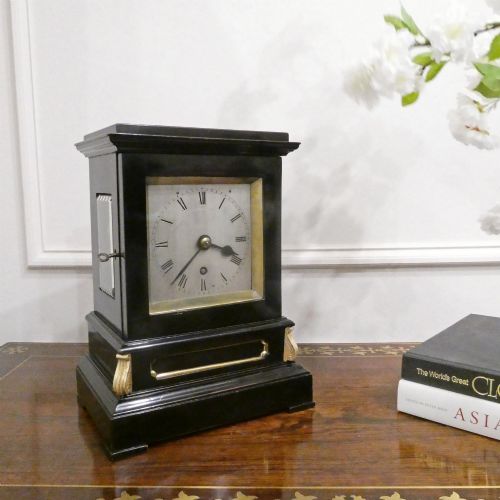
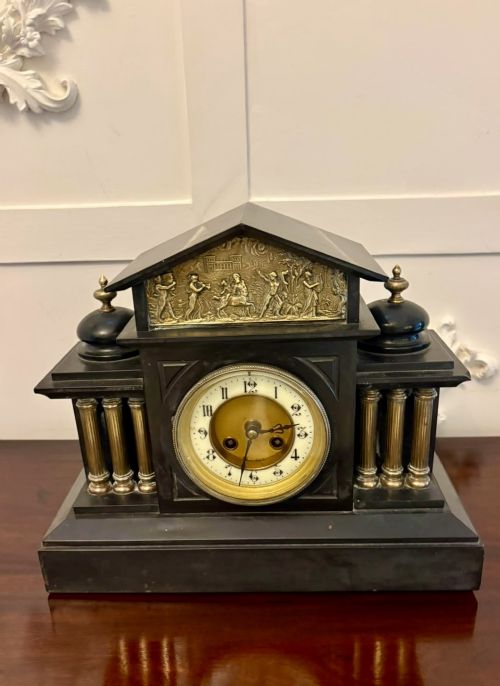
A black brass table clock encompasses everything from Georgian bracket clocks in ebonised cases to robust Victorian architectural marble timepieces and later Chinoiserie lacquered designs.
The selections encountered here frequently date from the nineteenth century, drawing heavily on Regency, Victorian, and classical revival styles.
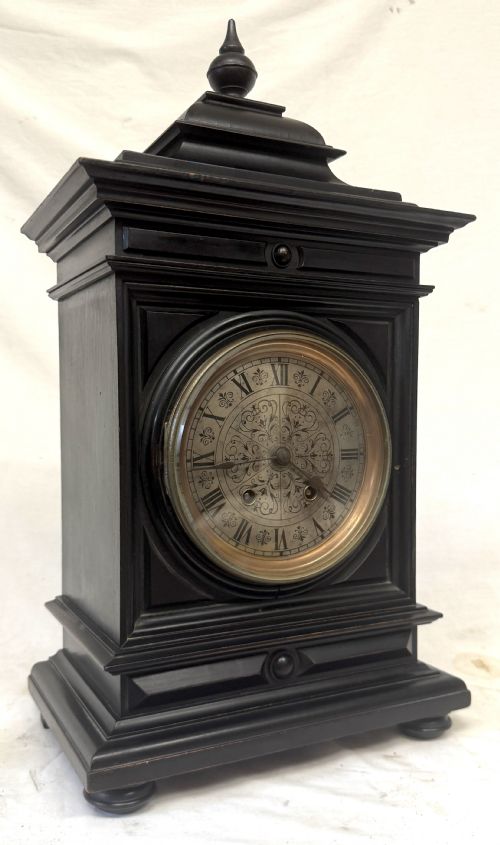
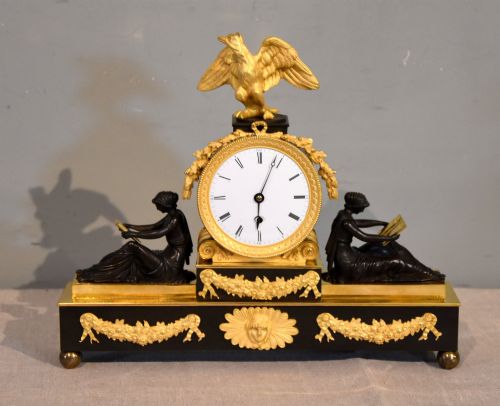
Makers housed these movements in sturdy cases of black slate, marble, and ebonised wood, accented by cast brass or ormolu mounts.
Materials and technique
Cased in heavy black slate, marble, or ebonised wood, these timepieces rely on dense materials to stabilise intricate mechanical movements.
Gilt brass, ormolu, and silvered dials provide crisp contrast against the dark body, often complemented by hand-painted Chinoiserie lacquer or marquetry inlay.
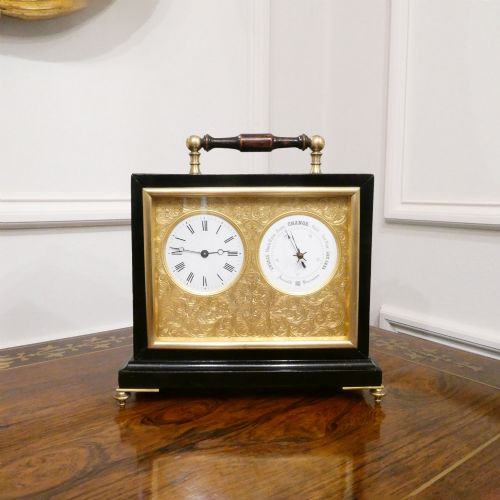
Some nineteenth-century industrial desk timepieces disguised ticking mechanical hearts inside miniature nautical machinery.
Separating top from bottom
Quality rests in the precision of the brass movement and the crispness of the cast mounts, where sharp chiselling distinguishes superior workshops from standard production.
The selection of the stone or wood casing also dictates worth, with solid black marble or finely figured ebonised timber holding greater substance than faux-finished alternatives.
Lenzkirch·Philippes Paris·John Witherston of Hereford·William Speakman·Henry Jones·Louis Recordon·Richard Rooker·Payne and Co·Jaeger LeCoultre
The Black Brass Table Clock Glossary
- Fusee
- A conical pulley used in older spring-driven clocks to maintain equal power as the mainspring unwinds. This mechanism ensures more accurate timekeeping throughout the running period.
- Bracket clock
- A portable table clock designed originally to sit on a wall bracket or table. Many retain their matching wall brackets from earlier centuries.
- Ormolu
- Gilt bronze mounted onto the clock case for decorative effect. The technique involves applying a mercury and gold amalgam to heated bronze.
- Ebonised wood
- Timber stained or painted to imitate ebony. This treatment gives a deep black finish popular across various nineteenth-century styles.
- Chinoiserie
- European decorative art imitating Chinese artistic traditions. These cases display hand-lacquered Oriental scenes on dark backgrounds.
Black Brass Table Clock: Frequently Asked Questions
Where should I place a heavy marble clock?
Position the clock on a sturdy, level piece of furniture such as a sideboard or mantelpiece capable of supporting substantial weight. A level surface keeps the pendulum swinging evenly.
Avoid placing the clock in direct sunlight or near active heat sources which can dry out internal oils and affect the case materials.
How do I tell a Regency clock from a Victorian one?
Regency pieces often display restrained classical lines with fine brass inlay and delicate mounts inspired by ancient Greek and Roman designs. They favour elegant proportions and understated ebonised or mahogany cases.
Victorian examples tend to be larger and heavier, particularly the architectural marble and slate models, often incorporating bolder bronze mounts and busier dial surrounds.
What is an ebonised case?
An ebonised case is made from a secondary timber like pear or beech that has been heavily stained and polished to resemble solid ebony. This technique achieved a rich, light-absorbing black surface.
Makers utilised this method to highlight bright brass dials and gilded ormolu mounts without the extreme cost of solid exotic hardwoods.