

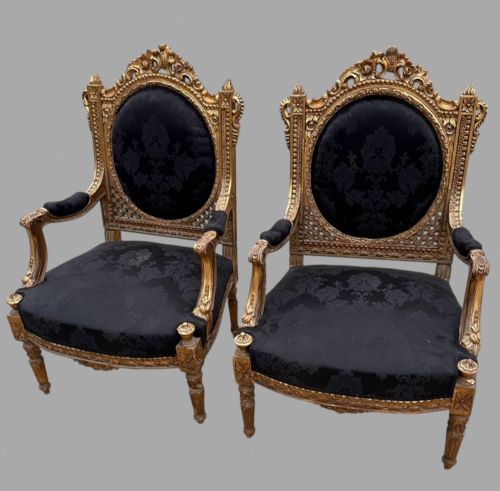

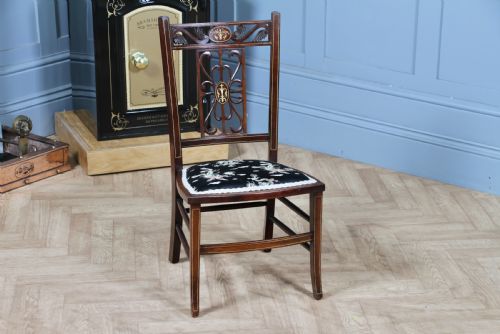


Black Salon Chairs
These black antique salon chairs bring dark, elegant presence and refined seating to a room.
Black Salon Chairs
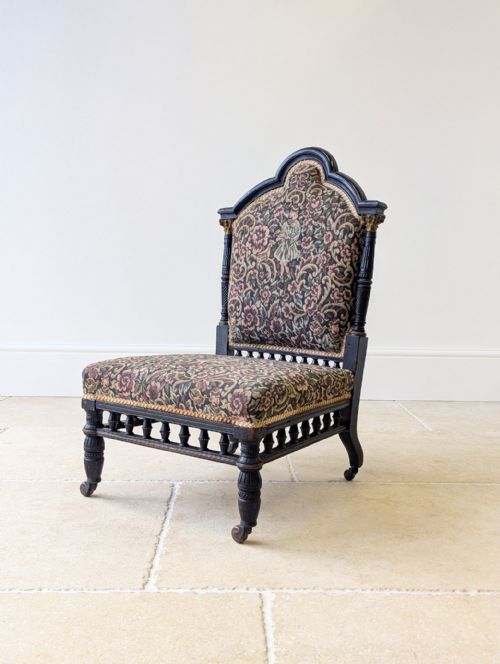
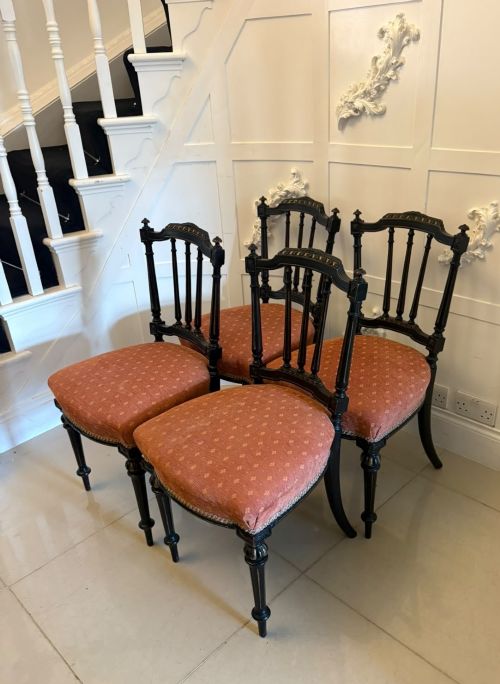
Black antique salon chairs encompass seating designed for formal entertaining and parlour use during the Victorian and Edwardian eras. The listings feature low salon chairs, armchairs, side chairs, and occasional seating originating from the nineteenth century.
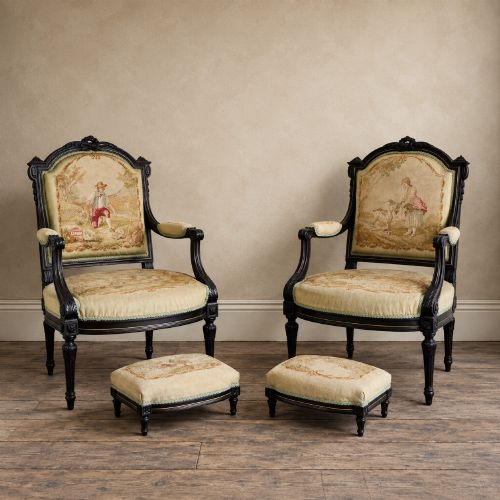
Most examples encountered here date from the Victorian period around eighteen-eighty, showcasing ebonised timber finishes designed to imitate costly exotic hardwoods like ebony. These chairs often appear in matching pairs or larger sets intended for drawing rooms.
Makers drew on various aesthetic influences, yielding forms from Aesthetic Movement designs to Louis XVI Revival and French chateau styles. Buyers frequently select these pieces for their compact footprints and decorative carved details.
Materials and construction
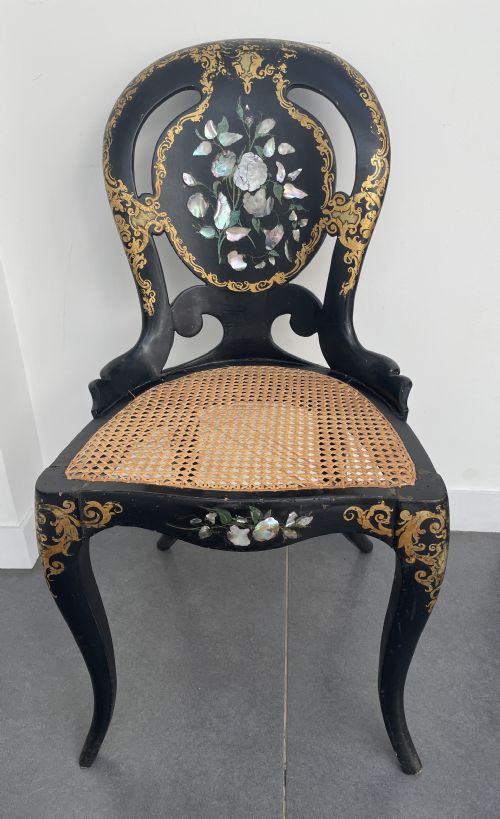
Makers predominantly utilised ebonised wood, applying dark finishes to domestic timbers to achieve a uniform black surface that suited formal interiors. Gilt highlights, brass fittings, and inlaid mother of pearl frequently decorated the frames.
Upholstery formed a central part of the construction, employing traditional fabrics, silk, and tapestry to provide comfortable seating. Carved wooden frames relied on period joinery techniques to support the upholstered backs and seats.
Listings feature ebonised wood, gilt, and mother of pearl across Victorian and Edwardian periods.
Assessing quality
Quality differentiates itself through the crispness of the carved ornamentation and the precision of inlaid details such as mother of pearl. Superior examples display balanced proportions and robust joinery that has survived decades of domestic use.
The sophistication of the stylistic revival, whether Louis XVI or Aesthetic Movement, dictates the refinement of the piece. Intact period upholstery or harmonious fabric choices elevate the overall integrity of the chair.
The Black Salon Chairs Glossary
- Ebonised
- Wood treated with stain or paint to resemble natural ebony. This finish became immensely popular during the Victorian period for formal parlour furniture.
- Salon chair
- A light, decorative seat made for formal reception rooms. These chairs prioritised elegant aesthetics and ease of movement over heavy lounging.
- Aesthetic Movement
- A late nineteenth-century design style emphasising visual beauty above narrative or moral themes. Pieces from this movement often feature stylised ornamentation and ebonised surfaces.
- Louis XVI Revival
- A nineteenth-century style drawing inspiration from French neoclassical design. These chairs typically display straight tapered legs and classical decorative motifs.
Black Salon Chairs: Frequently Asked Questions
What rooms suit black antique salon chairs?
These chairs fit naturally into drawing rooms, bedrooms, and studies where a touch of dark period elegance is desired. Their compact dimensions make them practical for smaller spaces as occasional seating.
They pair well with both traditional and contemporary interiors, acting as striking focal points against lighter walls. The ebonised finish coordinates easily with various colour schemes.
How do I date a salon chair?
Dating relies on examining the timber preparation, the style of the carved details, and the overall structural form. Victorian examples often show ebonised beech or walnut alongside characteristic nineteenth-century revival motifs.
Comparing the construction methods to known period pieces helps confirm the era of manufacture. Subtle shifts in decorative taste between the eighteen-seventies and Edwardian periods provide further clues.
Were these chairs used for dining?
While the majority of salon chairs were designed for entertaining and parlour seating, some listings include ebonised dining chairs intended for formal meals. Salon chairs themselves generally feature lower profiles and decorative backs unsuited to heavy dining use.
Dining variants offer sturdier frames built to withstand regular movement around a table. Checking the height and back construction clarifies the intended historical function.
How should I care for ebonised wood?
Ebonised surfaces require gentle dusting with a soft, dry cloth to prevent the accumulation of grit. Avoid harsh chemical cleaners or silicone polishes that can degrade the dark finish over time.
Maintaining stable room humidity protects both the timber substrate and any delicate mother of pearl inlay. Periodic waxing with a suitable antique formula helps preserve the sheen.