




Birmingham Silver Enamel
Birmingham silver enamel items combine sterling silver mounts with vitreous glass coatings, offering vibrant decorative utility for collectors.
Birmingham Silver Enamel
When searching for birmingham silver enamel, buyers encounter functional accessories and vanity items originating from the Midlands assay office. The selection spans Victorian, Edwardian, and Art Deco periods, extending into mid-century British production.
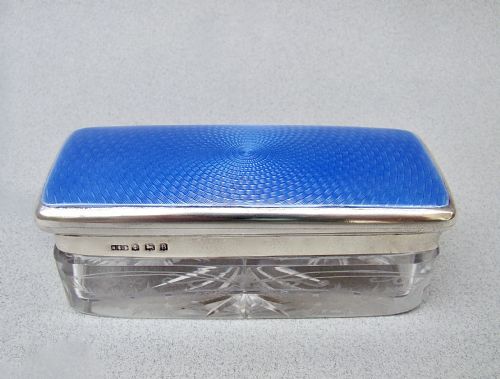
Powder compacts, dressing table jars, vesta cases, and scent bottles form the core of the available inventory. These pieces utilise sterling silver structures paired with coloured enamel panels, often decorated with engine-turned geometric patterns.
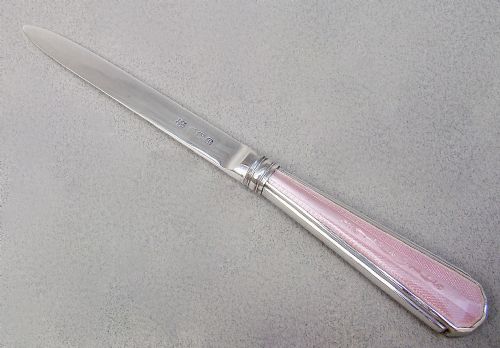
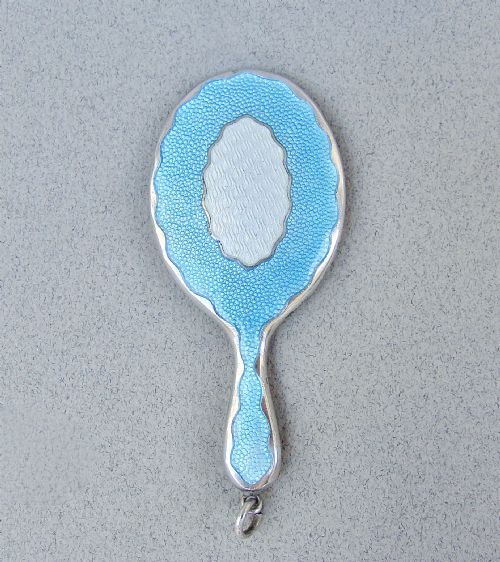
Examples range from miniature purse mirrors and letter openers to desk inkwells and trinket boxes. The output reflects shifting design sensibilities from ornate floral motifs to streamlined twentieth-century styling.
How They Were Made
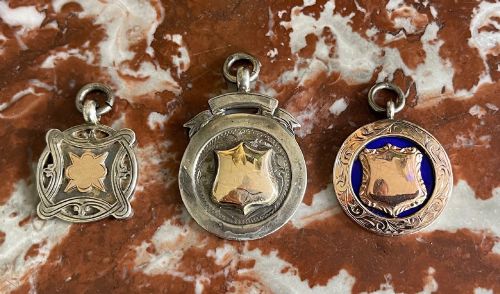
Silversmiths formed the structural housings, boxes, and mounts from sterling silver, hallmarked at the Birmingham assay office. Glass components such as cranberry, Bristol blue, and frosted vessels frequently integrated directly with the metalwork.
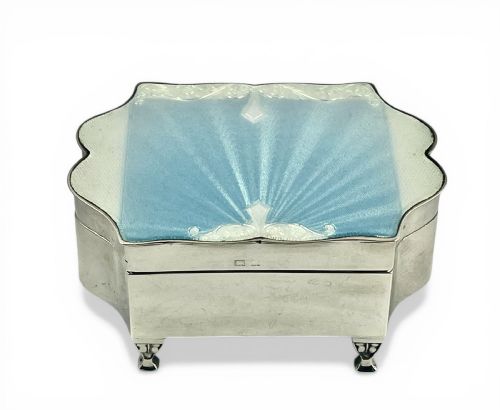
Vitreous enamel was applied to the silver surfaces in powdered form and fired in a kiln to fuse the glass to the metal base. Guilloche enamel required a mechanical lathe to engrave precise repeating patterns beneath translucent coloured coatings.
Listings span the Victorian, Edwardian, and Art Deco eras, utilising sterling silver, glass, and guilloche enamel across vanity jars and vesta cases.
What Varies in Quality
The precision of the engine-turned guilloche engraving dictates the visual depth of the enamel layer beneath the translucent glaze. Sharper, deeper machine cuts reflect light more uniformly across coloured panels than shallow or worn patterns.
The complexity of the object type and the identity of the maker influence the standing of individual pieces within the market. Specialised novelty forms and items bearing recognised silversmith marks demonstrate superior execution in both metal assembly and enamel vitrification.
Henry Clifford Davis·The Barker Brothers·Henry Williamson·Broadway And Co·Henry Matthews·Henry Perkins And Sons·Thomas Lyster Mott·Saunders And Shepherd·Charles May·The Adie Brothers·Levi And Salaman·W I Broadway And Co·A Scott·Synyer And Beddoes·Crisford And Norris·James Deakin And Sons·Greenberg And Co·Alexander Clark·Kimberley And Hewitt Ltd·Walker And Hall·Turner And Simpson·Horton And Allday
The Birmingham Silver Enamel Glossary
- Guilloche Enamel
- A decorative technique where a mechanical lathe etches precise geometric patterns into metal before applying translucent enamel. This method allows light to pass through the coloured glass and reflect off the worked surface beneath.
- Vitreous Enamel
- A material made by fusing powdered glass to a substrate through firing at high temperatures. The resulting compound provides a durable, glossy coloured coating on silver items.
- Vesta Case
- A small pocket box designed to hold matches, typically fitted with a striking strip on the base. Birmingham silversmiths frequently decorated the front panels of these cases with enamel motifs.
- Capstan Inkwell
- A desk accessory shaped like a nautical capstan, featuring a wide circular base tapering toward the top. Enamel medallions are commonly inset into the hinged silver lids of these pieces.
- Hallmark
- An official stamp applied by an assay office to indicate the metal purity, origin city, and date of manufacture. Birmingham items display the anchor symbol alongside standard sterling indicators.
Birmingham Silver Enamel: Frequently Asked Questions
How do I date Birmingham silver enamel?
Dating relies on the standard assay office marks stamped into the sterling silver mounts. Birmingham items feature an anchor symbol alongside date letters that correspond to specific years of production.
Style periods also provide broad indicators, shifting from ornate Victorian and Edwardian flora to geometric Art Deco designs and later mid-century forms.
What is guilloche enamel?
Guilloche is a decorative technique involving a mechanical lathe that engraves intricate geometric patterns into the underlying metal surface. Translucent enamel is then applied over the top, allowing light to catch the engraved design.
This method creates a shimmering, dimensional effect that appears to shift as the viewing angle changes.
How were dressing table jars used?
Dressing table jars held powders, creams, and pins on Victorian and Edwardian vanity surfaces. The sterling silver lids protected the contents while adding a decorative element to the bedroom suite.
Many incorporated matching scent bottles, hair brushes, and hand mirrors to create unified sets.
How should I clean enamel items?
Enamel requires gentle maintenance using a soft cloth and mild soapy water to preserve the glass surface. Harsh silver dips must be avoided, as chemical solutions can damage or discolour the vitreous coating.
Care should be taken to dry the pieces thoroughly after cleaning to protect the underlying sterling silver mounts.