


Bird and Flower Painting
These bird and flower painting pieces bring together natural studies and decorative arts from several centuries, offering collectors striking painted porcelain, silk, and canvas works.
Bird and Flower Painting
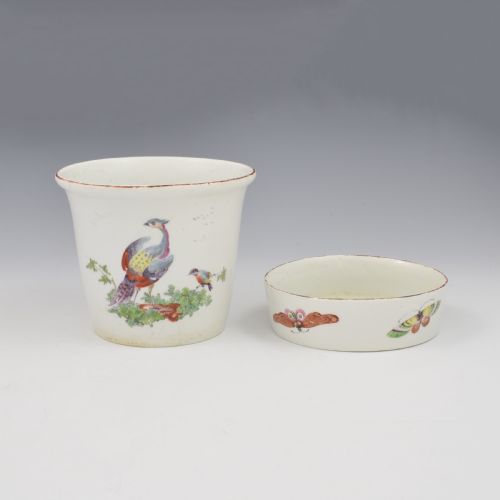
A search for bird and flower painting reveals a diverse mix of fine art and decorative objects spanning the seventeenth century to the mid-twentieth century. Buyers encounter oil paintings on canvas, delicate watercolours on paper and silk, alongside porcelain vessels and painted furniture decorated with avian and botanical motifs.
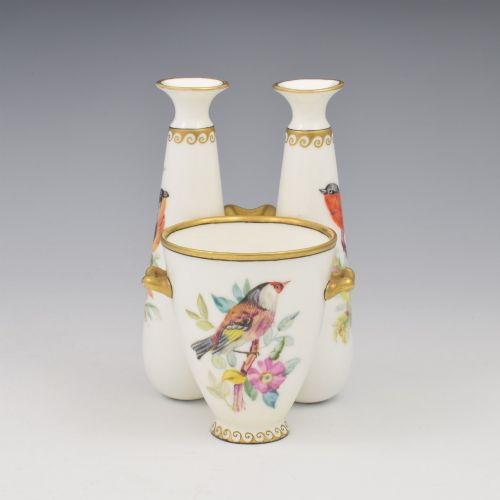
The pieces originating from East Asian traditions sit alongside European interpretations, including Chinese export ceramics, Japanese Satsuma wares, and British porcelain such as Derby and Royal Worcester. Traditional Chinese and Japanese works frequently pair birds with plum blossom or landscape elements, while European examples range from Dutch still lifes to Victorian decorative pieces.
Materials and methods
Makers utilised oil paint, watercolour, and enamel to render fine plumage and flora across canvas, paper, silk, and porcelain bodies. Gilding and gold leaf frequently highlight porcelain vessels and painted panels, adding metallic contrast to the painted pigments.
Ceramic pieces combine hand-painted enamel decoration with high-firing techniques, particularly visible in Chinese porcelain jars and Japanese Imari chargers. Textile and wood supports also appear, including painted leather screens and wooden cabinetry finished with Chinoiserie decoration.
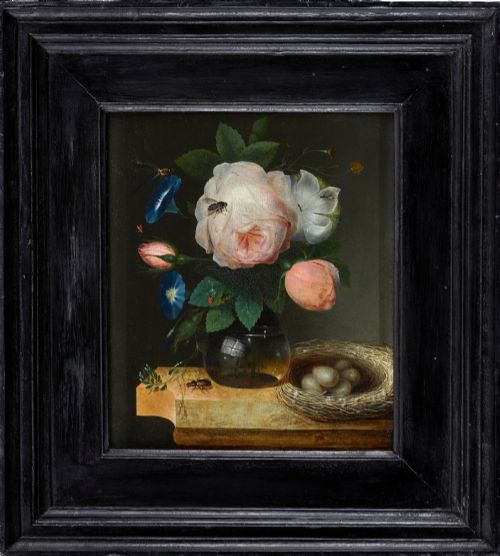
Pigeons, swifts, and unidentified nests share the canvas with classic roses and plum blossom across these historic nature studies.
Assessing quality in these works
The standard of execution in brushwork and pigment application dictates the visual success of each piece. Fine botanical accuracy and detailed feather rendering distinguish superior painted surfaces from simpler decorative output.
The preservation of the original painted surface, whether oil on canvas, enamel on porcelain, or ink on silk, determines the integrity of the object. Intact gilding and stable supports without excessive restoration maintain the original character intended by the maker.
The Bird and Flower Painting Glossary
- Chinoiserie
- European decorative style reflecting Chinese artistic influences, commonly applied to furniture, ceramics, and interior panels. This style often incorporates asymmetrical compositions of birds and flora.
- Famille rose
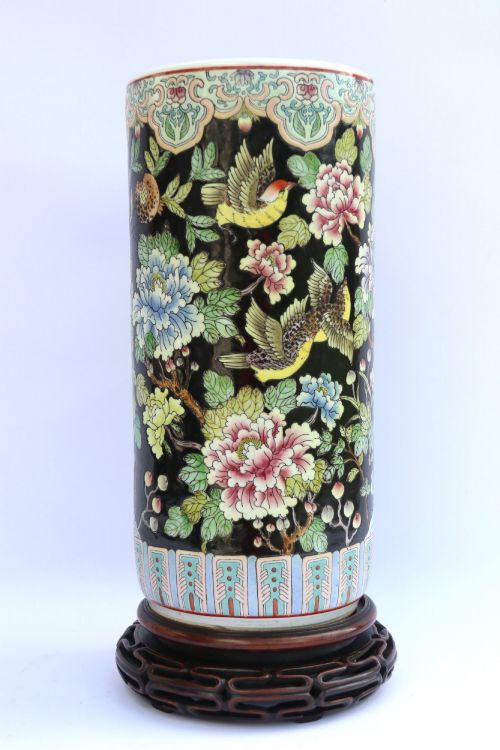
- Chinese porcelain palette dominated by opaque pink or rose enamel colours, developed during the Qing dynasty. Pieces in this group frequently depict detailed floral and avian scenes.
- Imari
- Japanese export porcelain decorated in underglaze blue, iron red, and gold. These wares often feature dense panel designs combining floral motifs with birds.
- Satsuma ware
- Japanese earthenware with a crackled ivory glaze, decorated with enamel and gilt painting. Production expanded significantly during the Meiji period for export markets.
- Still life
- Artwork depicting inanimate subject matter, typically including natural objects such as cut flowers, fruit, and nests with birds. Dutch and Flemish traditions heavily influenced this genre.
Bird and Flower Painting: Frequently Asked Questions
What periods do these pieces cover?
The available selection spans from the seventeenth century through the Victorian era up to the mid-twentieth century. Works originate from both European studios and Asian workshops.
Collectors find items reflecting distinct regional movements, including Flemish Baroque painting, Qing dynasty porcelain, and Meiji period Japanese ceramics.
What materials were used for these artworks?
Makers worked with oil paint on canvas, watercolour on paper, and ink and pigment on silk. Ceramic pieces employ porcelain and earthenware decorated with enamels and gilding.
Other surviving formats include painted leather screens, wooden furniture with Chinoiserie finishes, and canvas panels.
How do Chinese and Japanese styles differ?
Chinese pieces in this category often feature famille rose or famille noire enamels on porcelain, alongside ink and watercolour paintings on silk showing birds among plum blossom. These reflect traditional scholar painting themes.
Japanese works frequently include Imari chargers and Satsuma earthenware bowls, which combine dense geometric borders with naturalistic bird and flower studies.
How should I care for painted silk and canvas?
Works on silk, paper, and canvas require protection from direct sunlight to prevent fading of delicate watercolours and oil pigments. Maintaining stable indoor humidity prevents warping of wooden panels and degradation of textile supports.
Ceramic vessels and porcelain jars need minimal maintenance beyond gentle dusting with a soft, dry cloth.