


Big Cat Sculpture
A big cat sculpture brings the raw power of the predator into a room, rendered in bronze, marble, and carved wood.
Big Cat Sculpture
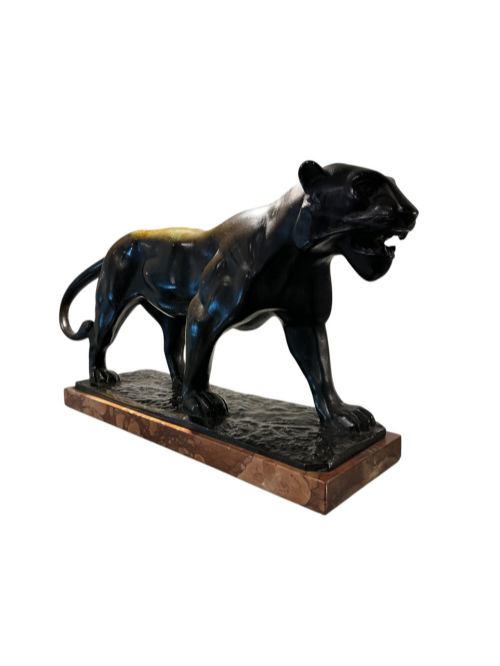
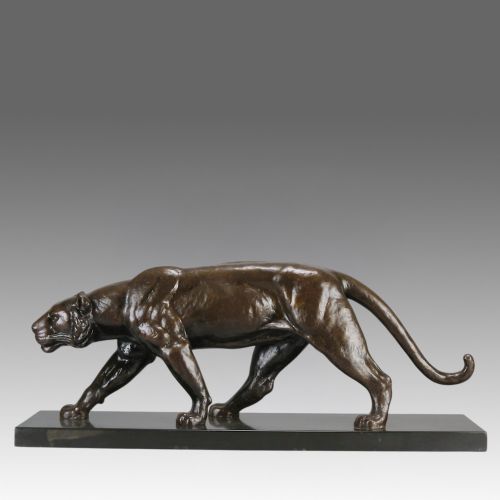
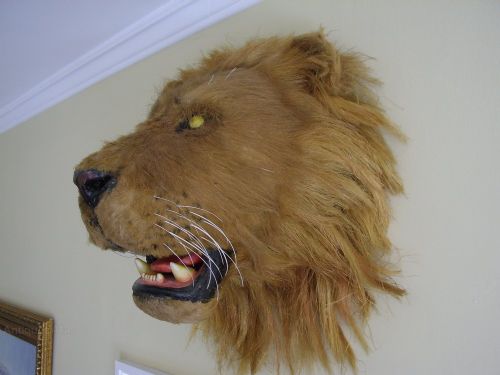
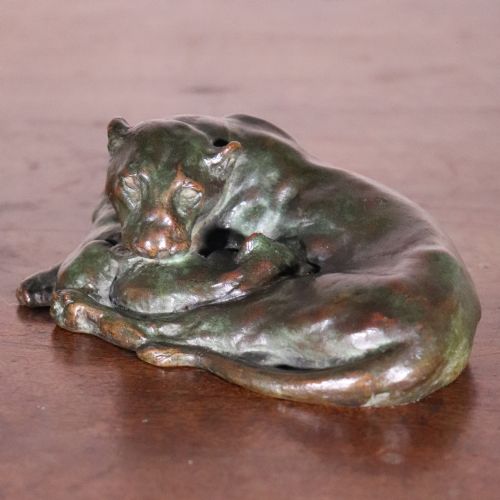
When you search for a big cat sculpture, you encounter depictions of panthers, tigers, lions, and leopards ranging from the nineteenth century through the Art Deco period. These figures take the form of freestanding studies on marble bases, wall-mounted heads, and porcelain figurines.
The selection includes French Animalier works, Austrian cold-painted bronzes, and theatrical props. Art Deco panthers in bronze or spelter mounted on marble are particularly common.
Origins span French foundries, Austrian workshops, and British folk art traditions. Pieces vary from small desk ornaments to large architectural salvage heads.
Materials and Technique
Foundries utilised the lost-wax casting method for bronze figures, often applying patination or cold-painted polychrome finishes by hand. Spelter served as a more affordable metallic alternative during the Art Deco era.
Carvers worked in walnut, alabaster, and other woods to produce detailed feline studies, frequently mounting the finished sculptures onto contrasting black or veined marble plinths.
Several big cats share their display marble with an unsuspecting python.
Judging Quality
The fidelity of the musculature and the subtlety of the surface texture determine the distinction between a masterwork and a standard production piece. Foundry marks and artist signatures denote high-tier French Animalier and Vienna School output.
The integration between the feline figure and its marble base affects overall harmony. Clean casting lines and expressive facial detail elevate the sculptural presence.
Alexandre Ouline·Franz Bergman·Eugene Emile Borga·G. Gardet·Anna Vaughn Hyatt Huntington·Clovis Masson·Michel Decoux·Georges Gardet·Louis Riche·Thomas Cartier
The Big Cat Sculpture Glossary
- Animalier
- A nineteenth-century artistic movement focused on the realistic depiction of animals. Practitioners specialised in observing anatomical precision in motion.
- Cold-Painted Bronze
- A technique where bronze figures are painted with cold enamel rather than fired in a kiln. This finish requires careful preservation to prevent flaking.
- Spelter
- A zinc alloy used as a substitute for bronze in decorative figures. It is lighter and softer than bronze, frequently finished with a dark patination.
- Lost-Wax Casting
- A metalcasting process where a molten metal is poured into a mould that has been created by means of a wax model. This method allows for intricate anatomical detail.
- Patinated Bronze
- Bronze treated with chemicals to produce a coloured surface oxidation. This treatment protects the metal and defines the shadows in the fur.
Big Cat Sculpture: Frequently Asked Questions
What is an Animalier sculpture?
An Animalier sculpture is a nineteenth-century artwork depicting animals in realistic poses. These pieces capture the natural tension and muscle structure of predators.
Artists observed wild animals in menageries to achieve anatomical accuracy in bronze.
How do I identify a spelter panther?
Spelter is a softer, lighter zinc alloy that was frequently used for Art Deco sculptures instead of bronze. It is less dense and often reveals a silvery grey metal beneath chips in the dark finish.
Examining the underside or base usually clarifies the metallic composition.
What is cold-painted bronze?
Cold-painted bronze refers to metal figures decorated with unfired oil-based or enamel paints. This Austrian technique produced vibrant plumage and fur colorations.
The finish remains delicate and is easily damaged by moisture or harsh cleaning.
Where should I display a marble base sculpture?
These heavy figures require a sturdy sideboard, desk, or mantelpiece that can support the combined weight of the metal and stone. Placing them away from direct sunlight protects any patination.
Ensure the display surface is level to protect the marble plinth.