


Biedermeier Secretaire Bureau
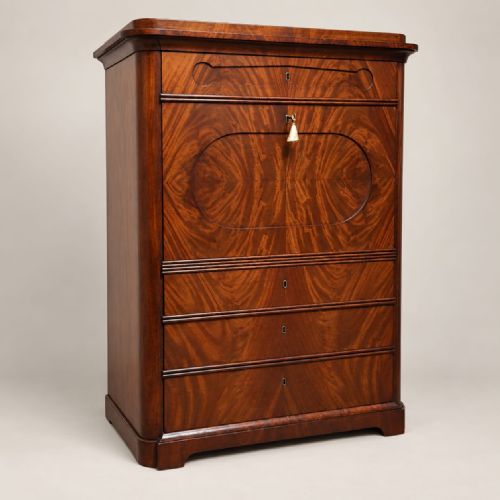
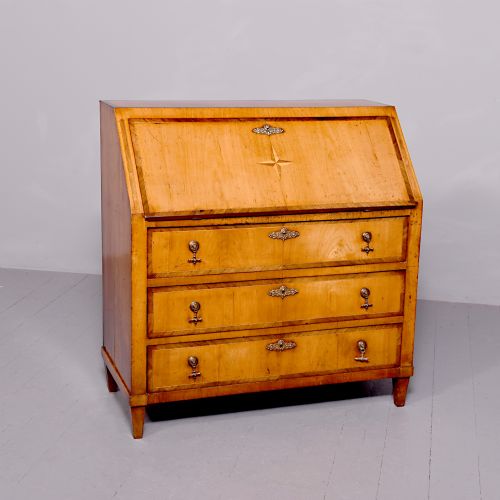
These biedermeier secretaire bureau pieces combine architectural restraint with figured timbers to anchor a study.
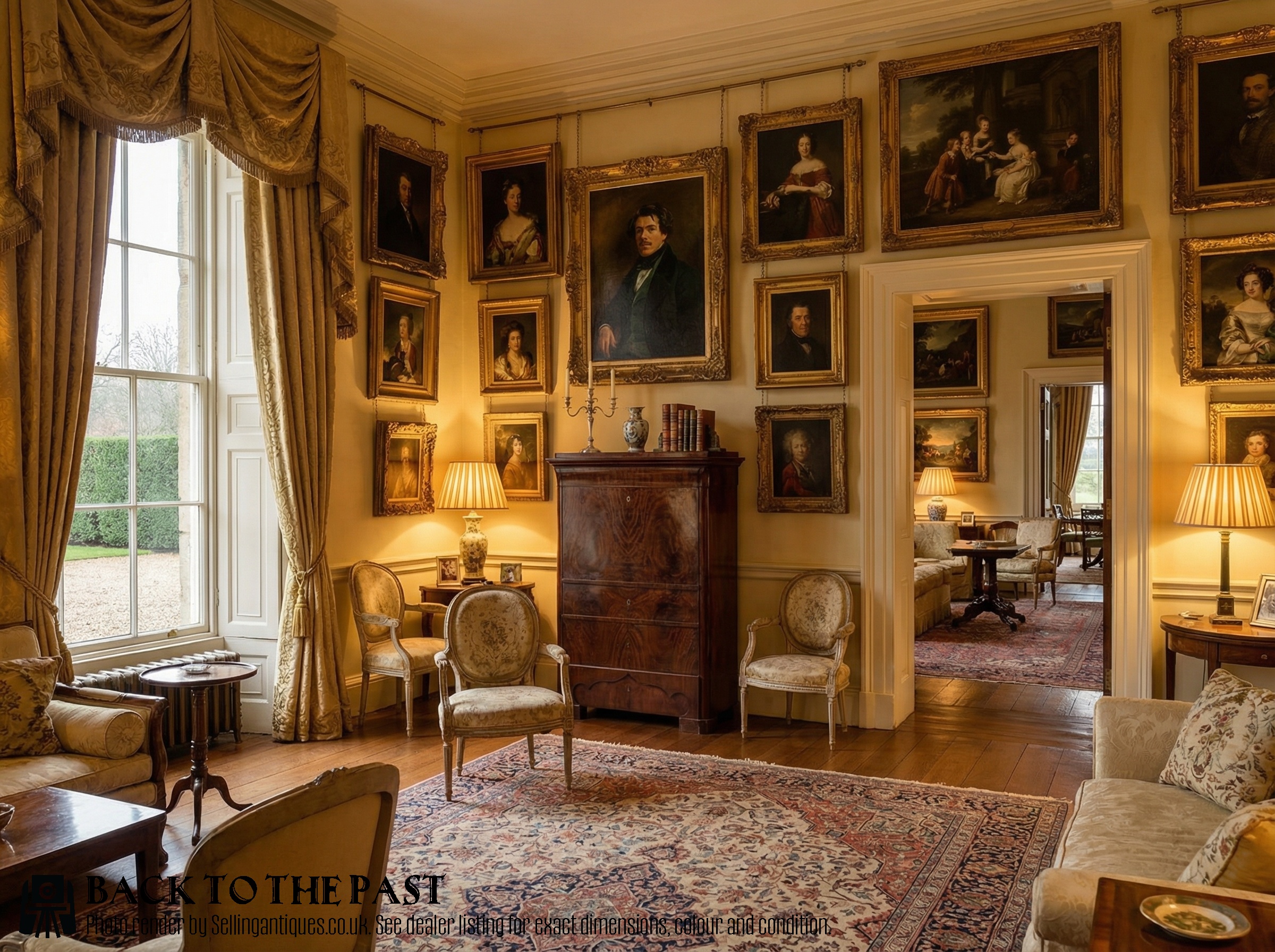
Biedermeier Secretaire Bureau
A biedermeier secretaire bureau serves as a principal writing desk and cabinet, featuring a drop-down writing flap that conceals fitted interior drawers and pigeonholes. Most examples appearing here date to the nineteenth century, ranging from compact abattant desks to tall bureau bookcases.
The form spans several distinct continental origins, including Swedish workshops and broader European centres. Makers worked within styles described variously as nineteenth century continental and country biedermeier, producing practical storage combined with refined writing surfaces.
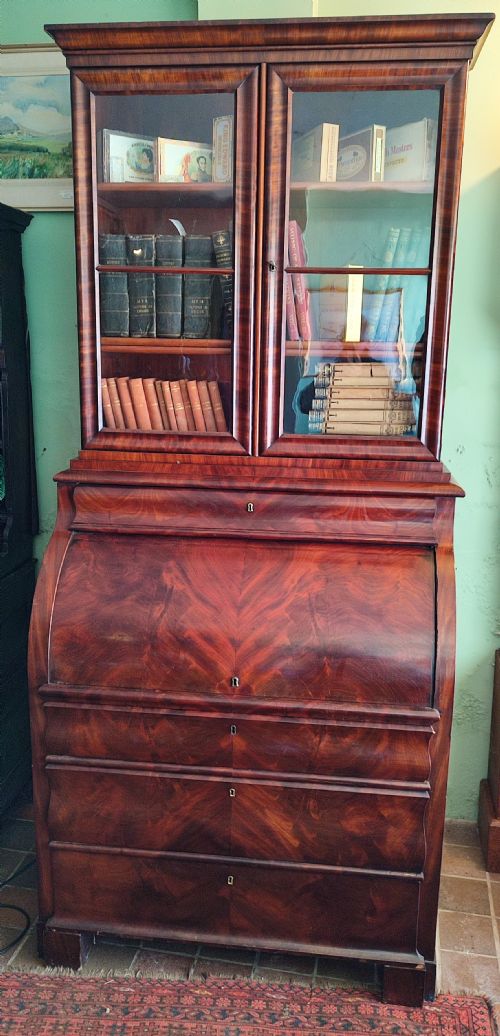
Buyers encounter these objects catalogued under various terms such as escritoire, secretaire a abattant, and cylinder bureau bookcase. Each configuration provides concealed workspace while maintaining a clean, orderly exterior facade.
How they were made
Cabinetmakers constructed carcass frames using solid secondary timbers like pine before applying sophisticated face veneers. External surfaces display figured veneers including mahogany, walnut, rosewood, and birch veneer.
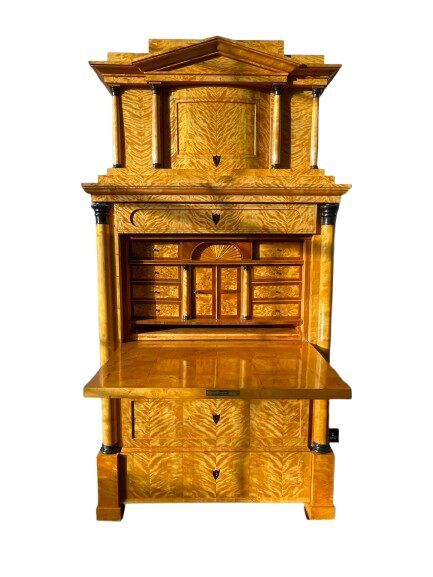
Decoration relied primarily on timber selection rather than carved ornamentation, utilising contrasting ebonised wood or delicate brass stringing to accentuate drawer fronts and structural lines. Glass panels feature in tall bookcase variants.
Construction techniques prioritised stability across large vertical surfaces to prevent warping in dense hardwoods and delicate veneers. Dovetail joints secure internal compartments and drawer construction.
Current listings demonstrate nineteenth-century craftsmanship utilising birch veneer, walnut, mahogany, and brass across various desk configurations.
What varies in quality
The distinction between standard and superior pieces rests largely on the choice and matching of timber veneers. Master cabinetmakers selected blonde walnut, masur birch, and figured mahogany with symmetrical grain patterns across the primary facade.
Internal complexity sets finer examples apart from simpler country workshops. The arrangement of secret compartments, small drawers, and fitted pigeonholes reveals the original maker's investment of time and skill.
Hardware integration and structural proportion also differentiate the range. High-grade items maintain crisp geometric alignment where brass mounts, ebonised details, and door frames meet.
The Biedermeier Secretaire Bureau Glossary
- Secretaire a abattant
- A tall vertical cabinet featuring a hinged writing flap that pulls down to reveal a fitted desk interior. This form keeps workspace concealed when not in use.
- Masur birch
- A decorative timber variant exhibiting distinctive swirling growth patterns and dark spots. Swedish makers utilised this wood extensively for light-toned cabinet facades.
- Escritoire
- A light piece of writing furniture incorporating a sloping or drop writing surface above drawers. The term applies broadly to nineteenth century desks.
- Ebonised wood
- Timber treated with a dark finish to imitate ebony. Cabinetmakers applied this technique to mouldings and structural highlights for strong visual contrast.
- Burl walnut
- Wood harvested from tree growths that produce complex, swirling grain patterns. This material was sliced into fine veneers for prominent drawer and door panels.
Biedermeier Secretaire Bureau: Frequently Asked Questions
What is a biedermeier secretaire bureau?
It is a nineteenth-century continental writing cabinet featuring a drop-down flap and concealed internal drawers.
The form prioritises clean architectural lines and figured timber veneers over heavy ornamentation.
How do I use a drop-front desk?
Lower the front flap to create a stable writing surface while accessing the pigeonholes and small drawers inside.
When finished, fold the writing surface back up and secure it to restore the clean cabinet facade.
Where were these desks made?
These pieces originated across nineteenth-century continental Europe, with notable examples produced in Swedish workshops.
Craftsmen in various regions adapted local timbers like birch, mahogany, and walnut to the style.
How do I care for timber veneers?
Keep the wood away from direct sunlight and steady heat sources to prevent the dry air from cracking historical finishes.
Apply a microcrystalline wax periodically to nourish the surface and maintain a gentle sheen.
What distinguishes Swedish pieces?
Swedish examples frequently employ blonde timbers such as masur birch and feature lighter, restrained proportions.
These pieces emphasise pale natural grain patterns over the darker, heavier tones found in other regional variants.