


Biedermeier Centre Table
A biedermeier centre table brings warmth and proportion to a room, offering a striking focal point with its rich wood grains.
Biedermeier Centre Table
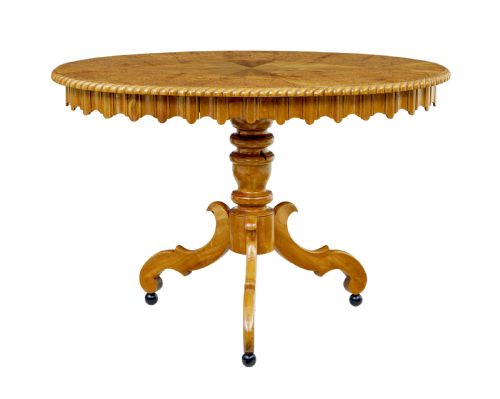
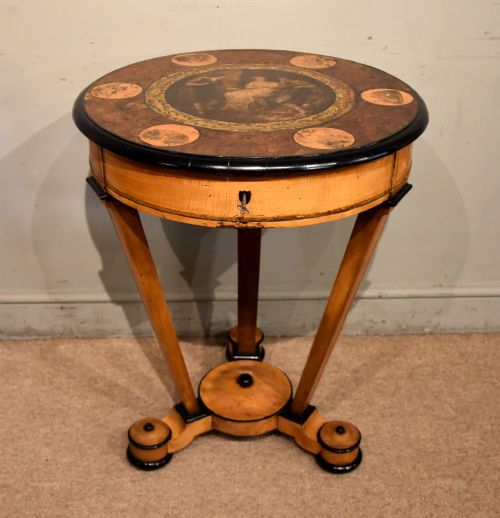
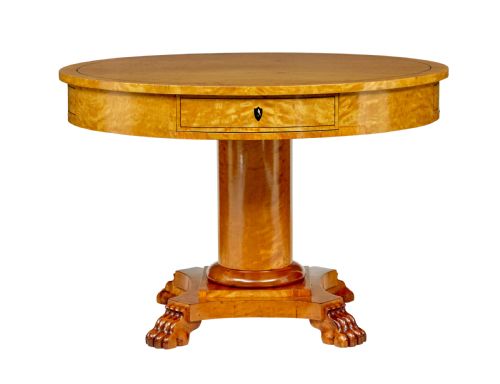
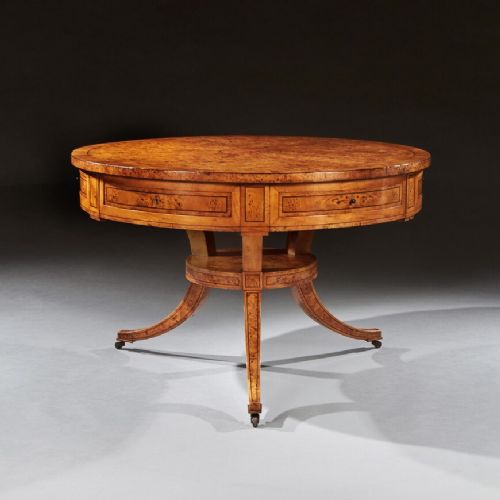
When you search for a biedermeier centre table, you are looking at freestanding circular, oval, and drum tables designed to anchor a room. The most common examples on this page are Swedish interpretations from the nineteenth century, often executed in warm, figured timbers.
The selection ranges from early nineteenth century forms to later revival pieces, including occasional tables, sofa tables, and coffee tables. These versatile pieces reflect Scandinavian neo-classical and empire influences, moving away from heavy ornamentation towards clean, architectural lines.
How they were made
Cabinetmakers utilised native and imported timbers, applying fine veneers over structural woods to create striking geometric patterns across the top. Burr birch, satin birch, and mahogany feature prominently, often contrasted with ebonised wood details or supported by brass mounts.
Construction techniques focus on stability and visual balance, employing central pedestals or robust pillar structures to hold circular and oval tops. Some variants incorporate tilt-top mechanisms or fitted drawers, demonstrating practical craftsmanship alongside decorative surface work.
Biedermeier Centre Table Retail Price Guide 2026
Typical asking prices for biedermeier centre table among the pieces listed under this phrase on Sellingantiques today, from the lower quarter to the upper quarter. They describe what is for sale here now, not the wider market.
The listings span the nineteenth and twentieth centuries, featuring Swedish Biedermeier, Empire Revival, and Regency styles executed in birch, mahogany, and marble.
What varies in quality
The distinction between standard examples and the finest work lies in the choice and matching of veneers. Burr root maple and burr birch show exceptional depth when the grain patterns are symmetrically mirrored across the surface.
Proportion and structural integrity also separate the grades. Better examples maintain crisp lines and secure joinery on the central pedestal, ensuring the table stands firmly without relying on excessive decorative additions.
The Biedermeier Centre Table Glossary
- Biedermeier
- A style originating in Central Europe during the nineteenth century, characterised by utilitarian comfort, clean lines, and a focus on polished wood grains rather than heavy carving.
- Centre table
- A freestanding table designed to be viewed from all sides, traditionally placed in the middle of a room rather than against a wall.
- Veneer
- A thin slice of figured wood applied over a secondary timber base to create decorative patterns on furniture surfaces.
- Gueridon
- A small French table supported by one or more columns, often featuring a circular marble or wood top.
- Drum table
- A circular library or centre table with a deep skirt containing drawers, resembling the shape of a drum.
Biedermeier Centre Table: Frequently Asked Questions
What is a biedermeier centre table?
A biedermeier centre table is a freestanding nineteenth century table designed to stand in the middle of a room, showcasing fine wood veneers like birch or mahogany.
These pieces typically feature a central pedestal base and circular or oval tops, reflecting the functional yet elegant aesthetic of the period.
How do I use a centre table?
These tables are designed to be viewed from all sides, making them ideal as a focal point in the middle of a principal room or a large hallway.
You can place a lamp, decorative objects, or books upon the surface, or use sofa tables and occasional variants alongside seating areas.
How do I date a biedermeier table?
Dating relies on examining the construction methods, timber choices, and stylistic influences present in the piece, comparing them against nineteenth century or later revival characteristics.
Swedish pieces from the eighteen hundreds often display distinct regional interpretations of empire and neo-classical designs.
What woods were used for these tables?
Cabinetmakers primarily worked with birch, burr birch, mahogany, and cherrywood, frequently using veneers to create striking visual patterns on the top surfaces.
Some examples also incorporate ebonised wood accents, brass details, or marble tops for added contrast and texture.