
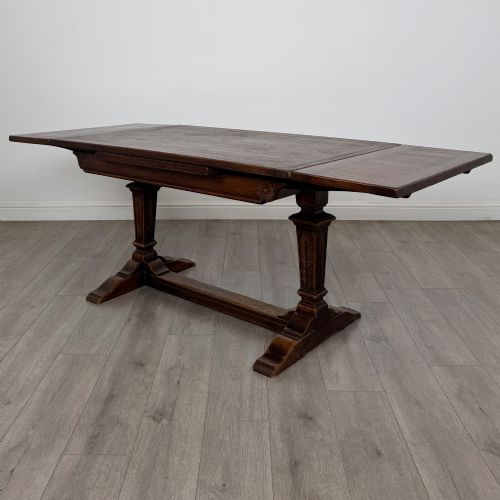
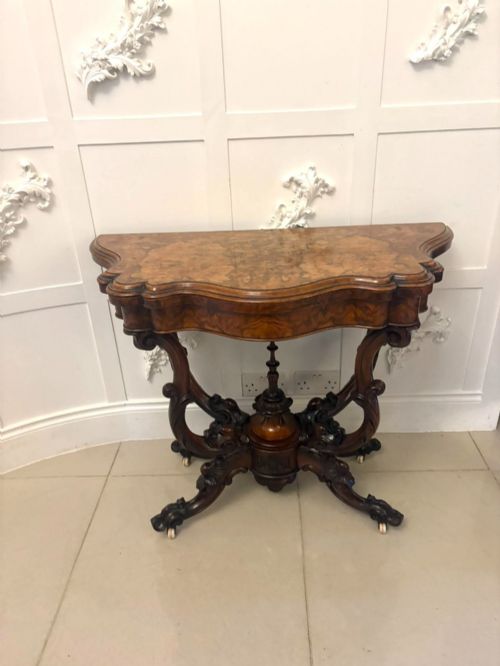
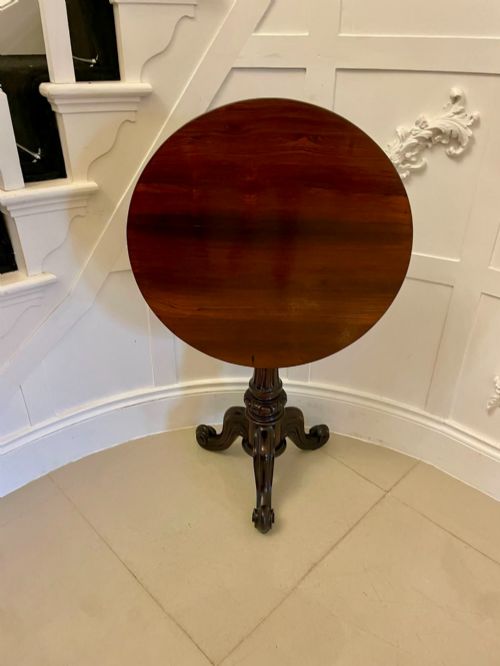


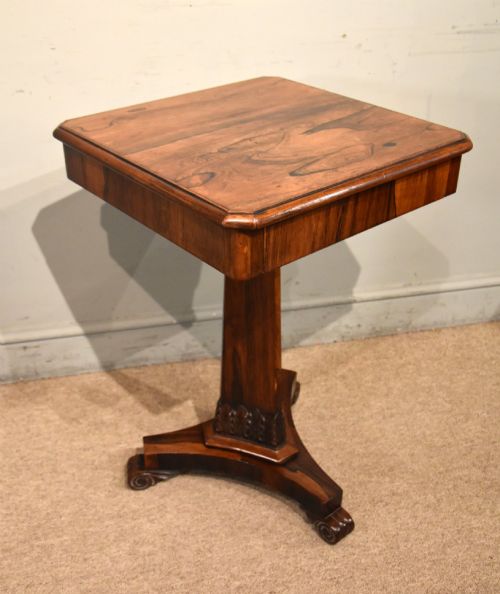
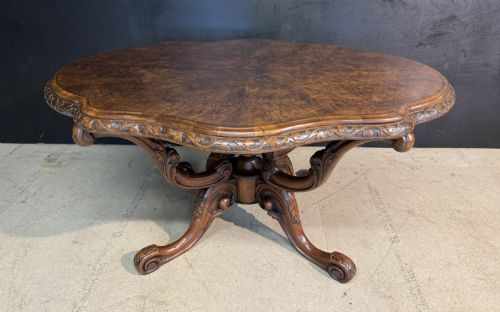
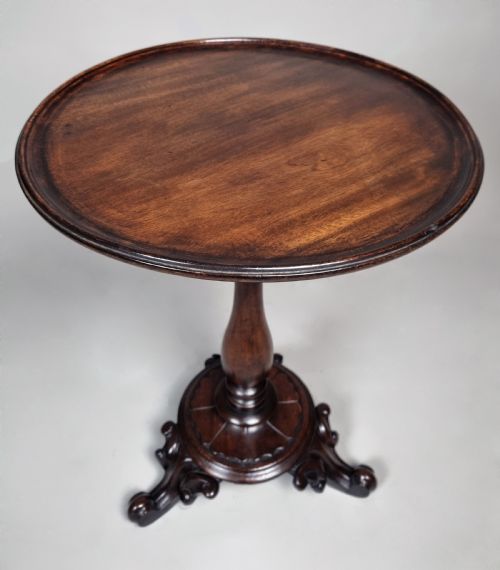
Carved Base Pedestal Table
A carved base pedestal table anchors a room with sculptural timberwork, offering a sturdy central column that supports dining, card, and breakfast formats.
Carved Base Pedestal Table
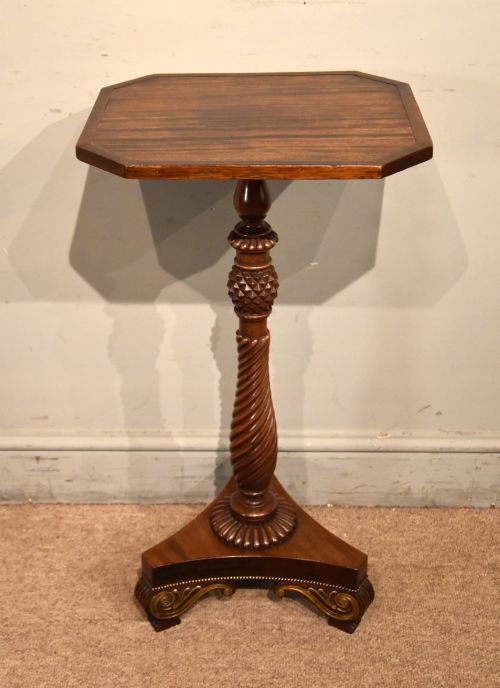
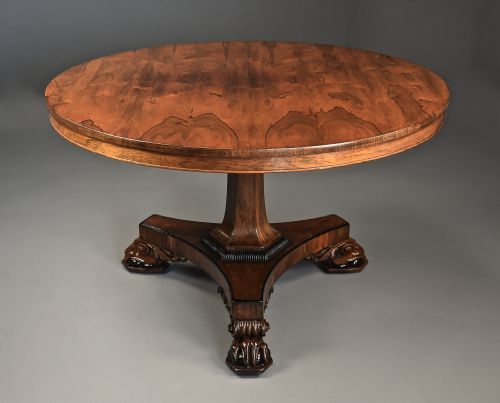
A carved base pedestal table combines a central column or support with solid timber construction, appearing in formats ranging from dining and breakfast tables to card tables, centre tables, and occasional pieces. The selection spans the Georgian, Regency, William IV, Victorian, and Edwardian periods, with nineteenth-century examples forming the core of the available range.
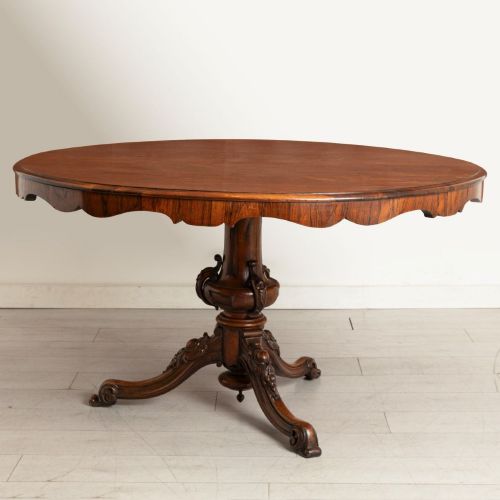
Makers utilised various functional designs such as tilt-top mechanisms, draw leaves, and wind-out extensions alongside stationary formats. The central supports frequently take triform or quadrapod shapes, carrying carved baskets, floral motifs, or classical detailing beneath circular, oval, or square tops.
Materials and construction
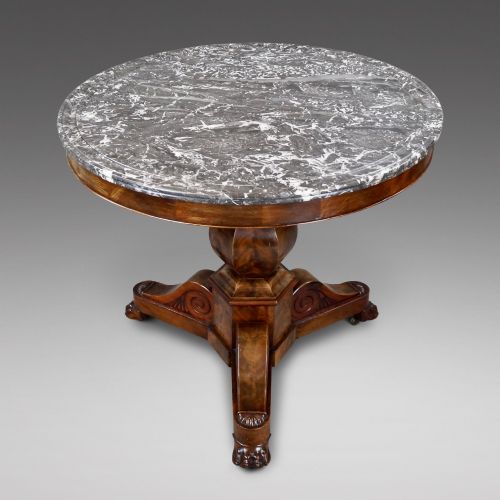
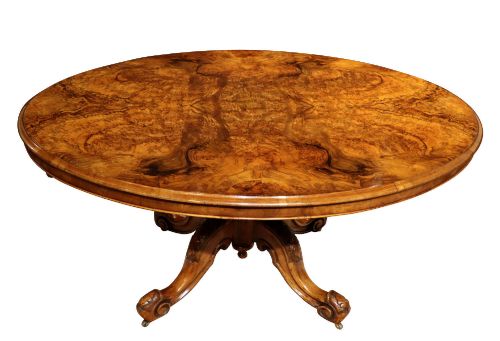
Cabinet makers constructed these pieces primarily from dense tropical and native hardwoods, using rosewood, mahogany, walnut, and burr walnut for rich figuring and durability. Specialised examples incorporate pollard oak, padauk, and burr yew wood, sometimes paired with marble tops or brass mounts.
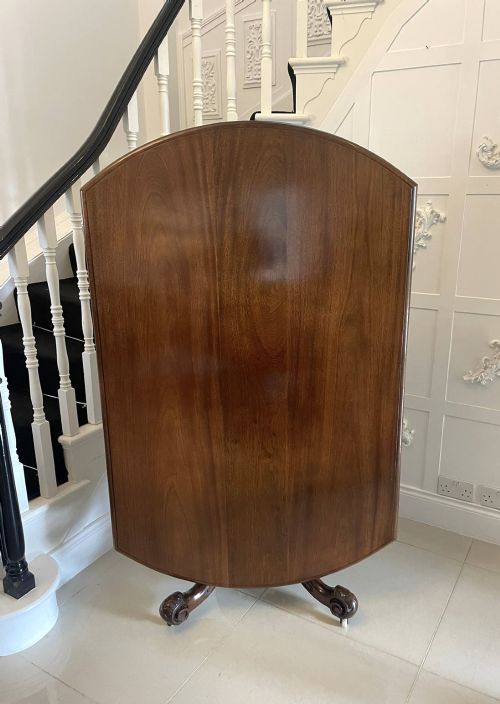
The architectural bases rely on solid timber turned columns and hand-carved supports fixed to tripartite or quadrapod feet. Tilt-top and snap-top mechanisms allow circular breakfast and lamp tables to fold away when not in use.
The inventory records nineteenth-century pedestal tables spanning Regency, William IV, and Victorian periods, constructed in rosewood, mahogany, walnut, and padauk.
Variations in quality
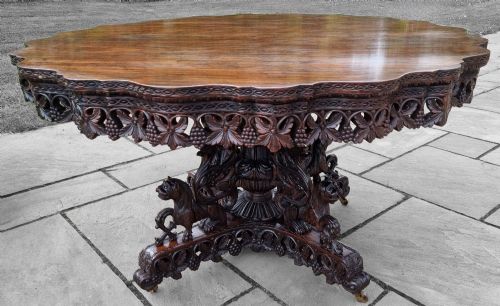
Quality rests upon the depth and crispness of the hand-carving on the central pillar and feet, alongside the choice of timber veneer. Superior examples display meticulously matched burr walnut or flame mahogany veneers that accentuate the grain across the table top.
The engineering of internal mechanisms, such as brass locking catches on tilt-top tables and smooth operation in extending dining formats, distinguishes workshop production. Heavier timber gauges and substantial solid wood turnings provide structural stability to the central pedestal.
The Carved Base Pedestal Table Glossary
- Triform base
- A three-sided pedestal support that rests on three feet, commonly seen on Regency and William IV tables. This configuration provides steady floor contact while allowing legroom.
- Quadrapod base
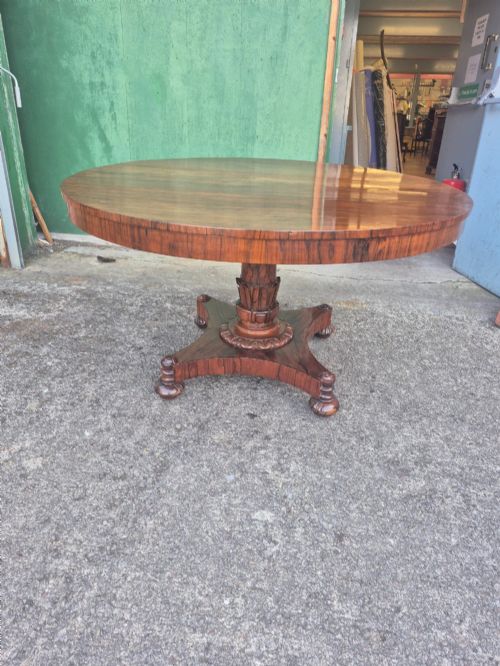
- A four-legged pedestal support branching from the central column, frequently found on larger Victorian breakfast and dining tables. It distributes weight across four distinct points.
- Tilt-top table
- A table featuring a hinged top that pivots vertically for storage against a wall when not in use. These mechanisms use a brass catch to secure the surface horizontally.
- Gueridon
- A small French occasional or centre table, typically supported by a single central pillar. The form gained popularity during the nineteenth century in mahogany and exotic woods.
- Loo table
- A large round Victorian card and game table designed for the nineteenth-century card game of loo. They often feature tilt-top mechanisms and heavily carved pedestal bases.
Carved Base Pedestal Table: Frequently Asked Questions
How were pedestal tables used historically?
These tables served multiple domestic functions depending on their top configuration and size. Dining and breakfast formats accommodated meals, while card and games tables hosted evening entertainment.
Smaller occasional and lamp tables sat in drawing rooms to hold decorative objects or lighting. Tilt-top versions allowed households to reclaim floor space by pivoting the surface upright against the wall.
How do I identify a William IV pedestal table?
William IV pieces typically date from the 1830s and display heavy, robust proportions executed in dark rosewood or mahogany. Their central pillars often feature bold acanthus leaf carving, fluting, or faceted geometry.
The bases frequently rest on paw feet or scrolling brackets attached to a tripartite platform. Rich timber grain and substantial weight characterise this transitional period between Regency elegance and Victorian ornamentation.
What is the difference between a centre table and a breakfast table?
Centre tables are designed to stand free in the middle of a room, finished with detail on all sides and typically featuring a fixed top. They function as display surfaces or writing areas.
Breakfast tables usually feature a circular or oval top mounted on a tilt mechanism, allowing the surface to fold down when not utilised for morning dining. Both forms rely on a central carved pedestal rather than four corner legs.
How should I care for a rosewood pedestal table?
Protect the timber surface by avoiding direct placement near heat sources or strong sunlight, which can dry out nineteenth-century polishes and fade rosewood. Use coasters and felt pads under objects placed on the top.
Clean the wood using a soft, dry cloth to remove dust, applying a quality beeswax sparingly only when the finish appears dry. Lift the table by its main frame rather than the top when repositioning it.