




19th Century Drum Desk
A 19th century drum desk offers a revolving workspace with deep history, combining cylindrical form and fine timber to anchor a traditional study.
19th Century Drum Desk
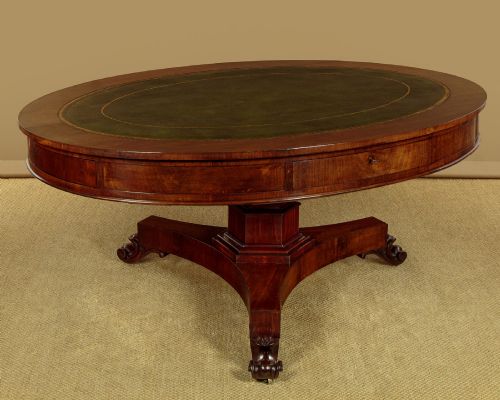
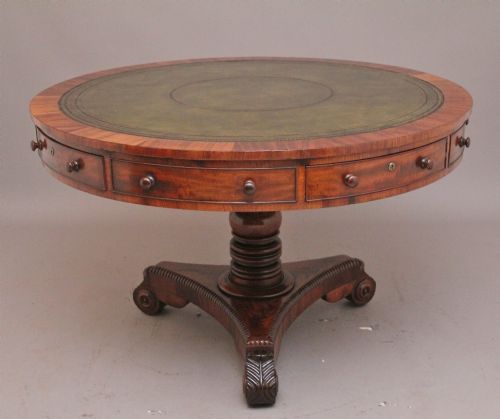
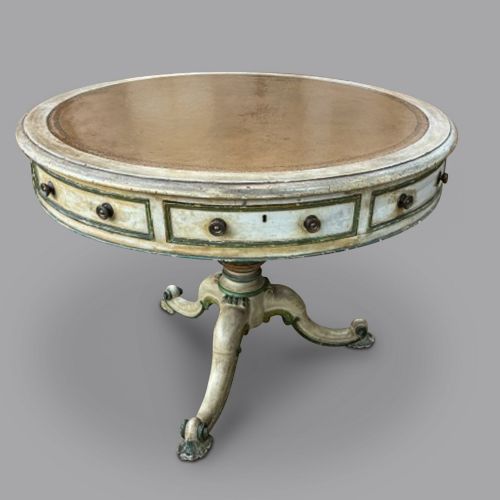
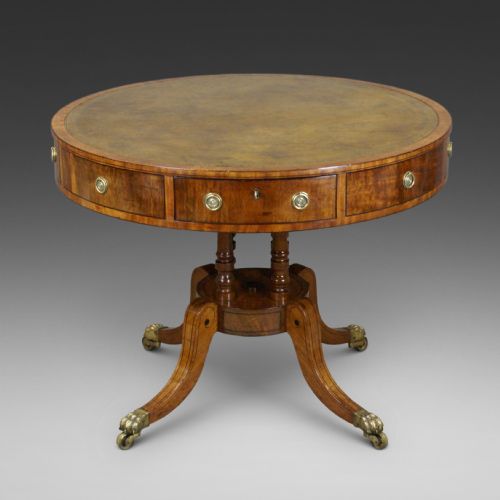
A 19th century drum desk stands on a central pillar, often housing rotating drawers beneath a circular top lined in leather. These library and centre tables embody the period's taste for functional elegance in private studies and reading rooms.
Most examples found here date from the Regency and Victorian eras, utilising timber such as mahogany, rosewood, and oak. Certain pieces reflect specific regional preferences, including Scandinavian neo-classical design or Irish craftsmanship.
Makers adapted the circular format for writing, sorting papers, and consulting large volumes. The revolving mechanism allowed immediate access to stationery without shifting position in the chair.
How they were made
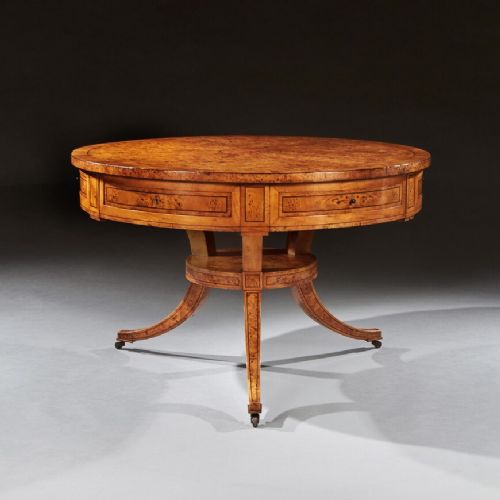
Cabinetmakers built these tables around robust pedestals, frequently employing flame mahogany or burr root maple veneers to cover the curved surfaces. Grain selection dictated the visual rhythm of the drum circumference.
Writing surfaces incorporated hand-tooled leather inserts, often edged in gilt tooling to frame the work area. Structural stability depended on heavy tripod or platform bases fitted with brass castors.
Listings span the nineteenth century, including specific dates such as eighteen-fifty, eighteen-sixty, and eighteen-eighty alongside broader Regency periods.
What varies in quality
The sophistication of the internal mechanism separates standard pieces from finer works. Smooth rotation of the drum carcass and the precision of the drawer dovetailing indicate the original maker's skill.
Timber choice and figure elevate certain examples, particularly those employing burr maple, pollard oak, or richly figured flame mahogany. The crispness of carved mounts and the quality of the brass fittings complete the distinction.
The 19th Century Drum Desk Glossary
- Drum table
- A circular library or centre table with a deep carcass containing drawers, supported on a central pillar. The shape resembles a bass drum.
- Flame mahogany
- A veneer cut from the branch junction of the mahogany tree, producing a distinctive flickering flame pattern. Cabinetmakers prized this figure for principal surfaces.
- Ormolu
- Gilded bronze used for decorative mounts and clock bezels. French pieces frequently integrated this material for enriched detail.
- Pollard oak
- Timber taken from trees that were pollarded, creating dense, clustered growth rings and knots. It yields a highly decorative grain pattern.
- Tripod base
- A pedestal support terminating in three legs, often fitted with brass castors for mobility. This configuration provided stability beneath a heavy circular top.
19th Century Drum Desk: Frequently Asked Questions
What is a drum desk?
A drum desk is a circular library table with a deep band containing drawers, mounted on a central pillar. It provides a stable writing surface with revolving access to stationery.
Cabinetmakers designed these pieces for studies and libraries during the Regency and Victorian periods, favouring dense timbers like mahogany and rosewood.
How do I care for the leather top?
Keep leather tops away from direct sunlight and excessive heat to prevent cracking. Dust gently with a dry cloth and apply specialist leather balm sparingly.
Avoid using modern chemical cleaners or placing damp vessels directly onto the hide, as moisture permanently marks antique leather.
Can I use a drum table for daily writing?
These tables function well for writing and laptop use, provided the chair height aligns with the kneehole clearance beneath the drawers. Many pieces include leather writing inserts specifically designed for daily use.
Ensure weight is distributed evenly across the circular surface when working with heavy ledgers or reference books.
How do I distinguish Regency from Victorian examples?
Regency pieces often display restrained neoclassical lines, using figured mahogany or rosewood with subtle brass inlay. Proportions tend to be crisp and architectural.
Victorian examples frequently incorporate heavier carving, walnut timber, and more ornate detailing reflecting revival styles of the later nineteenth century.