



Biblical Narrative Art
Biblical narrative art brings foundational scriptural stories into the home through oil paintings, engravings, etchings, and textiles from the seventeenth to the twentieth century.
Biblical Narrative Art
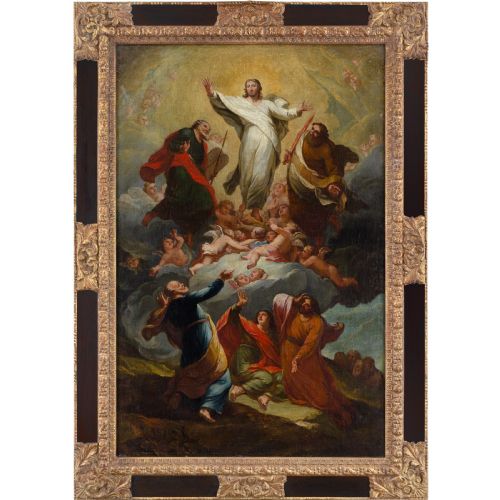
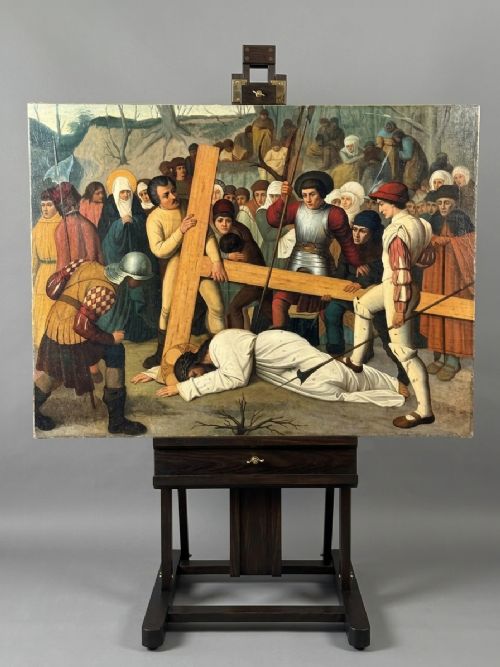
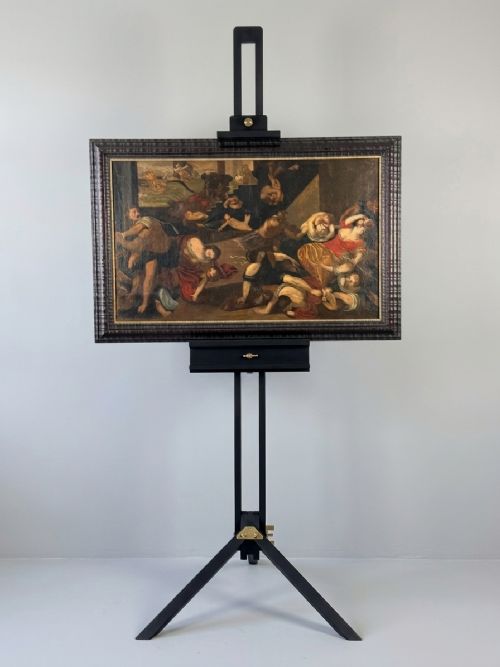
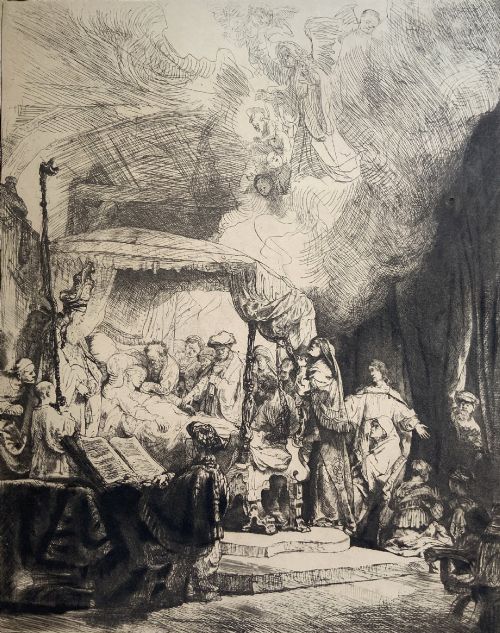
Biblical narrative art comprises devotional oil paintings, fine art prints, and textile art depicting figures and scenes from scripture. When you search for biblical narrative art, you encounter works ranging from seventeenth-century baroque canvases to nineteenth-century Gothic revival pieces.
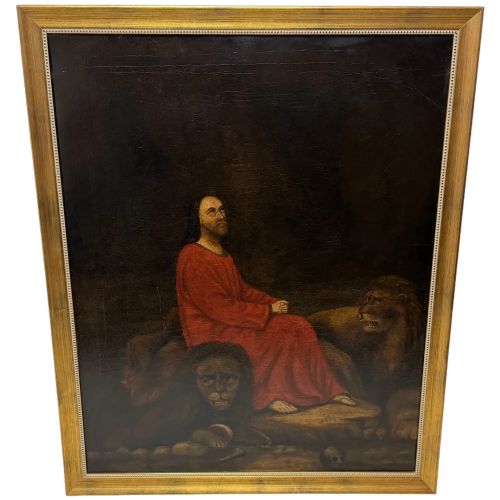
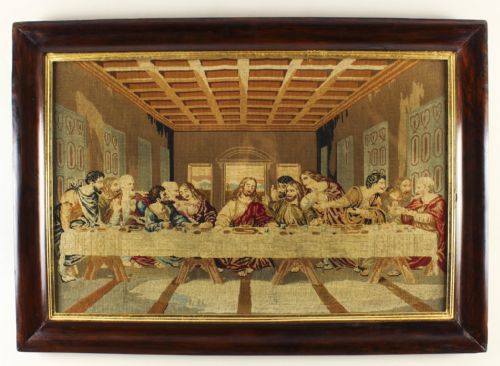
The objects on this page centre on well-known scriptural subjects such as Daniel in the lions' den, David and Goliath, the Massacre of the Innocents, and Adam and Eve. These works take the form of framed oil paintings on canvas, engravings, etchings, and Flanders tapestries.
You are most likely to meet nineteenth-century oil paintings and prints on this page, alongside seventeenth-century Dutch and Italian works. These pieces reflect historical artistic revivals and traditional devotional practices across European schools.
How they were made
Makers of biblical narrative art utilised oil paint on canvas and wood panels, applying layered pigments to achieve depth in large figurative compositions. Artists also worked with ink on paper to produce detailed etchings and engravings after master painters.
Textile works such as the Flanders tapestry employ woven threads to render complex narrative scenes with durable textural qualities. Frames often consist of giltwood, complementing the visual weight of the paintings and prints they enclose.
Listings feature periods spanning the seventeenth century, the Georgian era, the nineteenth century, and nineteen-forty.
What varies in quality
Quality in biblical narrative art rests on the expressive power of the figures, the handling of light and shadow, and the precision of the draughtsmanship. Works originating from named circles or followers of established masters demonstrate superior anatomical control and compositional balance.
The integrity of the canvas, panel, or paper support dictates the longevity and visual impact of the piece. Fine details in nineteenth-century etchings and seventeenth-century oil paintings distinguish accomplished studio production from simpler decorative works.
Jozef Jansessens·Rembrandt·Amand-Durand·Michelangelo·Antonio Capellan·Pietro D'asaro·Eugene Hindle
The Biblical Narrative Art Glossary
- Etching
- A printmaking technique where lines are bitten into a metal plate with acid before ink is applied and pressed onto paper. This method allows for fine linear detail in narrative prints.
- Baroque
- An artistic style spanning the seventeenth and eighteenth centuries characterised by dramatic movement, rich colour, and strong contrasts between light and dark. Baroque religious paintings emphasise emotional intensity.
- Giltwood
- Wood that has been coated with a thin layer of gold leaf or gold paint. This finish frequently appears on the antique frames housing devotional paintings and prints.
- Tapestry
- A form of textile art woven on a loom by hand, combining coloured threads to form a pictorial design. Flanders tapestries are known for their intricate narrative weaving traditions.
Biblical Narrative Art: Frequently Asked Questions
What subjects are common in biblical narrative art?
These works depict major dramatic events from scripture, including Old Testament tales like Daniel in the lions' den and David and Goliath, alongside New Testament scenes such as the Last Supper.
Artists frequently chose moments of high tension or moral significance to engage the viewer in contemplation.
How were these artworks displayed historically?
Religious paintings and framed prints were created for private devotion in homes as well as for institutional settings. Tapestries served both a decorative function and a practical one by adding insulation to stone walls.
Their placement reflected the owner's personal faith and cultural standing.
How do I care for antique oil paintings?
Keep canvas and wood panel works away from direct sunlight and sudden shifts in temperature or humidity. Avoid touching the painted surface directly to prevent oils from skin transferring to the pigment.
Dust giltwood frames gently with a soft, dry cloth.
How do I distinguish seventeenth-century works from nineteenth-century revivals?
Seventeenth-century pieces often display the dramatic lighting and rich pigment layering characteristic of Baroque and Dutch Golden Age traditions. Nineteenth-century works frequently reflect historicist revivals and Victorian approaches to narrative composition.
Examining the canvas preparation and framing materials provides further clues to the period.