


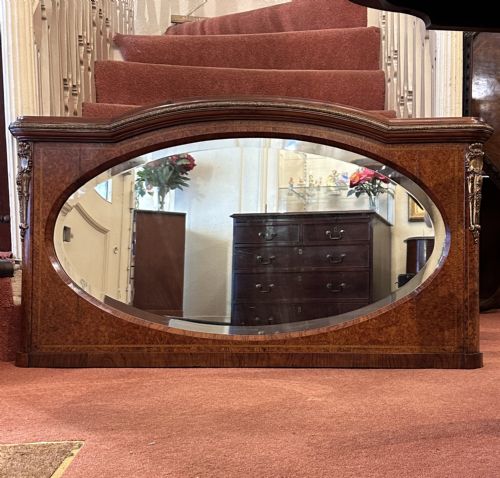

Bevelled Glass Oval Mirror
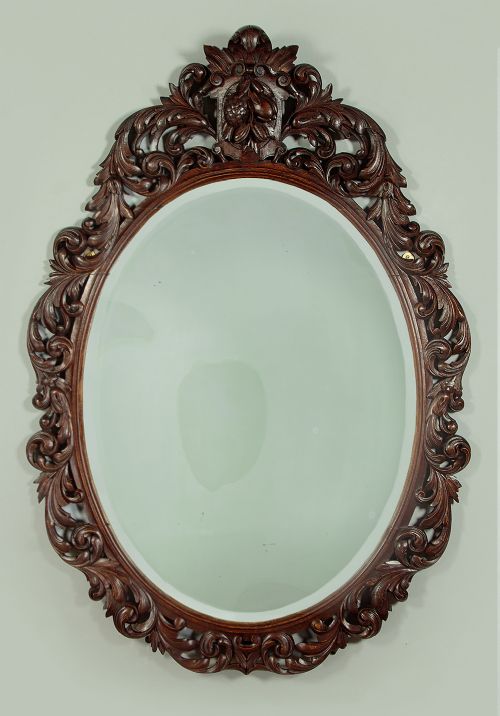
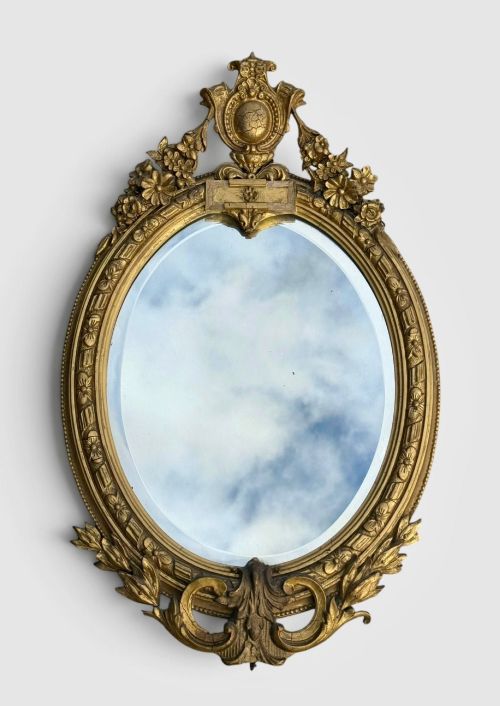
A bevelled glass oval mirror brings a soft curved elegance to a room, reflecting light across intricately carved wooden frames or gleaming gilt gesso.
Bevelled Glass Oval Mirror
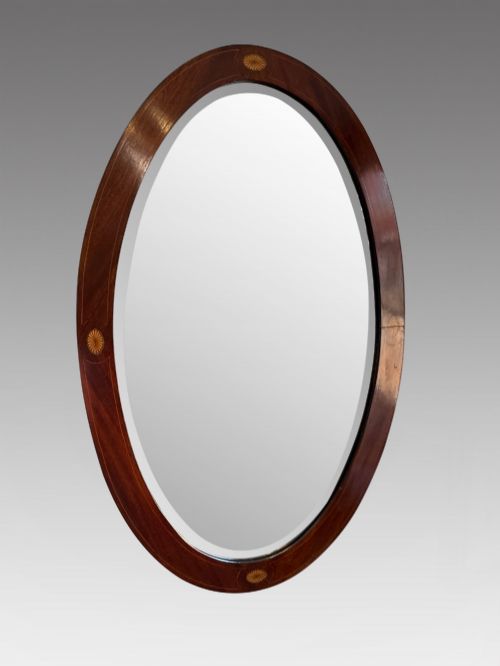
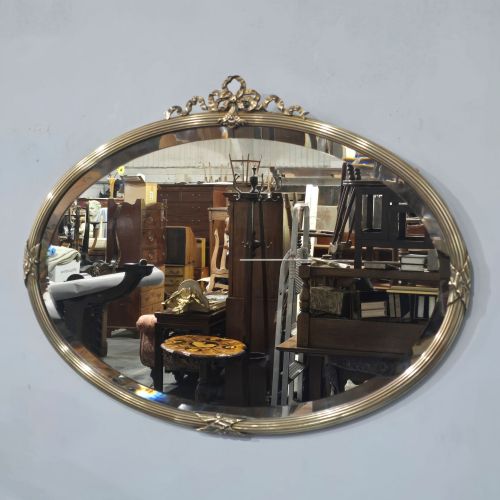
When searching for a bevelled glass oval mirror, buyers encounter wall-hanging and overmantel forms spanning the Victorian and Edwardian eras through the early twentieth century. These pieces emerge in styles ranging from restrained mahogany and oak frames to elaborate Rococo revival giltwork and Arts and Crafts brass.
The inventory on this page reflects domestic British and continental workshops, offering everything from simple daily dressing mirrors to decorative reception room showpieces. The defining characteristic across the selection is the shaped glass plate itself, finished with a hand-ground angled perimeter.
Common regional variations include French gilt frames alongside English mahogany and satinwood iterations, often featuring original hanging rings or backboards. Buyers select these mirrors to anchor hallway spaces or sit gracefully above mantelpieces, drawing on proportions established over a century ago.
What varies in quality
Quality rests primarily in the crispness of the frame's carving and the depth of the bevel on the glass plate. Superior pieces display hand-cut mouldings and tightly mitred corners rather than cast resin substitutes or crude assembly.
The preservation of the original reflective mercury or silver backing determines authenticity, as natural foxing shows age without obscuring the image. Finer mirrors retain their original timber backing boards, brass hanging rings, and untouched surface patination.
Proportion and scale dictate desirability, with well-balanced oval dimensions that complement the decorative style of the frame. The presence of specialised details like burr yew-wood veneers or hand-painted silk inserts elevates standard utility mirrors into notable decorative objects.
Listings feature oak, mahogany, and giltwood frames spanning the Victorian, Edwardian, and Arts and Crafts periods.
The Bevelled Glass Oval Mirror Glossary
- Bevel
- An angled edge ground along the perimeter of a glass plate to catch and refract light. This process requires skilled hand-work on older mirrors.
- Gesso
- A plaster-based mixture applied to wood frames as a smooth foundation for gilding or painting. It is sculpted to create ornate relief decoration.
- Foxing
- Age-related brown spots and speckles that develop within the silvered backing of antique mirrors. Collectors value gentle foxing as a sign of genuine period age.
- Overmantel
- A large mirror designed specifically to hang on the wall directly above a fireplace mantelpiece. These pieces often feature extended horizontal or domed proportions.
- Fretwork
- Thin wood panels cut through with intricate decorative patterns using a fine scroll saw. It appears frequently on eighteenth and nineteenth-century mirror frames.
Bevelled Glass Oval Mirror: Frequently Asked Questions
How do I hang a heavy mirror safely?
Heavy antique mirrors require solid fixings screwed directly into wall studs or masonry using appropriate wall anchors. The original hanging wire or brass loops on the back must be inspected to ensure they can support the weight of the frame.
Professional mirror hangers recommend using two separate suspension points rather than a single central hook to distribute the load evenly and keep the frame level against the wall.
Can I clean the glass without damage?
Cleaning antique mirror glass requires a soft cloth and a gentle, ammonia-free cleaning solution applied to the cloth rather than sprayed directly onto the glass. This prevents moisture from seeping behind the plate and accelerating deterioration of the silvered backing.
Care must be taken around the edges where the bevel meets the frame, as moisture trapped in the crevices can cause staining or loosen old adhesives.
What causes dark spots on the glass?
Dark spots and fading known as foxing occur when moisture and oxygen react over decades with the silver or mercury backing behind the glass. This chemical breakdown is a natural ageing process unique to older mirrors.
While heavy distortion can obscure reflection, light foxing adds character and confirms the antique status of the glass plate.