
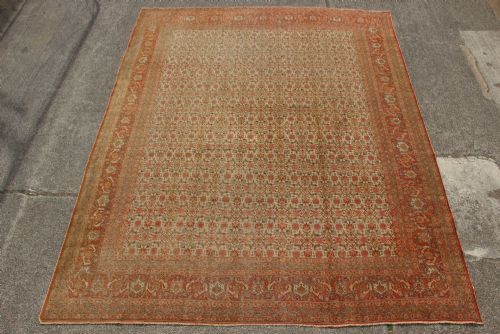
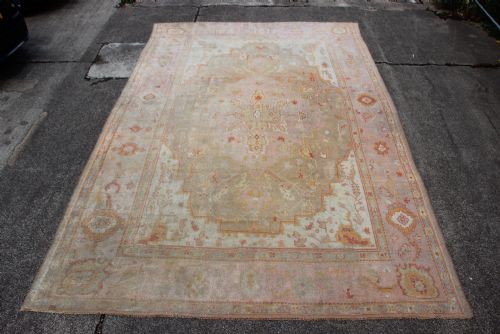
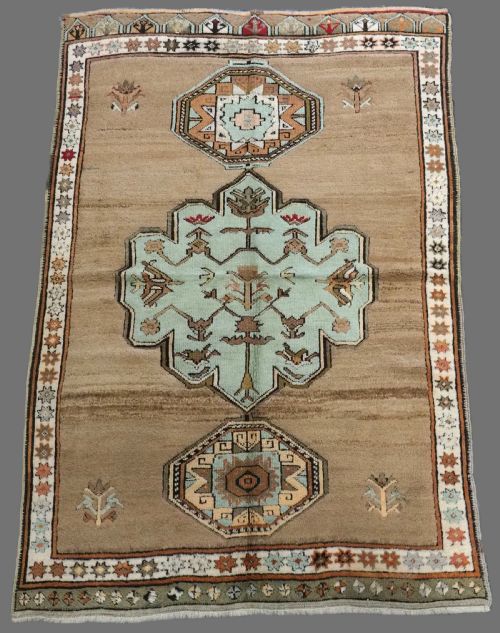
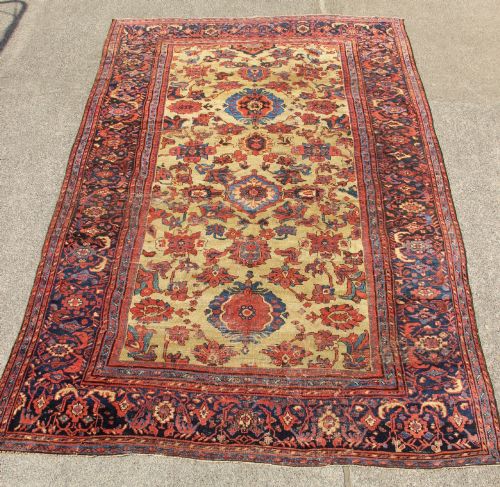
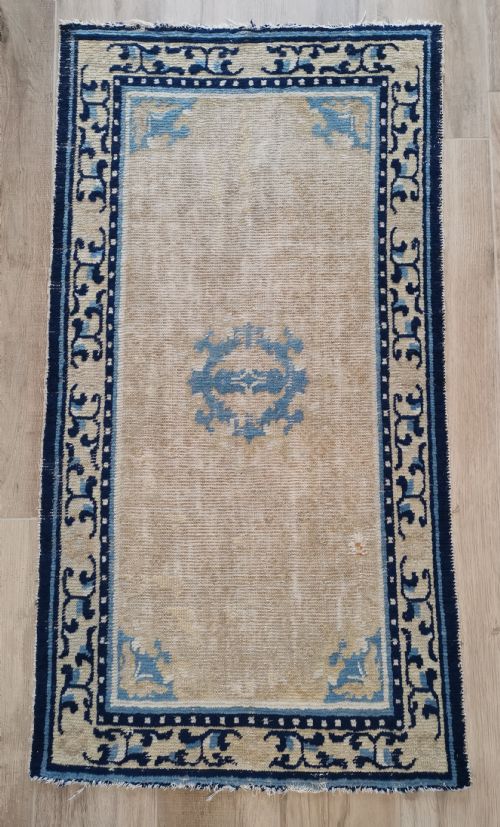
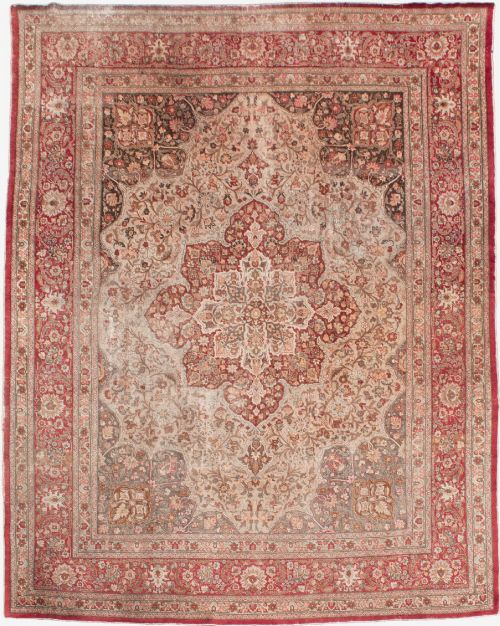
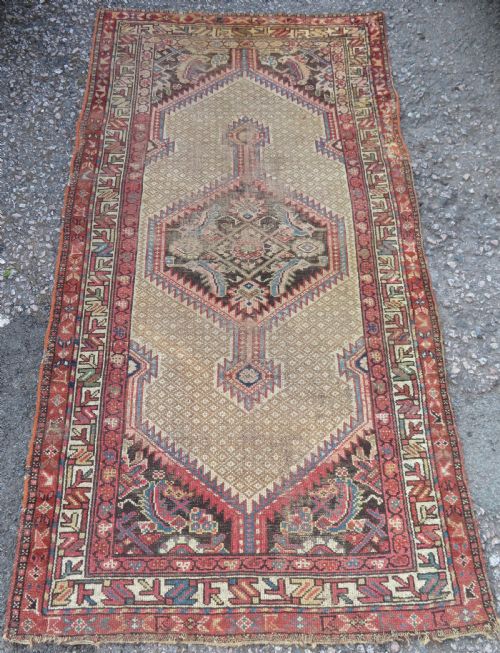
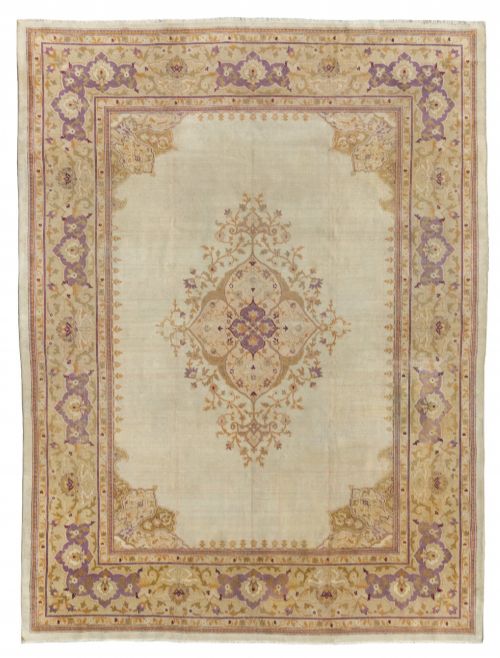


Beige Wool Area Carpet
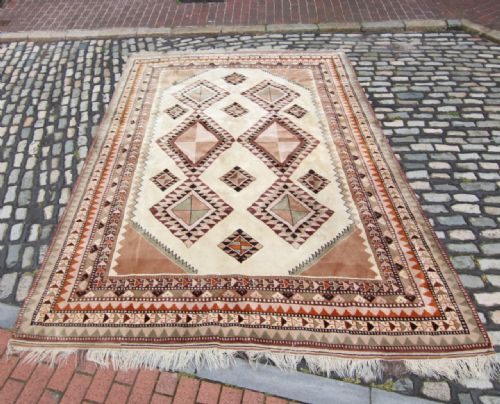
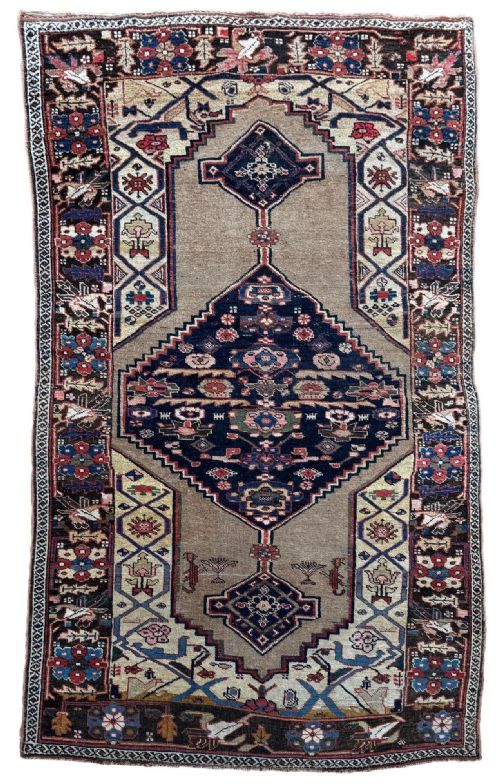
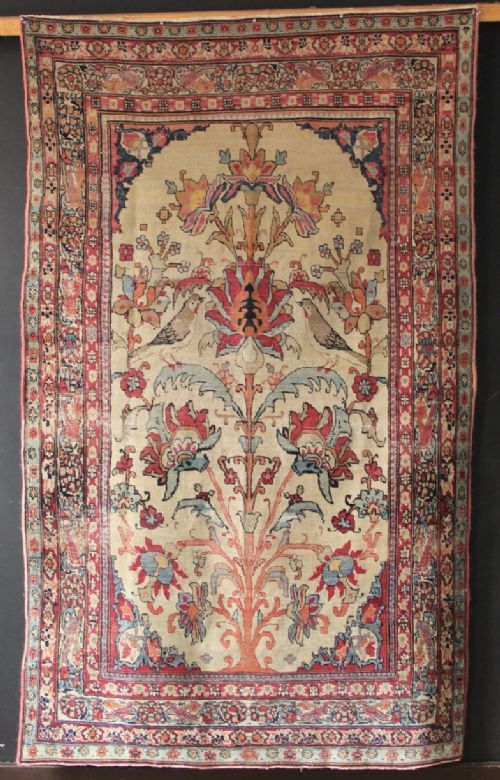
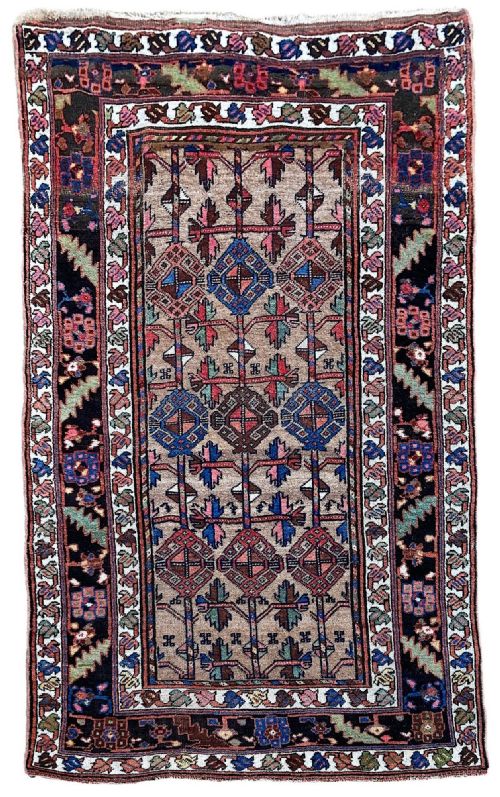
These beige wool area carpet examples bring muted earthy tones and intricate woven traditions into large rooms.
Beige Wool Area Carpet
A beige wool area carpet encompasses woven floor coverings featuring neutral sandy, pale, or camel grounds created across various global weaving traditions. Buyers searching for a beige wool area carpet will encounter pieces originating from Persian, Turkish, Chinese, and European workshops spanning the mid-nineteenth century through the 1930s.
The selection ranges from large country house Persian carpets such as Tabriz, Bidjar, and Kirman to Anatolian Oushak and tribal village rugs from Baluch and Afghan regions. Pieces often display subtle faded patinas resulting from age, utilising natural camel hair or sheep wool fields to achieve understated coloration.
Materials and Construction
These carpets rely heavily on wool and hand-spun wool fibres, occasionally incorporating natural camel hair or camel wool for the pile and foundation yarns. Cotton is also utilised in the structural warps and wefts of many Persian and Turkish village pieces to provide stability.
Weavers knotted these materials by hand onto vertical looms, employing techniques specific to their regional provenance such as asymmetrical or symmetrical knotting. The resulting textiles range from heavy country house weaves to finer city workshop productions.
Camels occasionally contributed their wool directly to the rug field, walking out of the desert and straight onto the floor.
Assessing Quality and Execution
Quality in these floor coverings rests upon the density of the knotting, the fineness of the spun wool, and the integrity of the structural foundation. Tightly packed knots allow intricate floral or tribal motifs to remain crisp and defined over decades of use.
The depth and nuance of the natural dye palette also dictate standing, where harmonious fading and complex abrasash create a rich surface texture. Condition plays a role, distinguishing structurally sound examples from those compromised by heavy wear or past restoration.
Benlian
The Beige Wool Area Carpet Glossary
- Camel Wool
- Natural fibre sheared from camels, often left un-dyed to provide a warm, durable beige or tan field in tribal rugs.
- Abrash
- A natural variation in carpet colour caused by changes in dye batches or hand-spun yarn lots, creating subtle horizontal bands of tone.
- Pile
- The upright yarn loops or cut ends that form the usable surface of a carpet, traditionally woven from sheep wool or cotton.
- Warp
- The stationary vertical threads stretched on a loom that run parallel to the length of the rug and form the fringe at the ends.
- Weft
- The horizontal threads passed back and forth through the warp threads to bind the knots in place across the width of the carpet.
Beige Wool Area Carpet: Frequently Asked Questions
How do I clean a wool carpet?
Vacuum gently without using a rotating brush roll to prevent pulling the delicate pile yarns.
Consult a professional specialist experienced in antique textiles for deeper washing to protect the natural dyes.
Where should I place an antique carpet?
Position the piece in low-traffic living rooms or bedrooms to minimise friction on the historical wool pile.
Keep the textile away from direct sunlight to prevent fading of the soft beige and camel tones.
How can I date my rug?
Examine the construction materials, the subtlety of the natural dye palette, and any inscribed dates or structural quirks.
Stylistic markers such as room-size formats or specific village motifs also help narrow down the period.
Are these carpets suitable for daily use?
Wool and camel hair fibres offer natural resilience and lanolin that resist dirt and everyday foot traffic.
Using a quality rug underlay provides additional cushioning and prevents slipping on hard floors.