
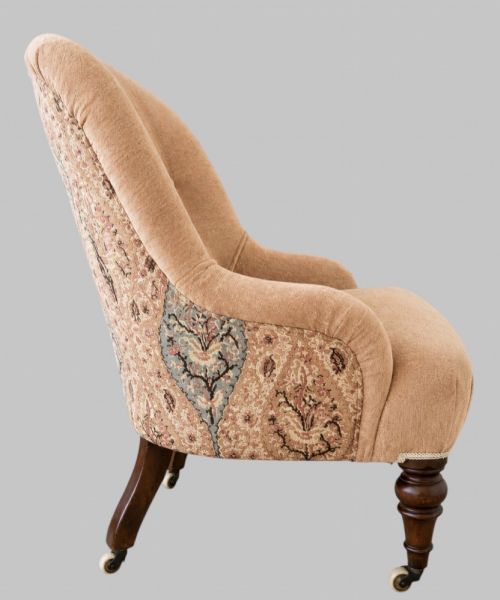


Beige Victorian Armchair
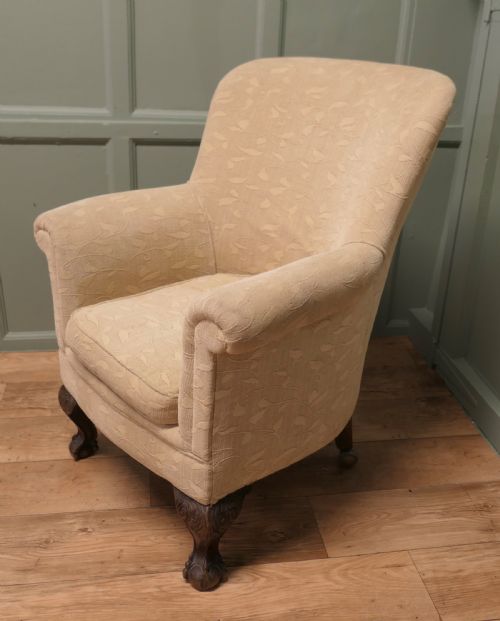
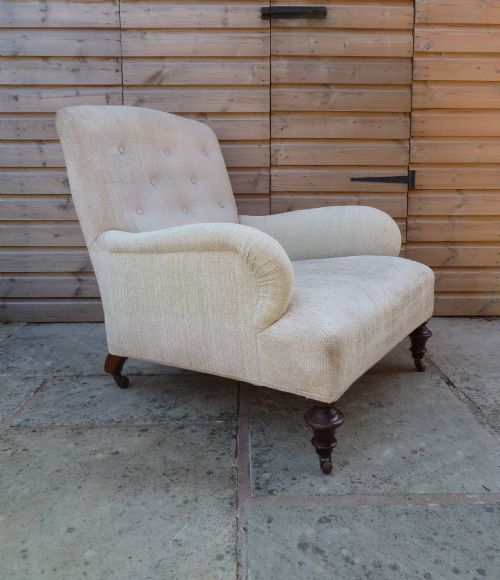
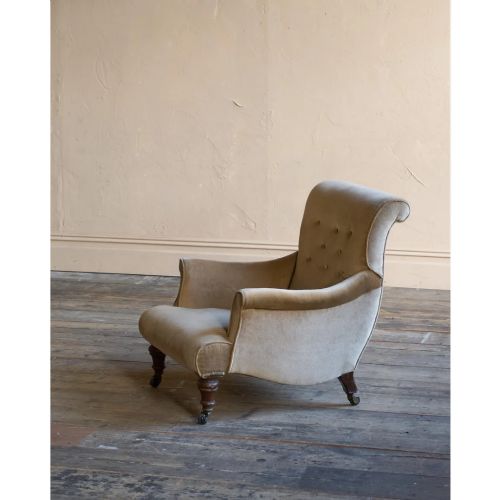
A beige victorian armchair brings warmth and upholstered comfort to a room, offering deep seats and classic nineteenth-century proportions.
Beige Victorian Armchair
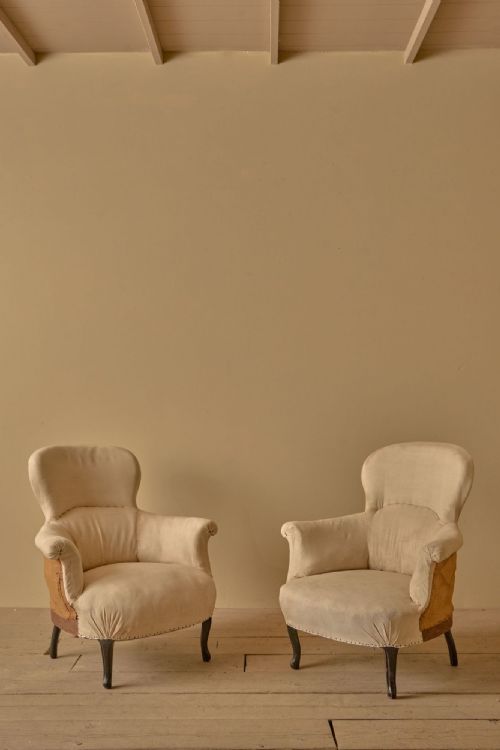
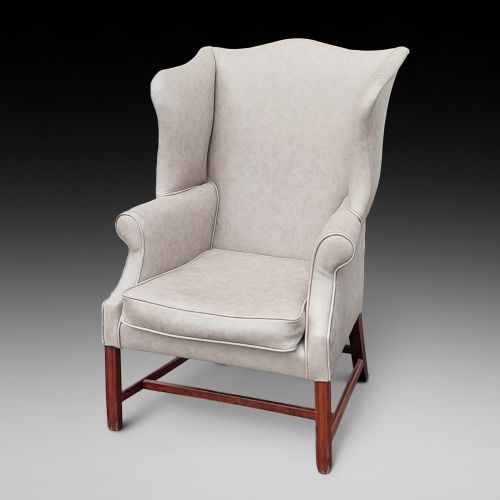
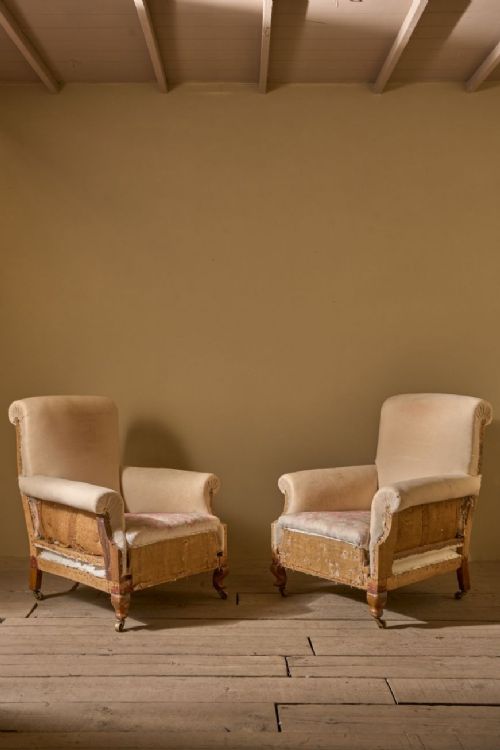
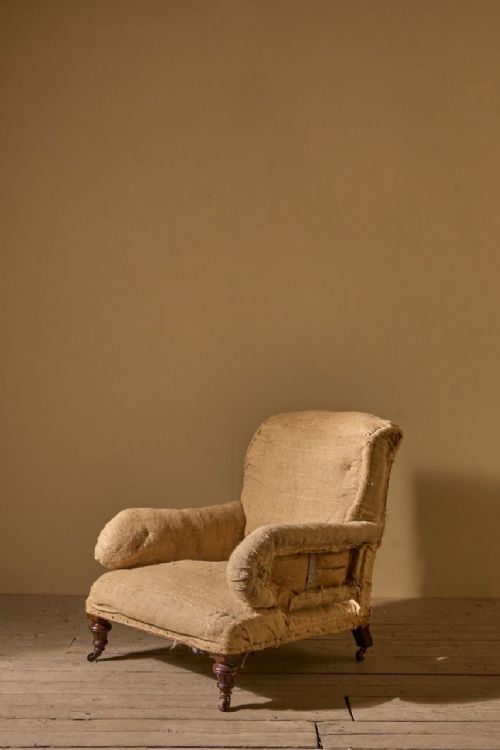
When searching for a beige victorian armchair, buyers encounter nineteenth-century seating spanning the Victorian, Regency, and Edwardian eras, including library armchairs, nursing chairs, and country house styles. These pieces range from compact occasional tub chairs to large proportioned wing backs and deep-seated club chairs.
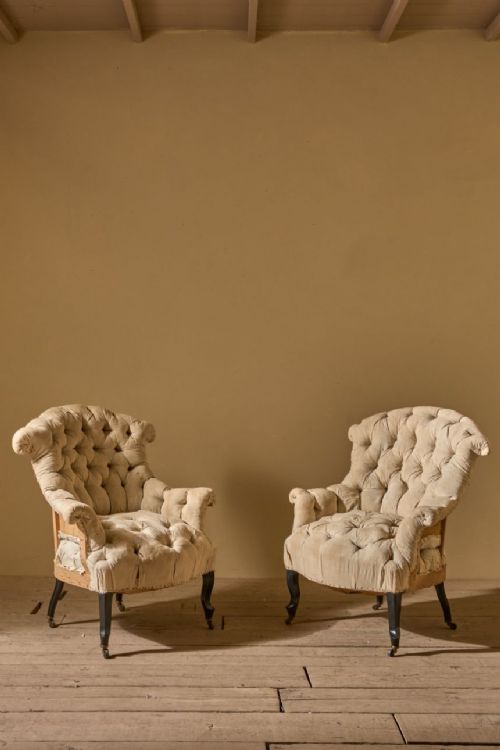
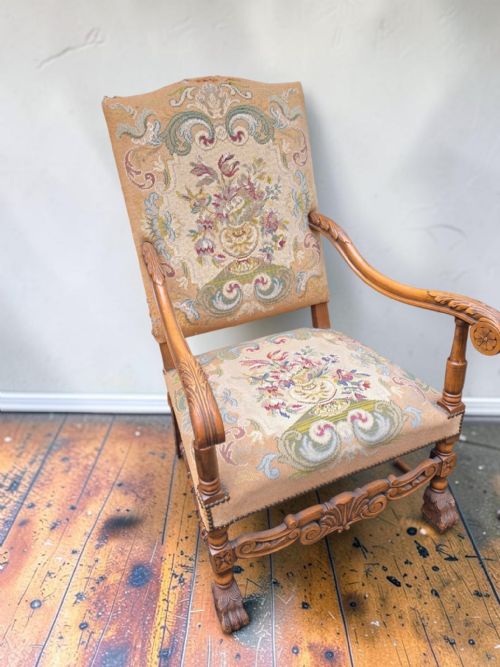
The selection frequently includes upholstered frames covered in woven fabrics, velvet, tapestry, and kilim carpet, alongside show-frame models in mahogany, walnut, and rosewood. Many pieces reflect specific regional or continental tastes, such as French Napoleon III buttoned designs and English country house seating.
Materials and construction
Frames rely on sturdy timbers including mahogany, walnut, rosewood, and general wood or timber, often featuring carved wooden elements or exposed show frames. Metal components such as iron frames and brass fittings provide structural support and mobility.
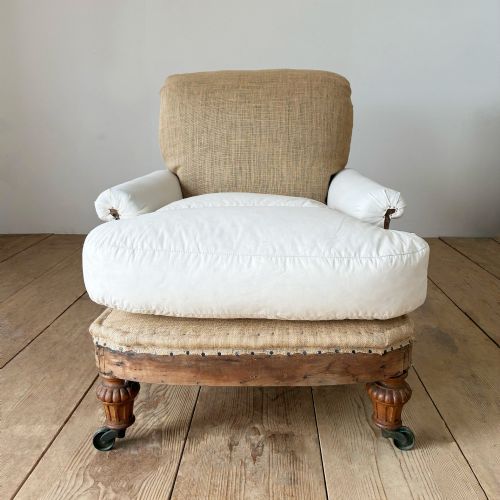
Upholstery techniques involve traditional buttoning, springs, and padding finished in durable fabrics like velvet, tapestry, and patterned textiles. Makers combined exposed polished wood structures with deep, soft cushioning to create lasting comfort.
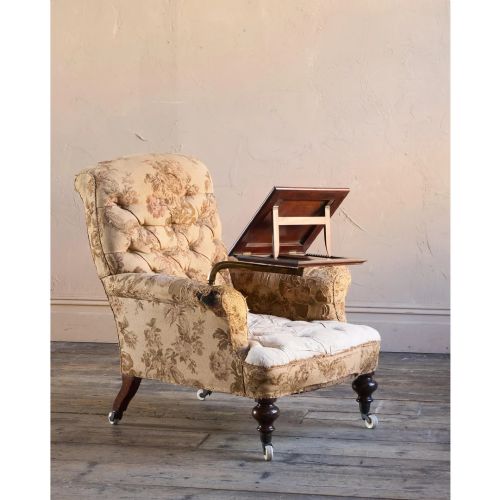
A nineteenth-century library armchair comes equipped with its own reading stand for dedicated book lovers.
Distinctions in quality
Quality rests in the precision of the timber carving, the structural integrity of the underlying wood or iron frame, and the resilience of the traditional upholstery. Superior examples demonstrate balanced proportions, whether in a compact nursing chair or a large library armchair.
The refinement of the show frame and the selection of covering materials, from fine velvet to heavy tapestry and patterned fabric, separate standard seating from exceptional library and country house pieces.
Gillows·Howard and Sons
The Beige Victorian Armchair Glossary
- Show frame
- A wooden structural frame left partially visible around the upholstered portions of the chair. It highlights the grain and carving of timbers like walnut and mahogany.
- Nursing chair
- A low-seated Victorian chair designed originally for feeding infants or sitting comfortably near a fireplace. These pieces often feature compact proportions and upholstered backs.
- Tub chair
- A curved armchair with a continuous back and arms forming a rounded enclosure. This form provides enclosed seating comfort.
- Buttoned back
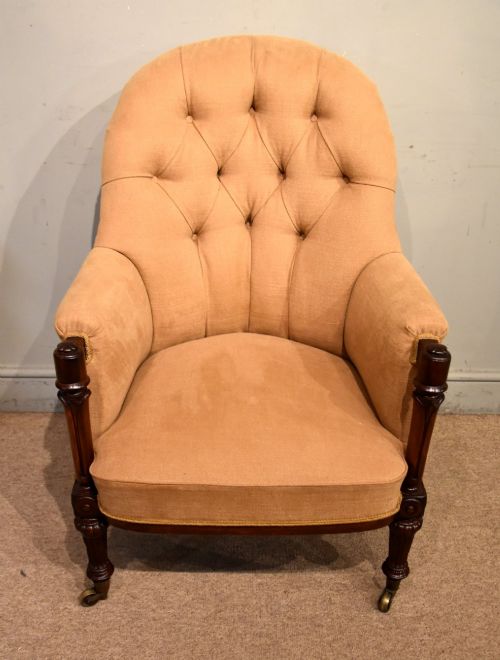
- An upholstery technique where the fabric is pulled tight and secured with recessed buttons in a geometric pattern. It creates distinct tufting across the backrest.
- Wing back
- An armchair with side panels attached to the backrest designed to shield the sitter from drafts. These prominent side wings define traditional library and country house seating.
Beige Victorian Armchair: Frequently Asked Questions
What is a victorian armchair?
A victorian armchair is a nineteenth-century seat featuring period upholstery, wooden frames, and diverse forms ranging from low nursing chairs to large library armchairs.
These pieces reflect the evolving domestic comfort and stylistic trends of the nineteenth century, utilising materials like mahogany, velvet, and walnut.
How were these armchairs used?
They served primarily as comfortable seating in libraries, bedrooms, and drawing rooms across English country houses and town residences.
Certain variations, such as library chairs with reading stands or low nursing chairs, fulfilled specific domestic tasks during the nineteenth century.
How do I identify the period?
Period identification relies on structural characteristics, frame timbers like rosewood and mahogany, and upholstery styles such as buttoning or show frames.
Reference to specific design eras like Regency, Victorian, or Edwardian helps narrow down the manufacturing timeframe of each piece.
What fabrics are used?
Original and replacement coverings include velvet, woven tapestry, patterned fabric, and kilim carpets.
These textiles complement the dark wood frames and contribute to the textured appearance characteristic of nineteenth-century seating.