
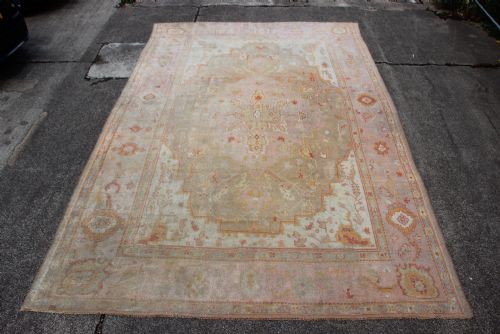
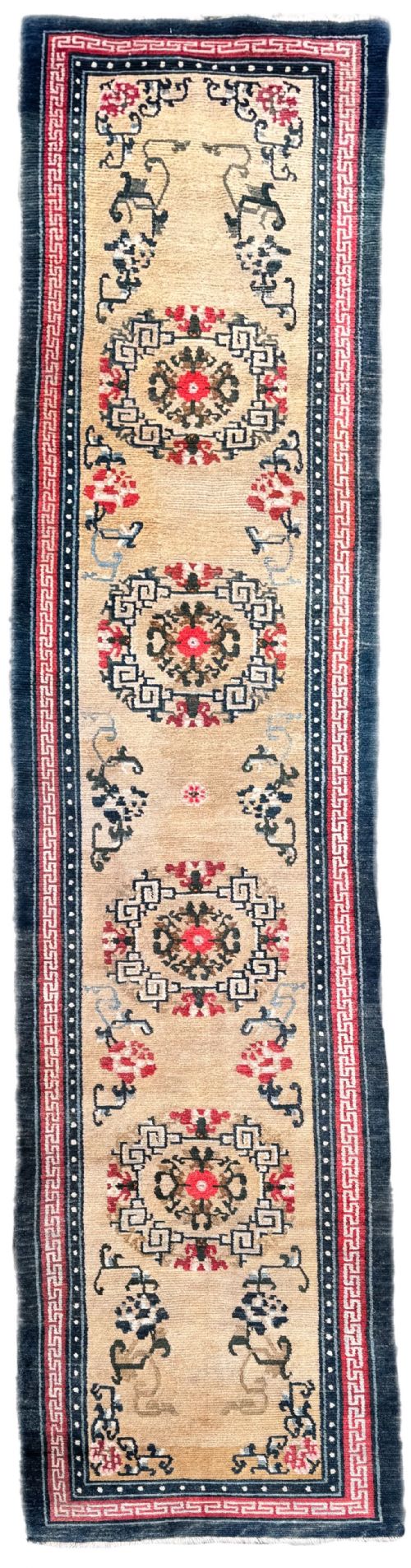
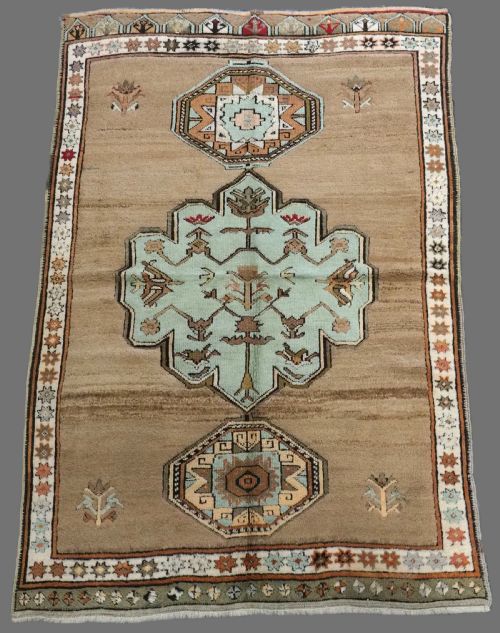
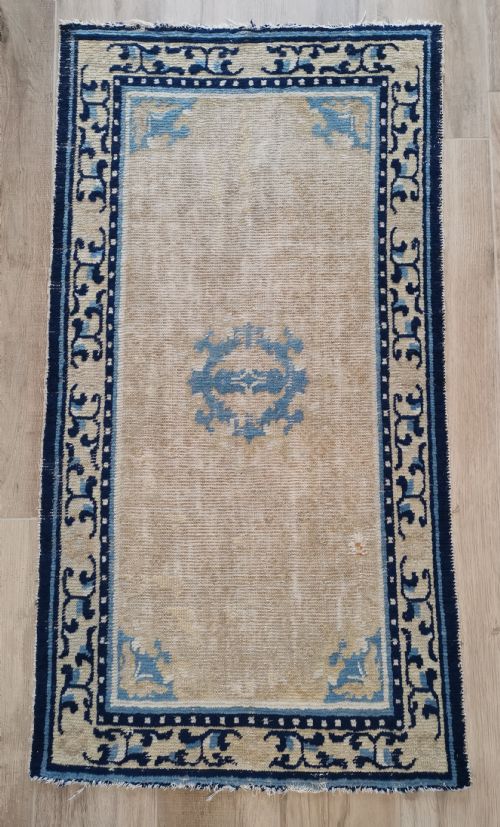


Beige Medallion Rug
These beige medallion rug examples bring historic Persian, Anatolian and Chinese weaving traditions into rooms through enduring wool and silk floor coverings.
Beige Medallion Rug
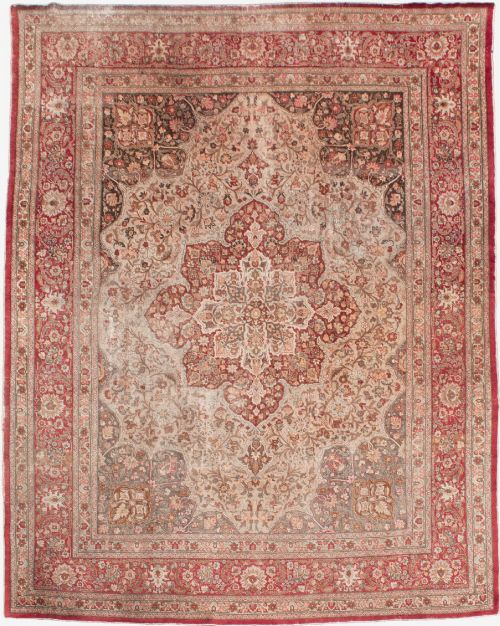
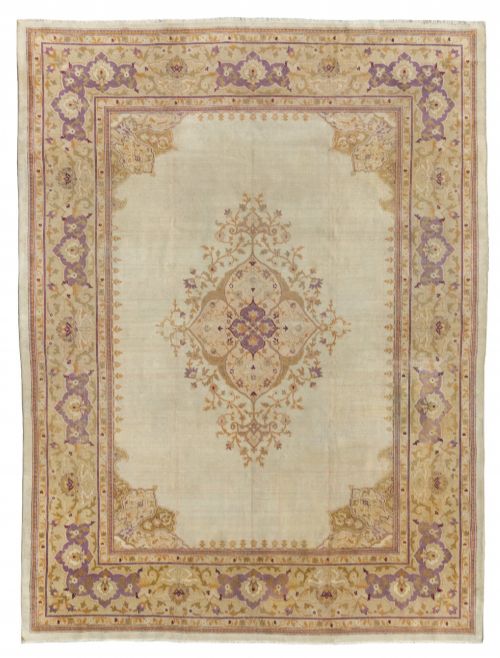
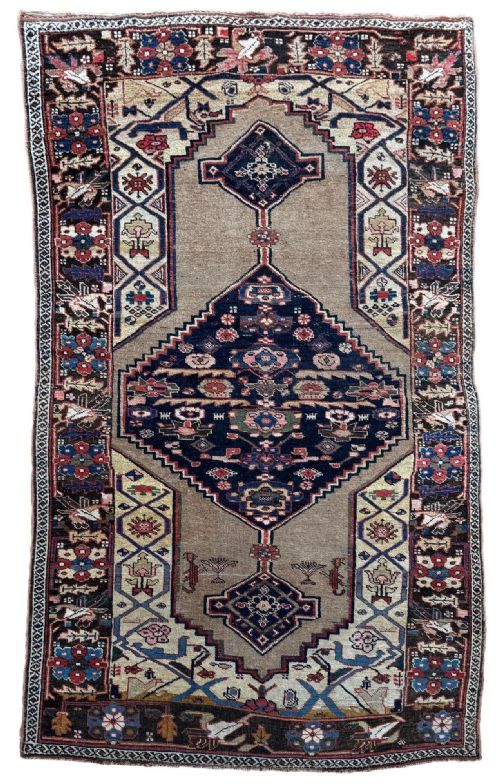
A beige medallion rug encompasses hand-knotted carpets and runners originating from Persian, Turkish, Chinese, Caucasian and Indian workshops spanning the mid nineteenth century to the early twentieth century. Buyers searching for a beige medallion rug encounter diverse regional forms, from large Oushak and Tabriz carpets to smaller village rugs and long runners.
The selections on this page demonstrate distinct regional layouts, including central motifs set against neutral fields of wool or silk. These floor coverings bridge traditional craftsmanship and neutral interior palettes through patterns recorded across various historical decades.
How they were made
The pieces utilise natural materials such as standard wool, hand-spun wool, camel wool, cotton foundations and floss silk. Artisans knotted these fibres by hand to build dense piles and durable foundations across different regional traditions.
Weavers employed traditional dyeing and knotting techniques specific to their localities, utilising silk for fine details and robust wool or camel hair for field structures. These methods result in varied textures ranging from heavy country house carpets to finely knotted silk rugs.
Materials documented across the listings include wool, cotton, silk, camel wool, hand-spun wool and floss silk.
What varies in quality
Quality rests upon the fineness of the knotting and the selection of raw materials, such as hand-spun wool or floss silk. Superior examples display precise execution of the central medallion and harmonious integration of secondary motifs.
The integrity of the foundation materials and the handling of the pile contribute significantly to the overall caliber of each piece. Master weavers achieved greater durability and structural refinement through tighter knot densities and superior fibre preparation.
The Beige Medallion Rug Glossary
- Medallion
- A central ornamental motif placed in the field of a rug. It forms the focal point of the composition in many traditional woven designs.
- Oushak
- A style originating from the Turkish town of Ushak, known for large-scale floral patterns and soft wool textures. These carpets often feature muted or pale palettes.
- Tabriz
- A type of carpet produced in north-west Persia, noted for complex floral designs and fine workshop execution. They frequently incorporate classical medallion layouts.
- Bidjar
- A durable rug style from Persia recognised for heavy, dense knotting and robust foundation construction. They are often described as iron rugs due to their solid build.
- Floss silk
- Unspun or raw silk filament used for knotting specific luxury pile sections. It imparts a distinct lustrous sheen and soft tactile quality to the surface.
Beige Medallion Rug: Frequently Asked Questions
Where were these rugs made?
The pieces originate from traditional weaving centres across Persia, Turkey, China, the Caucasus and India. Each region contributed distinct knotting techniques and stylistic motifs.
Production spanned village workshops and major city manufactories during the nineteenth and twentieth centuries.
What materials are used in the pile?
The pile is constructed primarily from wool, hand-spun wool, camel wool or silk. Some specialised examples utilise floss silk for enhanced softness and sheen.
Cotton is commonly employed for the warp and weft foundations supporting the knotted pile.
How do I care for an old rug?
Gentle vacuuming without a rotating brush helps remove dust while protecting the delicate hand-knotted pile. Professional cleaning suited to antique textiles preserves the natural dyes and fibres.
Keeping the rug out of direct sunlight prevents uneven fading of the wool and silk areas.
How are the different periods identified?
Dating relies on stylistic characteristics, structural analysis, material preparation and specific regional weaving traits recorded across the decades. Comparative study of border designs and knot structures aids in establishing approximate age.
Documentation and historical attribution link individual pieces to eras such as the late nineteenth century or early twentieth century.