



Bedroom Pedestal Vanity Unit
A bedroom pedestal vanity unit is the anchor of a dressing space, offering fitted drawers and surface top for daily grooming.
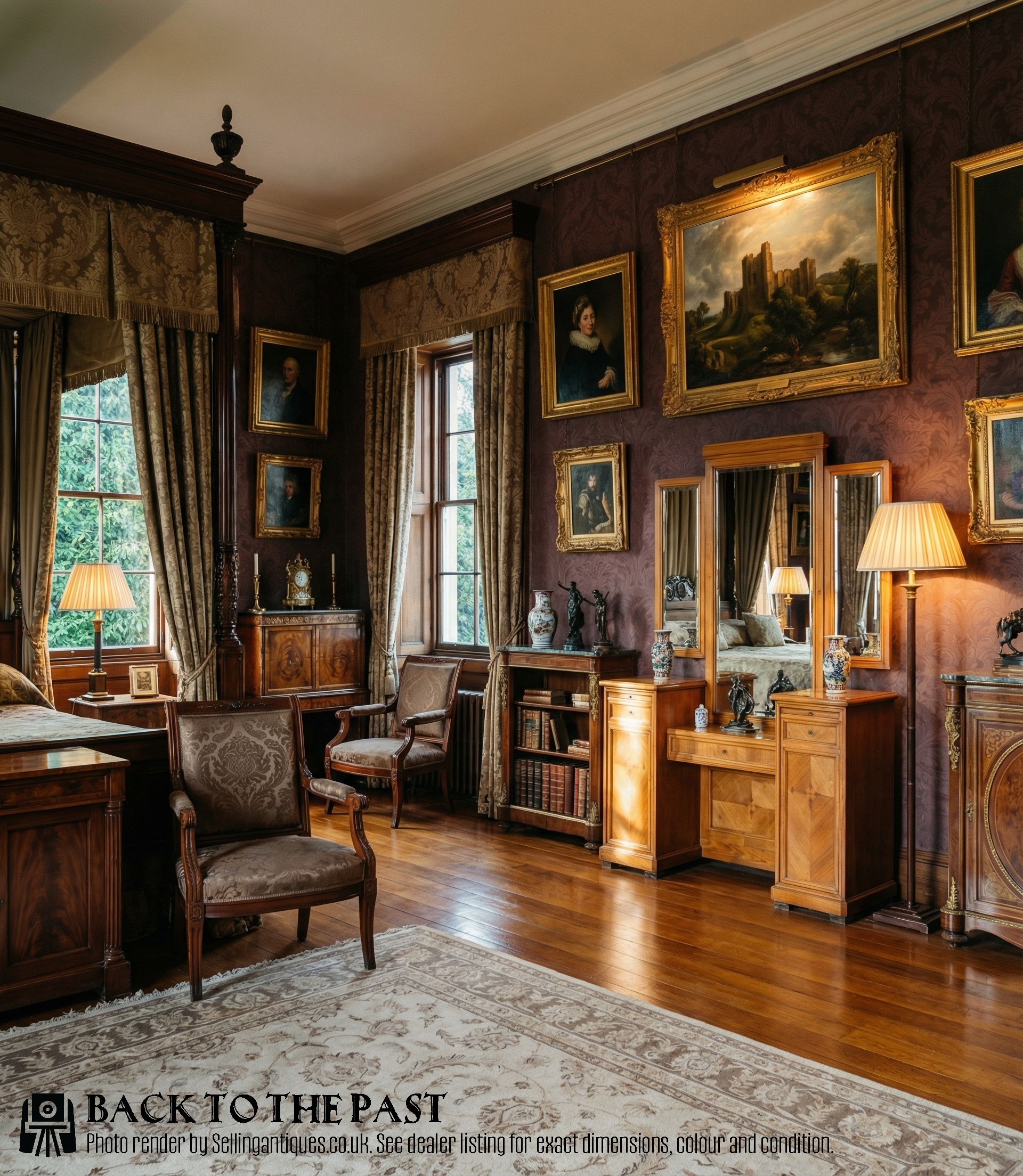
Bedroom Pedestal Vanity Unit
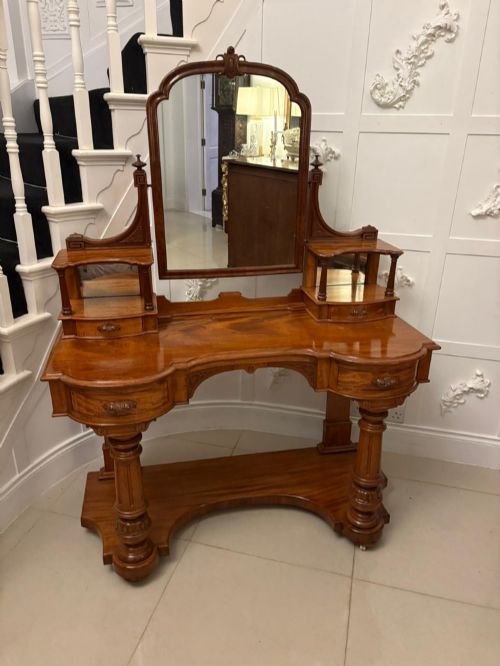
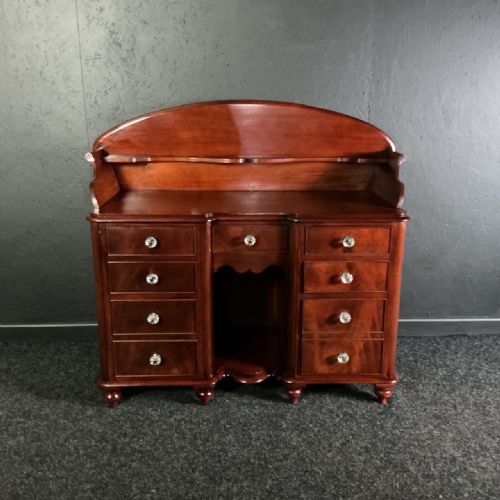
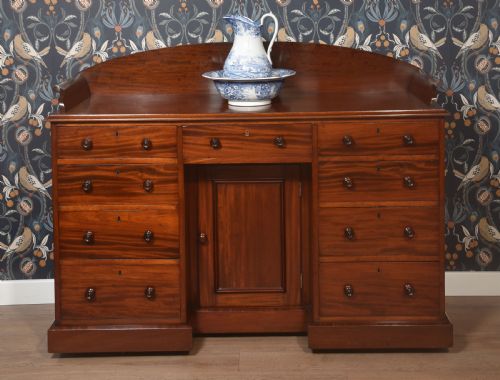
When you search for a bedroom pedestal vanity unit, you are looking at nineteenth and early twentieth-century dressing tables, washstands, and dressing chests. These pieces combine tabletop surfaces with flanking sets of drawers or pedestals, often incorporating pivoting or fixed mirrors.
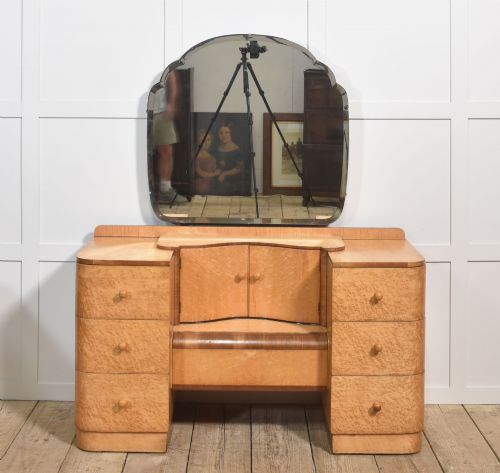
The versions most likely to meet you on this page span the Victorian, Edwardian, and Art Deco periods, alongside Cotswold School and continental designs. They range from solid mahogany washstands to maple and burr walnut art deco vanities.
Makers and workshops of the nineteenth and early twentieth centuries produced these items in various woods, including satinwood, oak, and pine, occasionally applying decorative marquetry or paintwork.
How they were made
Makers constructed these bedroom pedestal vanity units using solid timbers and veneers such as mahogany, walnut, satinwood, and oak. Frame construction typically involved traditional joinery for the pedestals and drawer carcasses, whilst decorative details relied on marquetry inlay and brass fittings.
Mirrors were integrated using timber framing and brass pivots, allowing adjustments to the glass. Many pieces incorporated separate or attached dressing chests, washstands, and stools using matching or complementary materials.
Several pieces include original tilting cheval mirrors that have quietly reflected morning routines for over a century.
What varies in quality
Quality in a bedroom pedestal vanity unit lies in the selection of timber veneers, such as burr walnut or figured mahogany, and the precision of the marquetry inlay. The integration of original mirror glass and brass hardware also distinguishes finer examples from simpler utilitarian pieces.
Structural integrity of the pedestals and the smooth operation of the drawers demonstrate the standard of workshop execution. Pieces bearing attribution to known makers or firms reflect higher levels of design and craftsmanship.
Harry and Lou Epstein·Edwards and Roberts·Betty Joel
The Bedroom Pedestal Vanity Unit Glossary
- Pedestal
- A foundational column or upright structure supporting the sides of a dressing table. It typically contains a vertical stack of drawers.
- Marquetry
- Decorative patterns formed by fitting together small pieces of veneer into timber surfaces. This technique creates pictorial or geometric designs on the wood.
- Cheval mirror
- A full-length mirror mounted in a freestanding frame that tilts on vertical pivots. It allows the user to view their entire outfit.
- Satinwood
- A durable, lustrous timber with a golden yellow sheen often used for fine cabinetwork. It takes a high polish and serves as a base for inlay.
Bedroom Pedestal Vanity Unit: Frequently Asked Questions
What is a bedroom pedestal vanity unit?
A bedroom pedestal vanity unit is a piece of furniture designed for grooming, featuring a central surface flanked by drawer pedestals and often accompanied by mirrors.
These items encompass Victorian dressing tables, Edwardian washstands, and Art Deco walnut vanities.
How do I date a vanity unit?
Dating relies on observing the timber choices, construction techniques, and stylistic markers present in the piece. Victorian examples often utilise heavy mahogany or burr walnut, while Art Deco pieces from the 1930s favour maple and streamlined geometric forms.
Hardware such as brass handles and the method of mirror mounting also provide chronological clues.
Where should I place it?
These vanity units function effectively against a bedroom wall where natural light from a window illuminates the mirror surface. Placing them in a master bedroom creates a dedicated dressing area.
Ensure there is sufficient clearance for both the pedestal drawers to open and the stool to pull out comfortably.
How do I care for the wood?
Maintenance involves dusting with a soft, dry cloth and avoiding placement near direct heat sources or strong sunlight that might fade the polish. Periodic application of suitable wax preserves the finish of woods like mahogany and walnut.
Keep glass components clean using standard glass cleaner applied to a cloth rather than sprayed directly near the timber frame.