


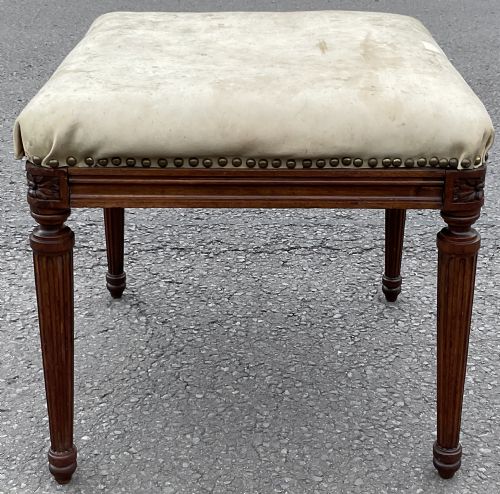
Bedroom Ottoman Bench
A bedroom ottoman bench brings practical seating and soft upholstery to the foot of the bed, drawing on nineteenth-century and early twentieth-century forms.
Bedroom Ottoman Bench
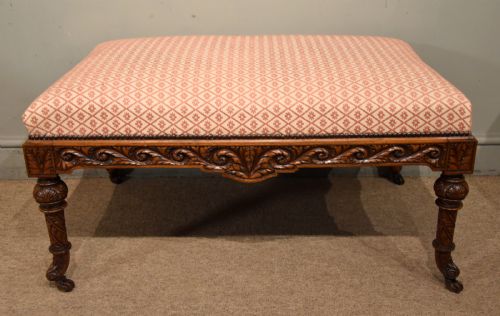
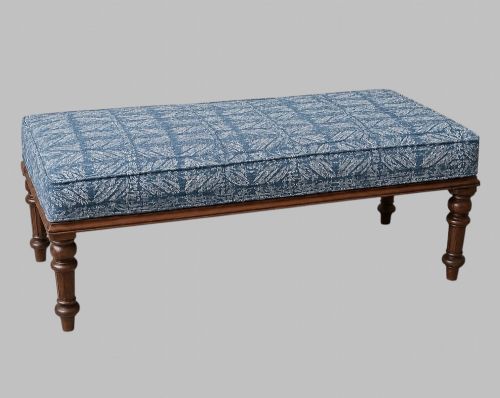
A bedroom ottoman bench covers a diverse range of seating and storage forms, including dressing stools, window seats, blanket boxes, and long benches. These pieces originate primarily from the nineteenth century, the Victorian period, and the early twentieth century.
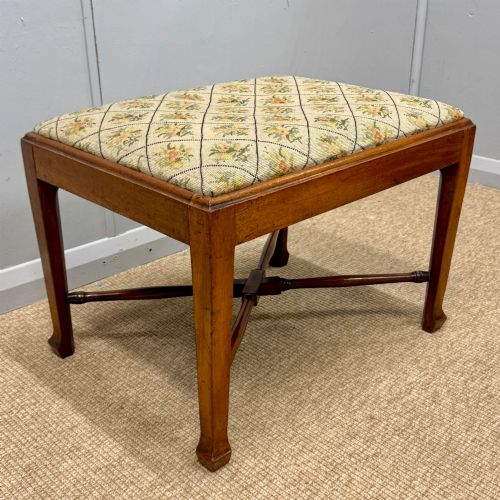
Buyers looking for a bedroom ottoman bench will most commonly encounter Victorian walnut or mahogany dressing stools, alongside French provincial and Swedish birch window seats. Many examples combine traditional wooden frames with updated textile upholstery such as linen, tapestry, or patterned fabric.
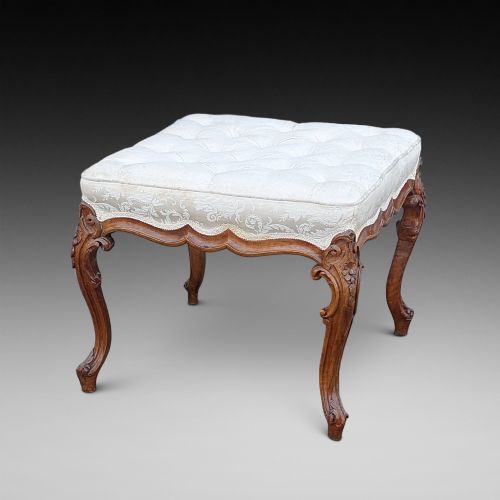
The selection also includes specialised variants like deep-buttoned ottomans and long stools supported on cabriole or fluted legs. These items function as versatile additions to domestic spaces, providing both surface utility and period character.
How they were made
Makers constructed the structural frames of these pieces using solid timbers such as mahogany, walnut, rosewood, birch, satin birch, and pine. Joinery techniques varied from carved rosewood and mahogany framing to simpler pinned box construction.
Upholstery formed a central part of the manufacturing process, employing materials like fabric, textile, leather, tapestry, and linen. Detail was added through hand carving, brass accents, ball and claw feet, and deep buttoning.
The listings on this site feature nineteenth-century and early twentieth-century pieces constructed from walnut, mahogany, birch, and pine.
What varies in quality
The standard of a piece is determined by the selection of timber, such as figured walnut or dense mahogany, and the crispness of any hand-carved ornamentation on the legs and frame. Early examples often demonstrate greater attention to joinery detail than later adaptations.
Upholstery execution and fabric choice significantly influence the overall integrity of the piece, with professional re-covering using specialist textiles maintaining the character of the original design.
Harry & Lou Epstein·James Shoolbred
The Bedroom Ottoman Bench Glossary
- Cabriole leg
- A furniture leg that curves outward and then tapers inward, terminating in a decorative foot. This style appears frequently on eighteenth-century revivals and Victorian seating.
- Window seat
- A long, narrow form of bench designed to fit into the recess of a window. These pieces often feature open frames or upholstered tops.
- Blanket box
- A deep storage chest with a hinged lid, sometimes adapted with upholstered padding to serve as a seat. Birch and pine frequently provide the carcass for these functional items.
- Cross stretcher
- An intersecting wooden brace positioned between the legs of a stool or bench for added structural stability. They are commonly turned or carved.
- Deep buttoning
- An upholstery technique where twine is pulled through the padding and secured with buttons to create a diamond pattern. This method adds firmness and texture to ottomans and stools.
Bedroom Ottoman Bench: Frequently Asked Questions
How do I use a bedroom ottoman bench?
These pieces sit neatly at the foot of a bed, serving as a seat while dressing or as a convenient surface for laying out garments.
Many variants also incorporate internal storage for bedding, blankets, or pillows, combining utility with traditional comfort.
How do I date a Victorian stool?
Dating relies on identifying the primary timber used, such as rosewood or walnut, alongside the specific revival style of the frame. Victorian pieces frequently utilise heavy carved mahogany or walnut with cabriole legs.
Examination of the underside and joinery methods can also offer clues to the manufacturing decade within the nineteenth century.
Are these benches suitable for modern bedrooms?
The understated proportions of these wooden benches allow them to integrate easily into contemporary interior schemes. Many pieces feature neutral linen or patterned textile upholstery that bridges historic and modern aesthetics.
Their dual functionality provides practical seating without overwhelming the floor space of a modern bedroom.