

Bedroom Mirror on Stand
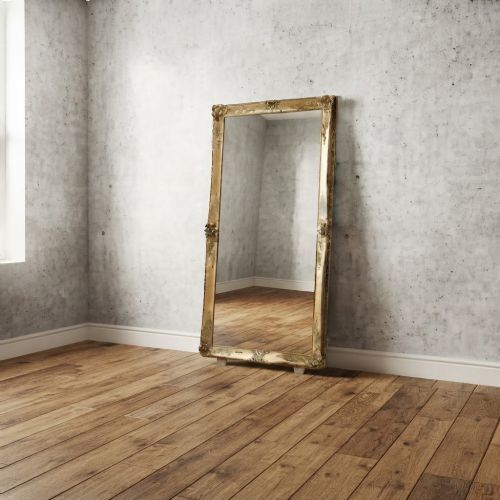
A bedroom mirror on stand offers a practical full-length reflection and brings architectural presence to a room.
Bedroom Mirror on Stand
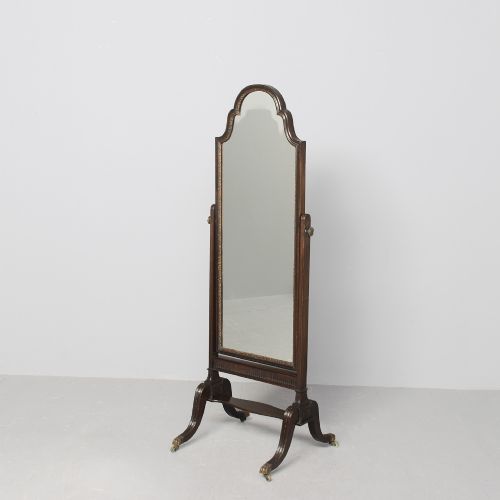
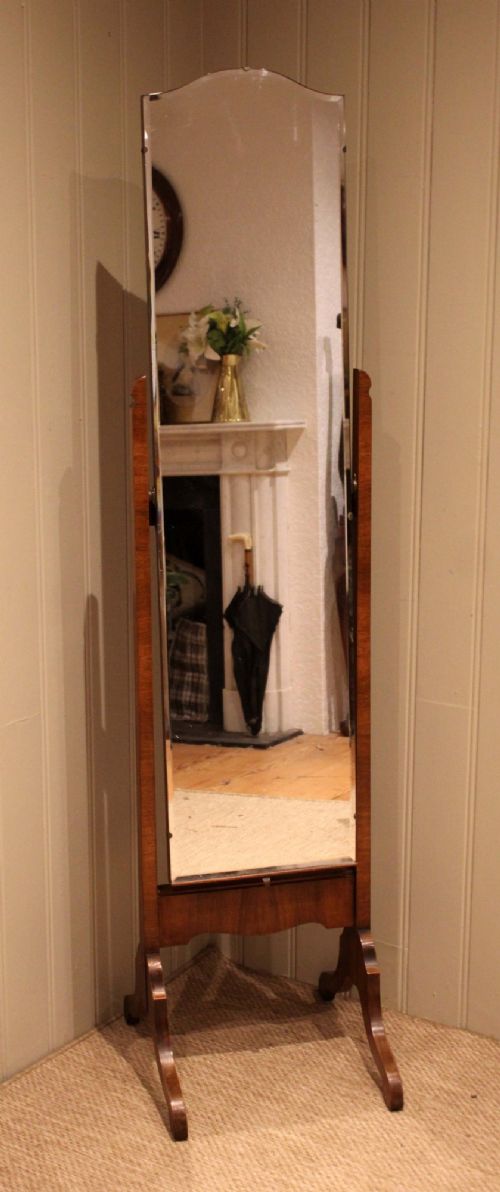
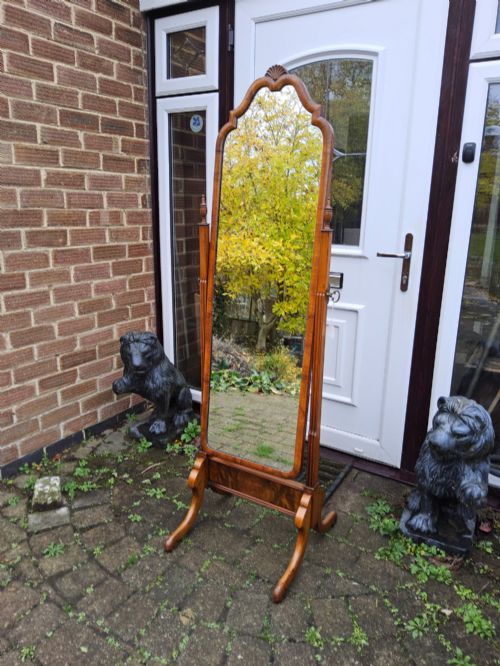
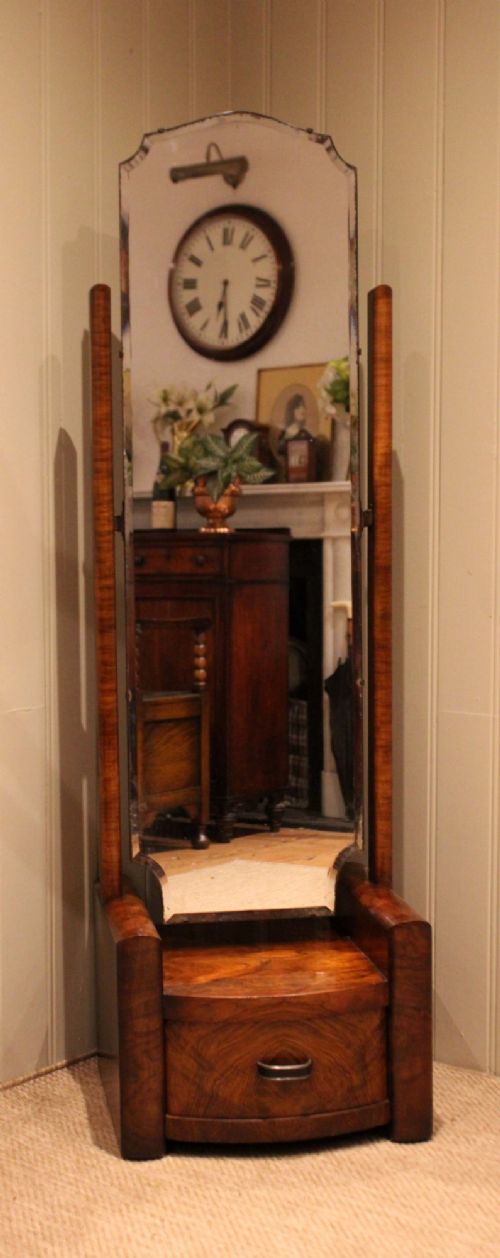
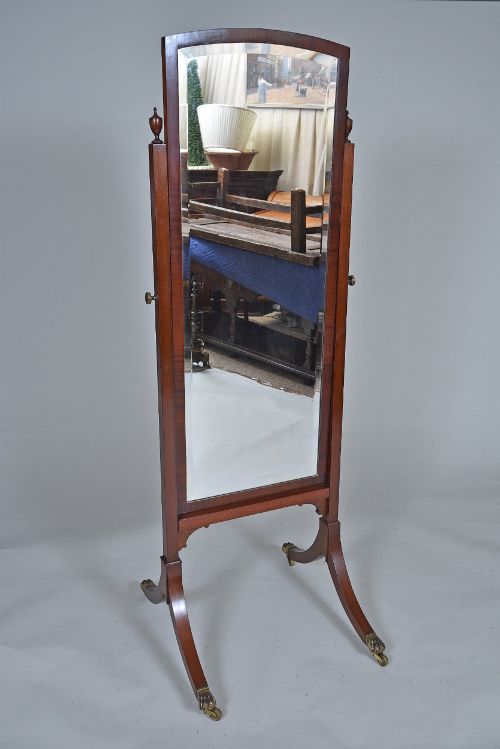
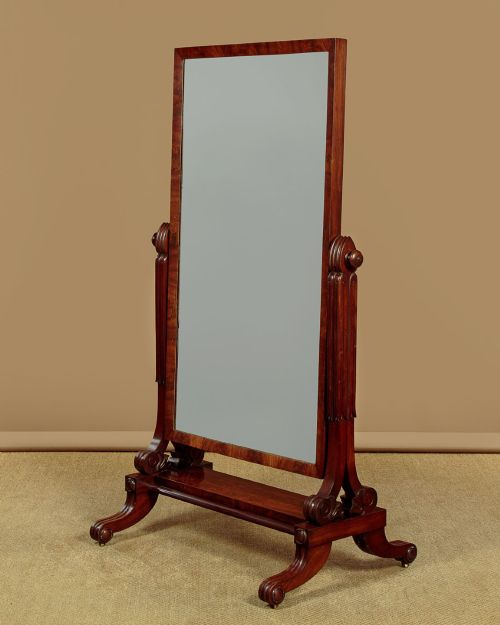
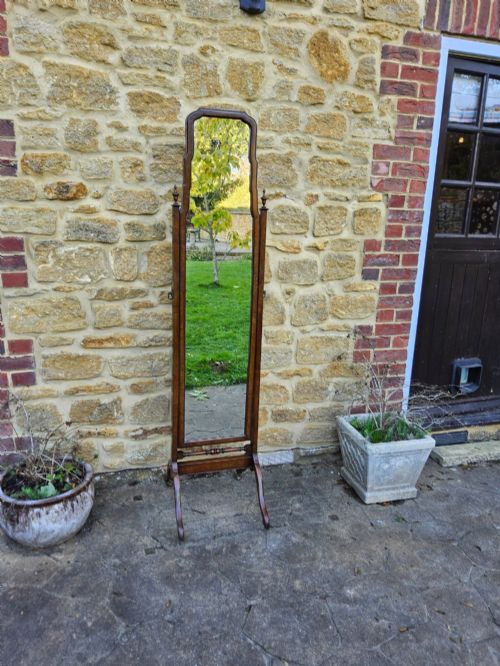
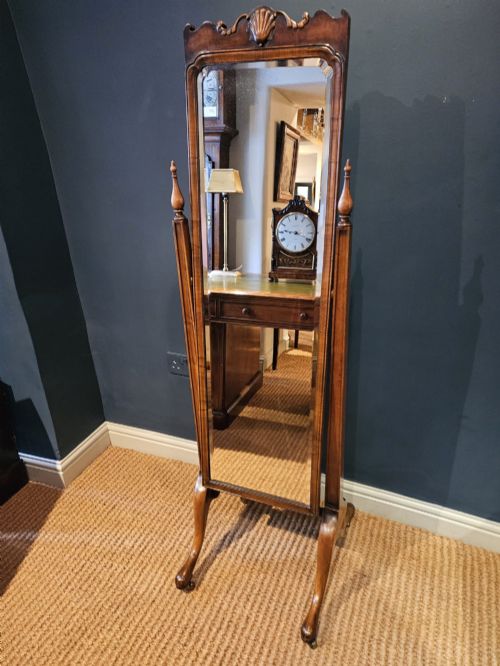
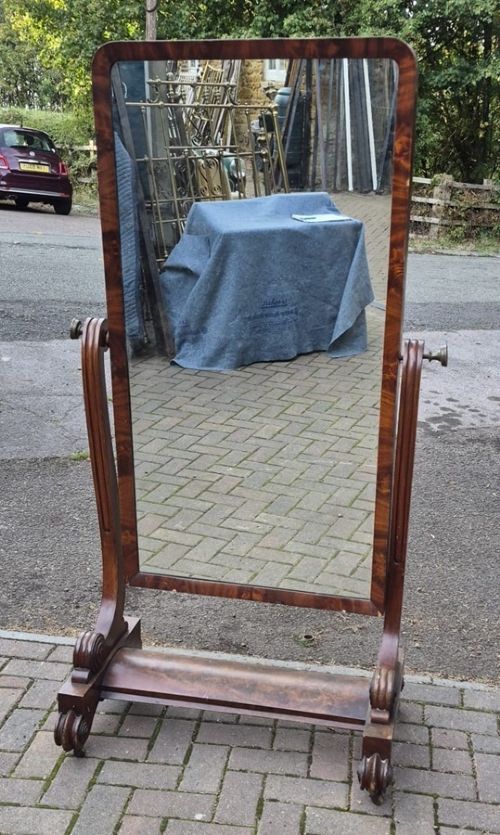
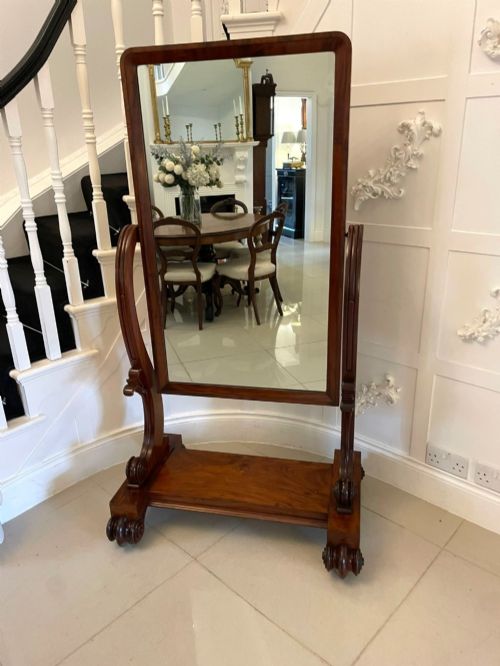
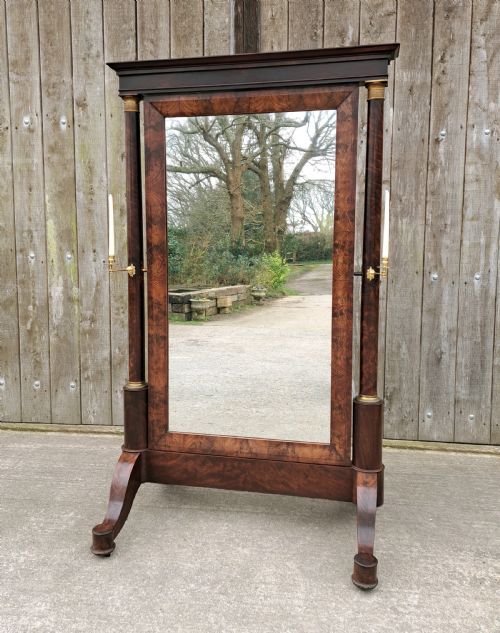
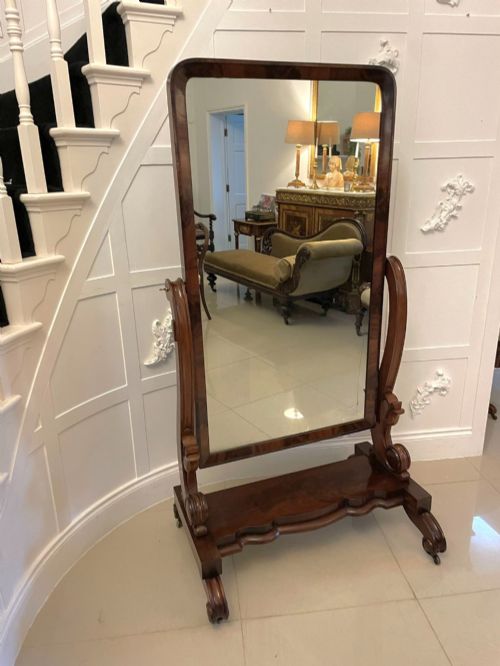
A bedroom mirror on stand primarily takes the form of a cheval mirror, a tall glass plate mounted within a freestanding frame that tilts on pivots. These pieces emerge across the nineteenth and early twentieth centuries in forms ranging from Regency mahogany to Edwardian inlaid designs.
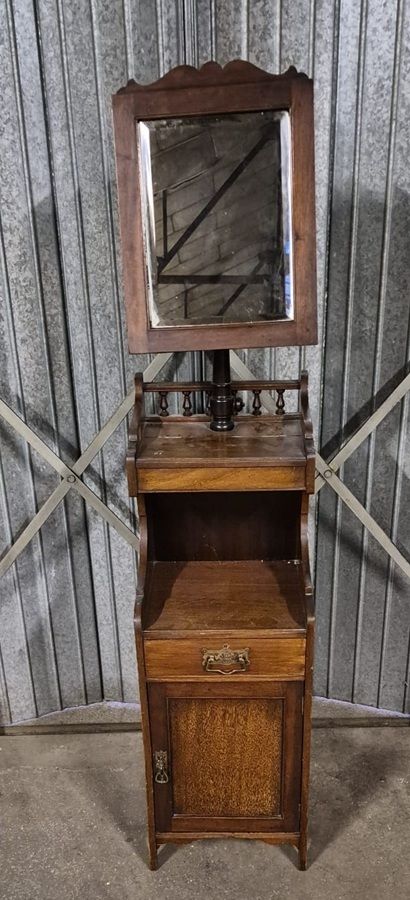
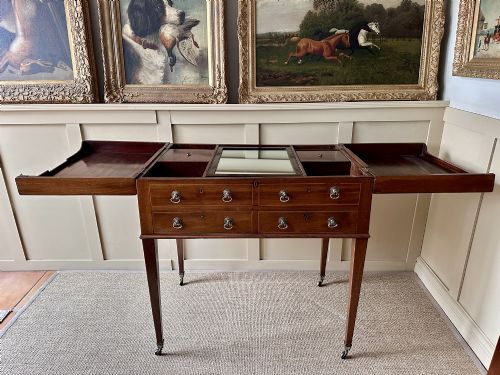
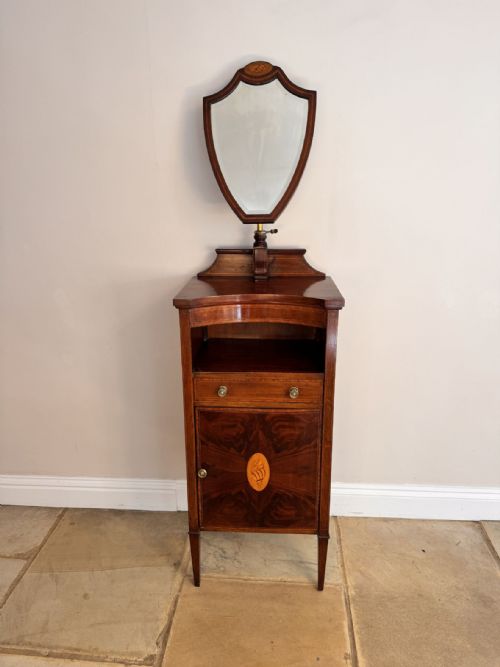
Buyers also encounter smaller table mirrors, shaving stands, and dressing stands that sit upon furniture rather than the floor. Mahogany remains the dominant timber across the selection, accompanied by walnut, oak, and occasional painted or ebonised finishes.
Materials and construction
Cabinetmakers constructed these frames using solid and veneered timbers such as mahogany, walnut, and oak, joined with traditional framing techniques. Brass pivots, brackets, and castors allow the heavy mirror plates to tilt smoothly within their upright supports.
Mirror glass is set within shaped surrounds, sometimes featuring detailed wood carving, inlay, or painted Chinoiserie decoration. Frames range from restrained architectural proportions to decorative French Chateau and French Empire styles.
Bedroom Mirror on Stand Retail Price Guide 2026
Typical asking prices for bedroom mirror on stand among the pieces listed under this phrase on Sellingantiques today, from the lower quarter to the upper quarter. They describe what is for sale here now, not the wider market.
Some Victorian shaving stands doubled as miniature vanity stations with hidden drawers for morning routines.
Distinctions in quality
Quality rests upon the selection of timber grain, the precision of the frame joinery, and the weight of the supporting mounts. Finer examples display carefully matched mahogany veneers, crisp carved details, and robust brass hardware that maintains the balance of the tilting glass.
The integrity of the original mirror glass and the stability of the floor frame or stand distinguish better pieces from simpler utilitarian versions.
Flashman & Co·Gillows
The Bedroom Mirror on Stand Glossary
- Cheval mirror
- A large freestanding mirror supported on a four-legged frame with vertical uprights. This design allows the glass to pivot fully within the uprights.
- Tilt dressing glass
- A smaller mirror mounted on a fixed stand or box base designed to rest on a table or dresser. The glass plate adjusts using side screws or pivots.
- Shaving stand
- A specialist furniture piece incorporating an adjustable mirror alongside storage drawers or wash basins. These were designed for grooming in bedrooms or dressing rooms.
- Chinoiserie
- A European decorative style reflecting Chinese artistic motifs, often applied as painted or lacquered designs on wood. This finish appears on select mirrors and dressing pieces.
- Pivots
- The metal pins or screws set into the sides of the mirror frame that attach it to the upright supports. They allow the glass to tilt at various angles.
Bedroom Mirror on Stand: Frequently Asked Questions
How do I adjust a cheval mirror?
Most freestanding mirrors use side pivots or thumbscrews threaded into the upright posts. Adjusting these tension fittings allows the glass to tilt and hold position securely.
Over-tightening can strain the wood, so balance the tension evenly on both sides.
Where should I place a mirror on stand?
Position the piece perpendicular to windows to capture natural light without creating harsh glares. Ensure the floor area provides a stable surface for the heavy frame and castors.
Allow enough clearance around the base for the glass to tilt freely.
What is the difference between a cheval mirror and a dressing mirror?
A cheval mirror stands directly on the floor and provides a full-length reflection. A dressing mirror sits on top of a table, washstand, or chest of drawers.
Both types utilise pivoting frames but serve different functional heights in a room.
How do I identify the period of these mirrors?
Look to the timber choices, construction methods, and decorative styles like Regency reeding or Edwardian inlay. Brass hardware design and the clarity of the mirror glass also indicate age.
Comparative details across nineteenth and early twentieth century examples help date the frame.