

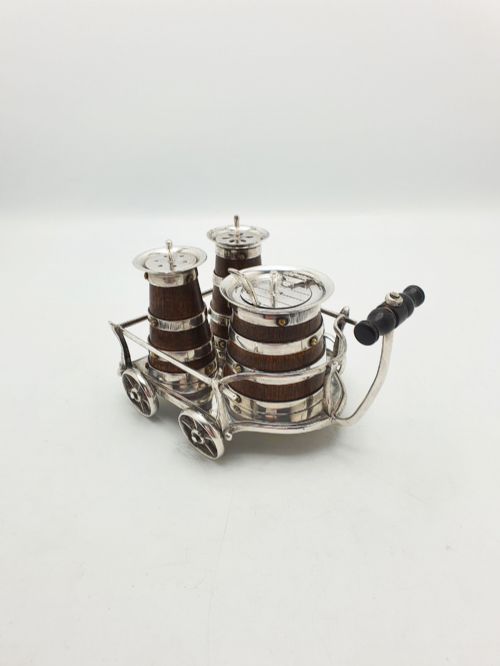


Barrel Stand Table
These barrel stand table pieces combine practical support with distinctive cylindrical forms, offering collectors unusual timber and porcelain items for the home.
Barrel Stand Table
A barrel stand table merges the sturdy proportions of a cask shape with the elevated surface of a pedestal or support, appearing across various centuries and traditions. When searching for a barrel stand table, collectors encounter pieces ranging from Chinese hardwood stools and garden seats to Georgian mahogany designs featuring distinct gun barrel stems.
The selection includes items spanning the eighteenth, nineteenth, and early twentieth centuries, drawing on diverse global workshops. Buyers frequently meet compact occasional tables, plant stands, and novelty pieces that utilise cylindrical profiles to anchor a room.
Originating from both British cabinet makers and Chinese export workshops, these items serve multiple household functions as stands, stools, or side tables. The diversity of periods ensures that each example reflects the specific aesthetic of its origin, from Georgian proportions to Victorian novelty.
Materials and construction methods
Construction relies upon dense timbers such as mahogany, oak, burr wood, and hongmu, often shaped through traditional joinery and turning techniques. Artisans selected these hardwoods for their durability and grain pattern, utilising lathe work to create smooth cylindrical or gun barrel stems.
Certain examples incorporate ceramics, utilising blue and white porcelain or rose medallion glazes for garden seats and barrel forms. Metalwork also appears through brass binding and silver-plated mounts, which reinforce and decorate wooden and ceramic bodies alike.
Barrel Stand Table Retail Price Guide 2026
Typical asking prices for barrel stand table among the pieces listed under this phrase on Sellingantiques today, from the lower quarter to the upper quarter. They describe what is for sale here now, not the wider market.
Listings feature items from the eighteenth, nineteenth, and early twentieth centuries, utilising mahogany, oak, burr wood, hongmu, and porcelain.
Judging quality and craftsmanship
Superior examples distinguish themselves through the precision of their turned elements and the quality of their timber selection, such as figured burr wood or dense hongmu. The integration of metal mounts, such as tight brass binding on wooden staves, indicates higher craftsmanship.
Proportion and stability separate finer pieces from standard iterations, ensuring that the cylindrical or tapered form remains balanced. The crispness of carved details on wooden stools or the hand-painted execution of porcelain garden seats determines the upper tier of the range.
Elkington
The Barrel Stand Table Glossary
- Gun barrel stem
- A turned furniture support shaped to resemble the profile of a historic firearm. This form appears frequently on eighteenth-century pedestals and tables.
- Hongmu
- A traditional Chinese category of dense, heavy hardwood prized for its deep colour and durability. Artisans utilised this material for structural stability and fine carving.
- Burr wood
- Timber featuring distorted grain patterns caused by tree growths, creating highly decorative swirls. Cabinet makers utilised veneer and solid sections of this material for visual impact.
- Rose medallion
- A distinctive style of Chinese porcelain decoration featuring panel scenes with figures, birds, and flowers painted in polychrome enamels. This palette dominates nineteenth-century ceramic garden seats.
Barrel Stand Table: Frequently Asked Questions
What is a barrel stand table used for?
These items serve primarily as small side tables, plant stands, or occasional furniture within living spaces and hallways. Their elevated surfaces provide a stable platform for decorative objects, lamps, or botanical displays.
Beyond surface use, certain ceramic and wooden variations function as garden seats or low stools. Their robust cylindrical construction allows them to support weight while occupying minimal floor space.
Are these pieces suitable for outdoor use?
While porcelain garden seats and certain hardwood items possess natural resilience, antique pieces benefit from indoor placement to preserve their finishes. Historical lacquered surfaces, silver plate, and burr wood veneers are sensitive to extreme weather and temperature fluctuations.
Placing them in sheltered indoor environments protects the joinery, metal mounts, and hand-painted glazes from degradation. Regular indoor care maintains the structural integrity of the timber and ceramics.
How do I date an antique barrel stand?
Dating relies upon examining the timber species, construction methods, and stylistic markers characteristic of specific centuries. Georgian pieces often display fine mahogany turning, whereas nineteenth-century examples may incorporate brass binding or Chinese export porcelain.
Tool marks, fixings, and the natural ageing of the wood or glaze provide further clues to the period of origin. Comparing the form against documented historical examples confirms the era of manufacture.