





Baroque Walnut Desk
A baroque walnut desk brings heavy timber and intricate marquetry into a room, offering a heavy work surface built for writing.
Baroque Walnut Desk
A baroque walnut desk brings together walnut timber, fruitwood marquetry, and brass fittings across forms such as bureaus, bureau bookcases, and secretaires. These pieces span the seventeenth and eighteenth centuries, originating from workshops in the Netherlands, Spain, Italy, and South Germany.
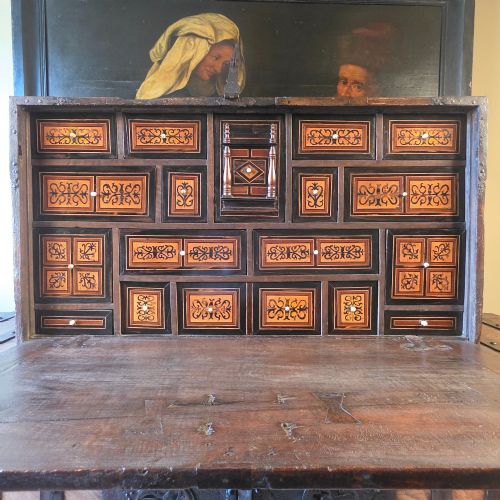
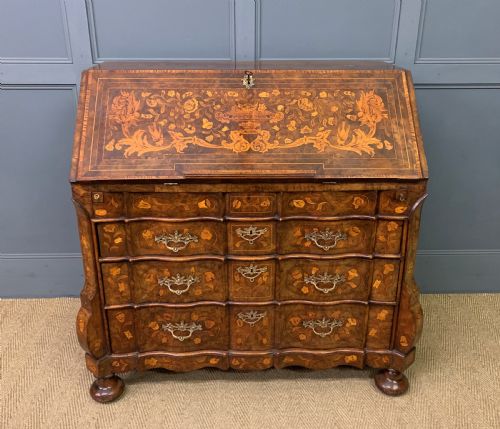
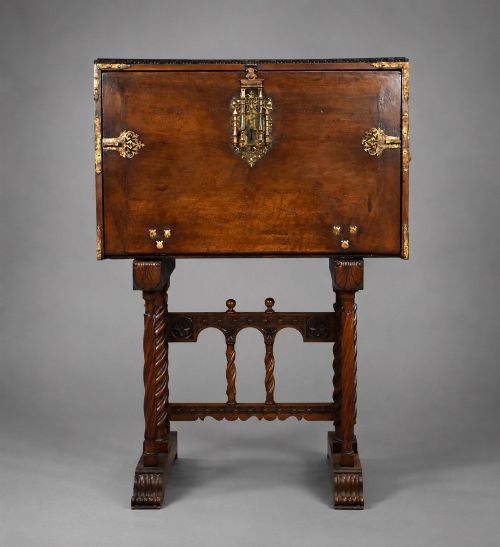
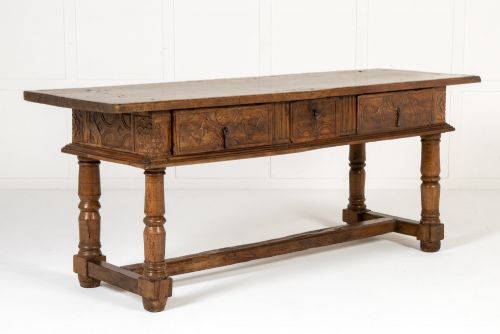
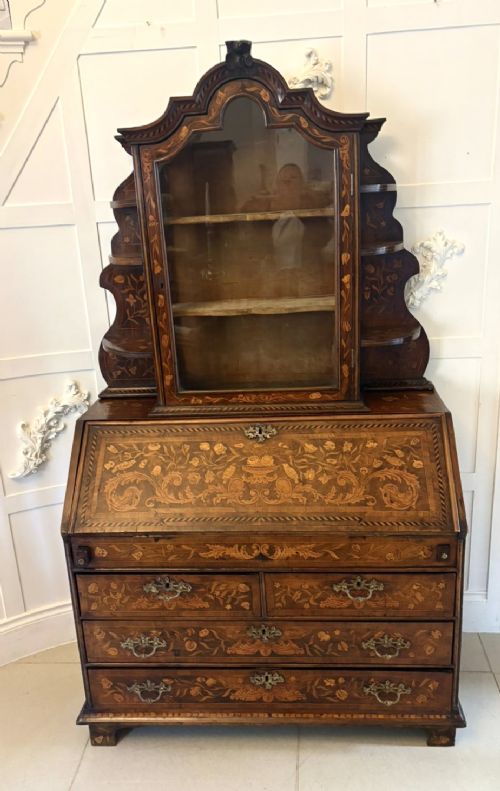
The version most commonly met on this page is the Dutch marquetry bureau or bureau bookcase, often inlaid with floral designs. Alongside these stand Spanish bargueño cabinets, Italian library tables, and solid walnut trestle tables from the seventeenth century.
Regional variations shape the selection significantly, shifting from the architectural drop-front cabinets of Spain to the figured burr veneers of Dutch writing furniture. Buyers encounter forms ranging from simple side desks to towering bureau cabinets fitted with revolving tabernacles and internal compartments.
Materials and construction methods
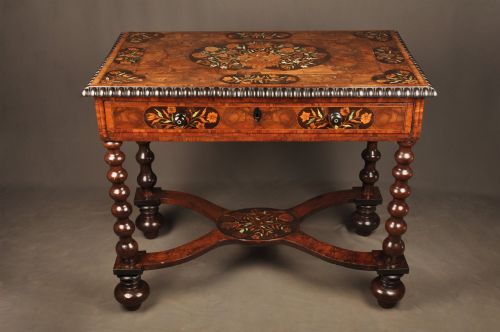
Cabinetmakers built these pieces using solid walnut and fruitwood timbers, applying burr walnut and marquetry veneers across expansive writing surfaces and fall fronts. Intricate floral inlays combine light and dark woods to create elaborate pictorial scenes on bureau flaps and tabletops.
Structural integrity relied on dense fruitwood framing, wrought iron braces, and hand-cut dovetails within drawer construction. Brass handles, escutcheons, and hinges secure the fall fronts and drawers, providing both operational strength and decorative contrast against the dark timber.
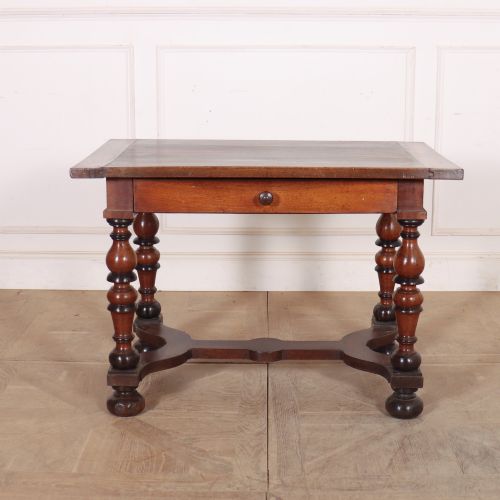
Some tables hide games boards beneath their tops, ready for an impromptu card match.
Assessing craftsmanship and condition
Quality rests upon the crispness of the marquetry cutting and the depth of the figured walnut grain selected for the primary surfaces. Finer examples display seamless veneer matching across large expanses and delicate floral details that retain their original tonal contrast.
The integrity of the internal fittings, such as secret drawers, pigeonholes, and revolving tabernacles, marks the division between standard utility pieces and masterworks. Original patination on the timber and untouched brass hardware elevate a piece above later restorations.
Angiolo Barbetti Firenze
The Baroque Walnut Desk Glossary
- Marquetry
- Decorative veneer work formed by fitting together small pieces of wood, bone, or metal to create pictorial designs on furniture surfaces. This technique defines the visual character of many Dutch writing cabinets.
- Bargueño
- A traditional Spanish cabinet with a drop-front panel that opens to reveal numerous small drawers and compartments. These portable writing cabinets typically rest upon decorative stands or tables.
- Bureau
- A sloping desk with a hinged flap that covers a workspace and internal pigeonholes. Eighteenth-century versions often sit atop a chest of drawers or a dedicated frame.
- Bureau Bookcase
- A two-part furniture form combining a sloping desk base with an upper enclosed shelving section. The upper doors often feature mirrored or glazed panels.
- Tabernacle
- A small central architectural shrine or compartment fitted within the interior of a cabinet or desk. These elements frequently revolve or conceal secret hiding spaces.
Baroque Walnut Desk: Frequently Asked Questions
Where were these desks made?
The pieces originate from workshops across continental Europe, with a strong concentration in the Netherlands, Spain, Italy, and South Germany. Each region developed distinct structural forms.
Dutch makers favoured floral veneers on slope-front bureaus, while Spanish cabinetmakers focused on solid walnut tables and drop-front cabinets.
How should I care for walnut veneer?
Protect antique walnut and marquetry by keeping pieces away from direct sunlight and maintaining stable room humidity. Sudden environmental changes cause timber to shrink and veneers to lift.
Apply traditional beeswax sparingly to nourish the dry wood and preserve the historic patina without sealing the surface.
What is a bureau bookcase?
A bureau bookcase combines a sloping desk base with a tall upper cabinet enclosed by doors for storing books. This two-part form became a staple of elite European interiors during the baroque period.
The interior layout typically includes adjustable shelving above and a fitted writing well with secret compartments below.