



Baroque Style Cherub Carving
These baroque style cherub carving pieces combine dramatic nineteenth-century revivals and earlier woodwork to bring sculptural energy into a room.
Baroque Style Cherub Carving
A baroque style cherub carving brings animated figural work into interiors through wall brackets, mirrors, tables, and architectural fragments. These objects draw on seventeenth-century Italian and English designs, manifesting predominantly in nineteenth-century revivals alongside earlier examples.
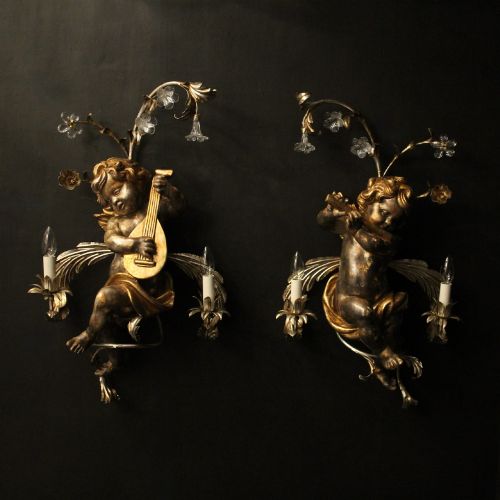
The selection here includes carved wood wall brackets, giltwood mirrors with putti, wooden statues, and walnut architectural elements. Buyers meet both Italian and English interpretations, ranging from small wall-mounted cherub heads to twin-arm wall lights.
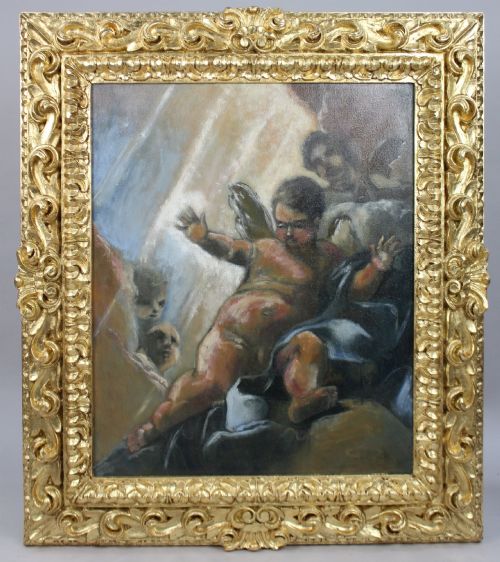
Forms extend from console tables with marble tops and firebacks to oil paintings set within elaborate carved frames. The majority of pieces date from the nineteenth century while retaining the heavy ornamentation of the seventeenth and eighteenth centuries.
Materials and construction
Carved wood forms the structural core of these pieces, utilising walnut, oak, and general timber shaped by hand. Many surfaces receive applications of gesso, gold leaf, and parcel gilt finishes to achieve the characteristic metallic sheen.
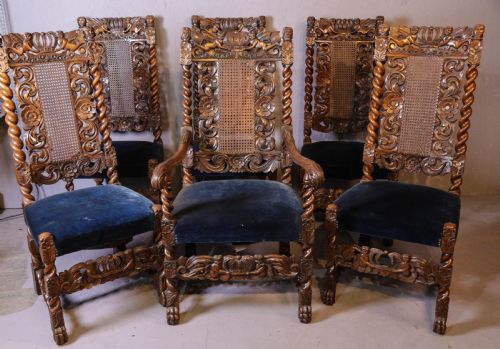
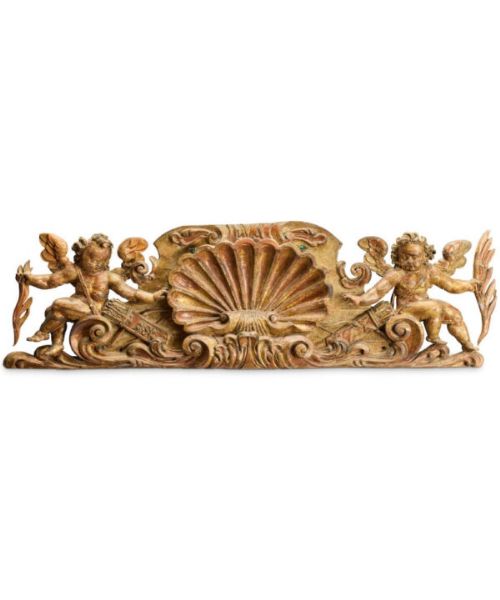
Execution relies on deep relief carving and sculptural joining, seen in heavily carved chairs, wall mirrors, and architectural pediments. Iron appears in specific items such as firebacks, while glass is integrated into bevel-edge mirrors and Murano lighting fixtures.
Listings feature oak, walnut, gesso, and carved wood objects spanning the seventeenth to the twentieth centuries.
Distinguishing quality in carving
Depth and crispness of the hand-carved detail separate ordinary woodwork from superior execution in these figures. Superior examples show confident handling of anatomy in the putti and cherubs, with naturalistic drapery and facial expression rather than static blocking.
The application of the gilt finish dictates visual success, where traditional gold leaf and gesso over wood create a warm, nuanced reflection compared to flat modern metallic paints. Integration between the carved wooden frame and the mirror glass or marble top also indicates higher workshop standards.
The Baroque Style Cherub Carving Glossary
- Baroque
- A style of European architecture, music, and art of the seventeenth and eighteenth centuries that is characterised by ornate detail and dramatic movement. Revivals of this aesthetic occurred frequently during the nineteenth century.
- Giltwood
- Wood that has been coated with gold leaf or gold paint. This technique provides the reflective, opulent surface seen on many baroque style frames and wall brackets.
- Gesso
- A plaster mix used as a base for paint or gold leaf on wood. It allows carvers to build up fine details before gilding.
- Carolean
- Pertaining to the reign of King Charles II of England, associated with rich carving, walnut furniture, and baroque influences. Pieces in this style often feature scrolls and floral motifs.
Baroque Style Cherub Carving: Frequently Asked Questions
What is a baroque style cherub carving?
These items are decorative wooden sculptures, architectural fragments, and furnishings shaped to resemble winged figures or putti. They draw heavily on seventeenth-century Italian and English design principles.
Most surviving examples date from nineteenth-century revival periods, utilising carved wood, gesso, and gold leaf to create dramatic visual focal points.
Where were these carvings placed originally?
Carved cherubs and putti adorned domestic interiors as wall brackets, mirror frames, console tables, and architectural pediments. They were designed to project from walls and frame mirrors or paintings.
Lighting fixtures and oil painting frames also incorporated these wooden figures to add sculptural depth to formal rooms.
How do I care for giltwood and carved wood?
Giltwood and carved wooden surfaces require stable indoor humidity away from direct sunlight and heat sources. Dusting should be done gently with a dry, soft brush to protect fragile gesso and gold leaf layers.
Moisture and chemical cleaners damage the historic finishes, so mechanical cleaning must be avoided entirely.
How can I tell the age of a carved piece?
Dating relies on tool marks, timber choice, and the composition of the gesso and underlying wood layers. Seventeenth and eighteenth-century works show different oxidation patterns and hand-tool signatures compared to nineteenth-century revival pieces.
Stylistic cues such as the specific interpretation of the baroque form help narrow down whether a piece is seventeenth-century or a later nineteenth-century copy.