



Baroque Gilt Wall Mirror
A baroque gilt wall mirror brings architectural weight and reflective light into a room, framed in ornate carved timber and gold.
Baroque Gilt Wall Mirror
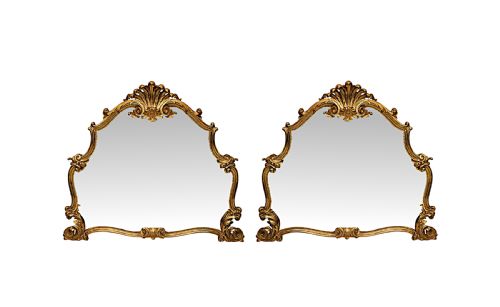
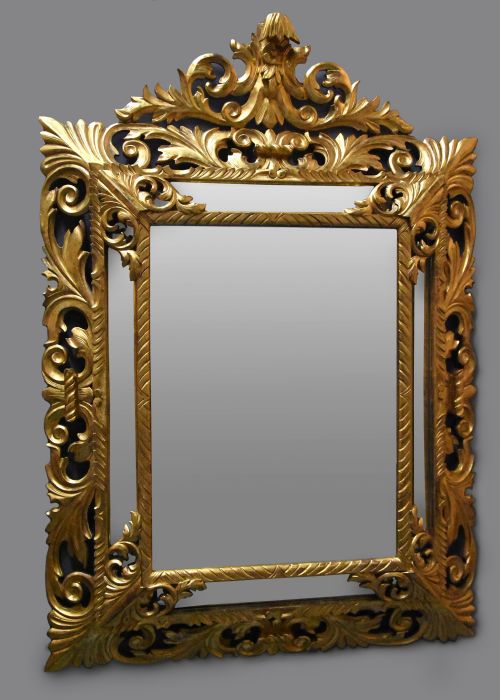
A baroque gilt wall mirror combines heavy architectural presence with reflective depth, taking the form of wall mirrors, pier glasses, and overmantel pieces. These objects emerge primarily from the seventeenth and eighteenth centuries, alongside later nineteenth-century revivals.
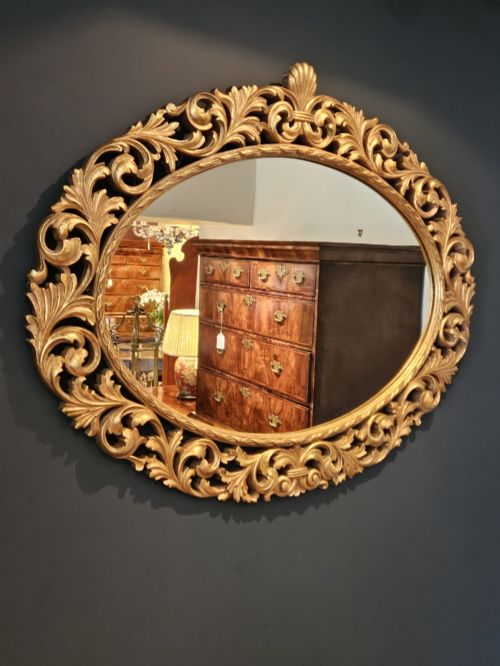
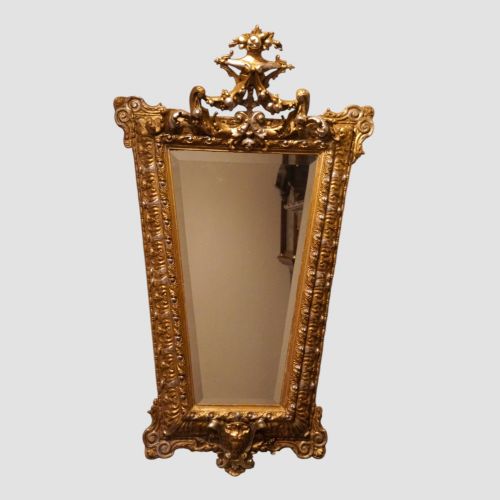
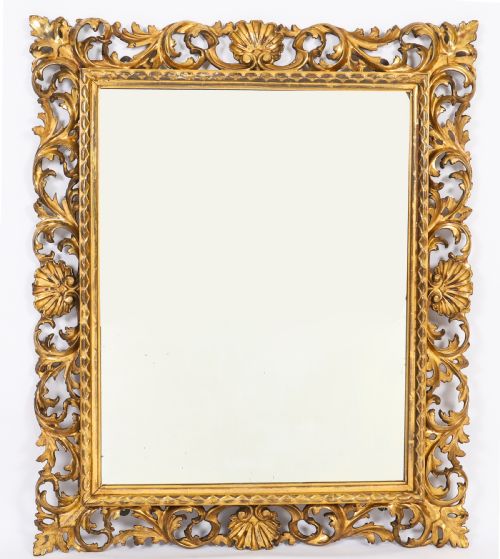
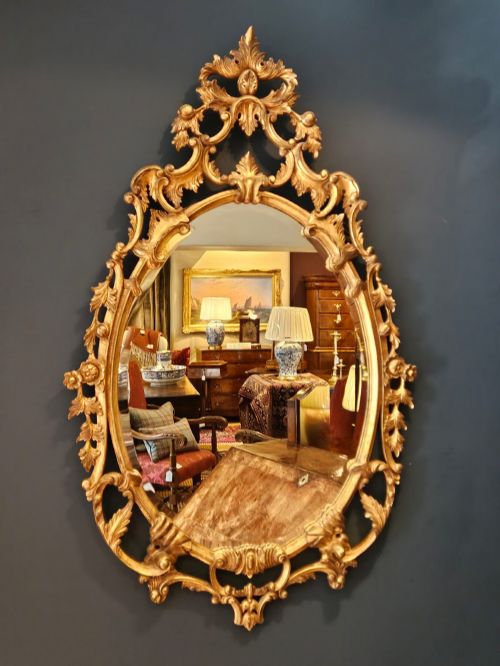
Italian and French workshops dominate the origins of these pieces, bringing regional flourishes such as Florentine carving or Rococo asymmetry to the frames. Buyers encounter rectangular, oval, and trapezoidal formats designed to command a wall or sit above a console table.
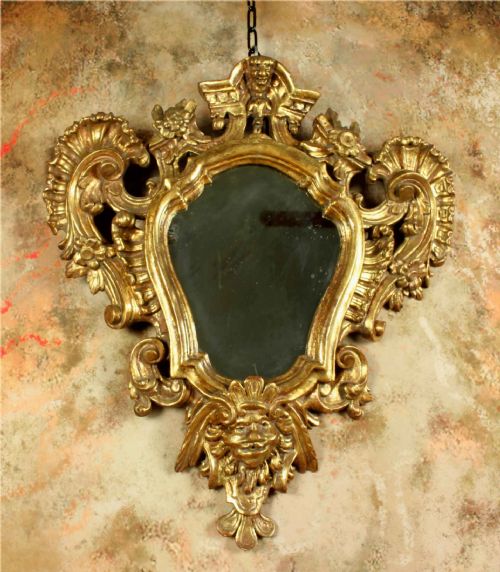
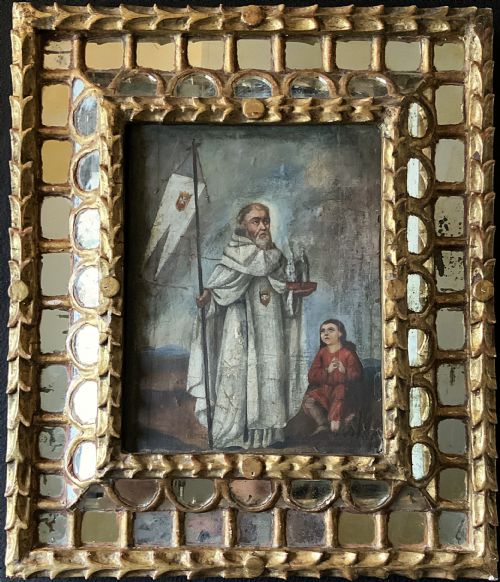
The forms range from restrained cushion frames to deeply carved compositions featuring decorative masks, lions' heads, and elaborate scrollwork. Many surviving examples carry the patina of centuries through their original surfaces and silvered plates.
How they were made
Carved wood provides the foundational structure for these frames, utilising timber shaped by hand before receiving surface treatments. Gesso is then applied to smooth the wood and create crisp relief details.
Gold leaf and silver leaf provide the characteristic metallic sheen, often laid over bole to enrich the tone of the gilding. Early examples incorporate original mercury plates that offer a characteristic mottled reflection.
Listings feature pieces spanning from the seventeenth century through to nineteenth-century revival periods, constructed from carved wood, gesso, and gold leaf.
What varies in quality
The depth and crispness of the hand carving separate ambitious sculptural frames from simpler moulded productions. Relief work featuring animated motifs like masks and acanthus scrollwork demonstrates higher artisan skill.
The integrity of the gilded surface and the survival of the original mirror plate define the visual reward of the piece. Period mercury glass and undisturbed gold leaf retain a soft, atmospheric depth absent in later replacements.
The Baroque Gilt Wall Mirror Glossary
- Giltwood
- Wood that has been coated with gold leaf or metal leaf over a prepared surface. This material defines the warm, luminous appearance of antique frames.
- Gesso
- A plaster-like mixture applied to carved wood to create a smooth ground for gilding. It allows for sharp, intricate decorative moulding.
- Pier glass
- A tall mirror specifically designed to hang on the wall space between windows. These pieces often match console tables positioned below.
- Mercury plate
- An early mirror glass produced using a tin and mercury amalgam backing. This process yields a distinctive undulating reflection with dark foxing spots.
- Cushion frame
- A mirror frame with a broad, rounded profile that slopes outward or inward. This style creates a pronounced three-dimensional border.
Baroque Gilt Wall Mirror: Frequently Asked Questions
Where should I hang a baroque gilt wall mirror?
These mirrors suit spaces where their reflective surface and ornate framing can draw the eye, such as above a fireplace mantel or a hallway console table.
Positioning them opposite a window helps maximise the natural light they bring into the room.
How do I identify an eighteenth-century mirror?
Eigteenth-century pieces often display hand-carved wooden frames finished with gold leaf over gesso, frequently paired with original mercury glass plates.
Construction details at the reverse, such as hand-cut timbers and old fixings, also point towards earlier periods.
What is the difference between baroque and rococo styles?
Baroque design emphasises symmetry, monumental scale, and heavy architectural drama with bold relief carving.
Rococo styling introduces lighter, more asymmetrical scrollwork, C-curves, and playful natural motifs.
Are these mirrors heavy to hang?
The combination of dense carved timber, gesso, and glass makes these frames substantial in weight.
Secure wall fixings anchored directly into wall studs are essential for safe installation.