

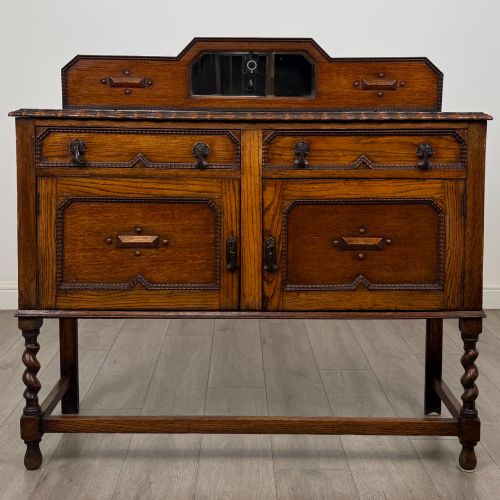
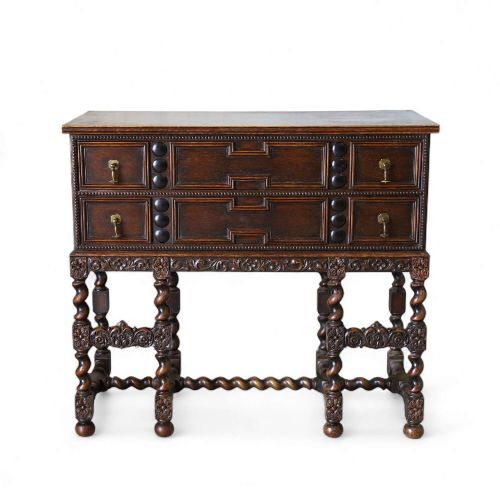

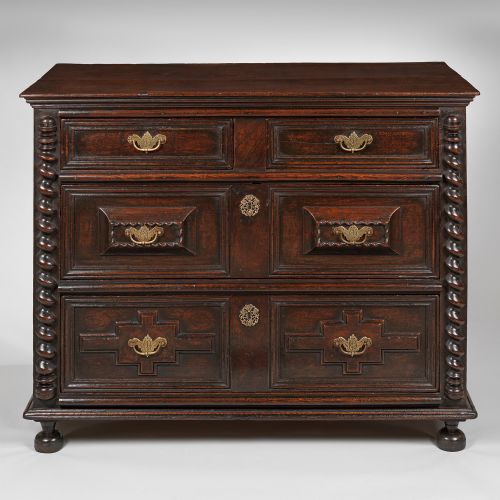


Barley Twist Oak Dresser
A barley twist oak dresser brings robust timber and spiralling turned supports straight into a dining room or kitchen.
Barley Twist Oak Dresser
A barley twist oak dresser combines utilitarian storage with the distinctive turned columns that define its aesthetic lineage. These pieces frequently manifest as sideboards, Welsh dressers, or buffet cupboards designed to display and store household belongings.
The examples gathered here span centuries of British and continental cabinetmaking, drawing on Edwardian, Victorian, and seventeenth-century revival idioms. One is most likely to encounter substantial sideboards and dressers featuring upper plate racks or carved display shelving supported by prominent turned columns.
Constructed primarily from solid or figured timber, these items range from austere vernacular forms to heavily carved Jacobean revival interpretations. They serve both as functional storage units and as focal points that anchor a room with architectural presence.
Materials and construction methods
Cabinetmakers relied heavily on oak as the principal structural timber, occasionally incorporating secondary woods such as walnut to add tonal contrast to drawer fronts and mouldings. Timber selection dictated the weight and durability of each carcass, ensuring that the heavy superstructure remained stable.
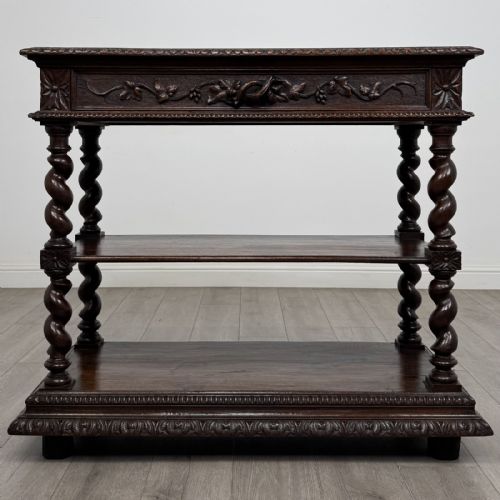
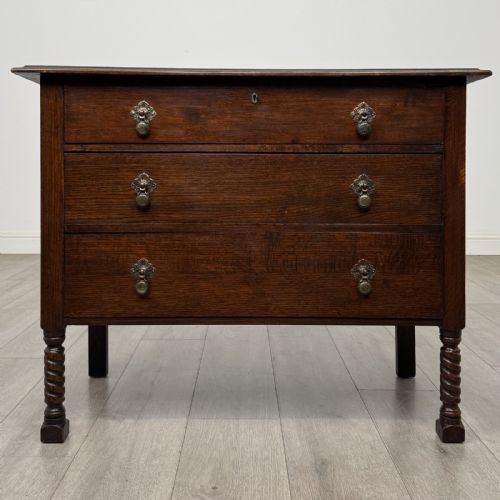
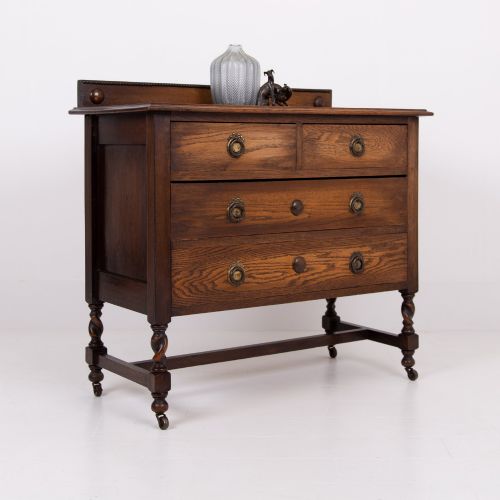
The defining feature, the barley twist, was produced by hand-turning or lathe-cutting solid timber into continuous, spiralling rope patterns. These turned supports were then integrated into the uprights of sideboards, the framing of plate racks, and the legs of dressers.
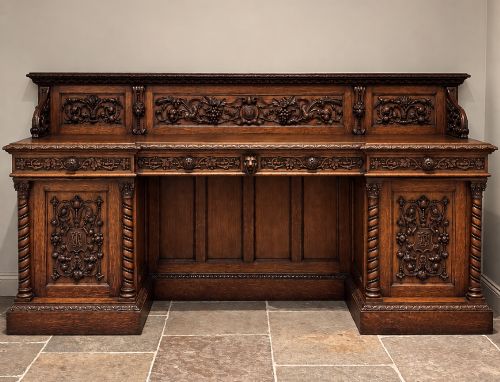
Surface detailing often included relief carving in the Jacobean or Carolean revival taste, executed with chisels to create deep panels, scrolling foliage, and figural motifs such as the Green Man. Brass handles, escutcheons, and glass panes were added as functional hardware to doors and drawers.
Barley Twist Oak Dresser Retail Price Guide 2026
Typical asking prices for barley twist oak dresser among the pieces listed under this phrase on Sellingantiques today, from the lower quarter to the upper quarter. They describe what is for sale here now, not the wider market.
The listings here encompass Victorian, Edwardian, and seventeenth-century styles executed primarily in oak with occasional walnut and brass details.
Factors determining quality
The standard of carving on doors, panels, and friezes separates mass-produced workshop items from superior cabinetwork. Crisp, deep undercut detailing indicates a maker who spent significant time refining the decorative elements.
Timber quality and grain selection dictate the visual depth of the oak, with figured planks commanding greater appreciation than plain, uniform boards. The integrity of the joints, the thickness of the drawer linings, and the original state of the brass hardware further distinguish the finer pieces.
The Barley Twist Oak Dresser Glossary
- Barley twist
- A turned wooden column carved in a continuous spiral resembling a twist of barley. This decorative motif gained popularity during the seventeenth century and saw extensive revival periods in the Victorian and Edwardian eras.
- Plate rack
- An open set of wooden shelves mounted to the upper section of a dresser, designed to display ceramic plates upright. These structures often feature plate grooves and smaller hanging hooks.
- Jacobean Revival
- A nineteenth-century design movement that imitated the heavy, austere style and geometric panel work of the early seventeenth century. Furniture in this taste often displays dark finishes and prominent mortise and tenon joints.
- Buffet
- A sideboard or low cupboard used for serving food and storing tableware. In continental pieces, this form evolves into substantial enclosed cabinetry with upper and lower sections.
- Escutcheon
- A protective metal plate surrounding a keyhole on a cabinet door or drawer front. These plates are typically made of brass and can be plain or elaborately chased.
Barley Twist Oak Dresser: Frequently Asked Questions
What is a barley twist oak dresser?
A barley twist oak dresser is a storage unit featuring turned spiralling columns in its upright supports, built primarily from solid oak.
These pieces function as sideboards, display dressers with plate racks, or buffet cupboards, combining practical shelving with decorative turned woodwork.
How were these dressers used historically?
Historically, these items served in dining rooms and kitchens to store heavy ceramics, silverware, and table linens.
The upper plate racks allowed households to display prized ceramic plates, while the lower cupboards and drawers concealed everyday dining utensils.
How do I tell an Edwardian piece from a Victorian one?
Edwardian examples tend to utilise lighter golden oak finishes and cleaner lines, reflecting the domestic tastes of the early twentieth century.
Victorian and revival pieces generally exhibit darker patination, heavier proportions, and much denser, deeper relief carving across the panels.
How do I care for an oak dresser?
Maintaining an antique oak surface requires simple dusting with a dry, soft cloth and occasional treatment with traditional beeswax.
Avoid placing the timber in direct sunlight or near sudden heat sources to prevent the wood from drying out and splitting.