

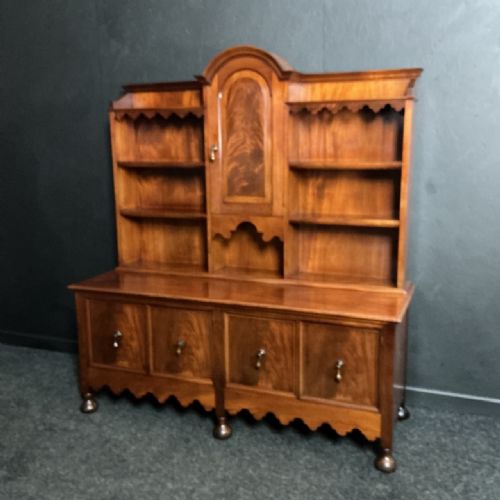
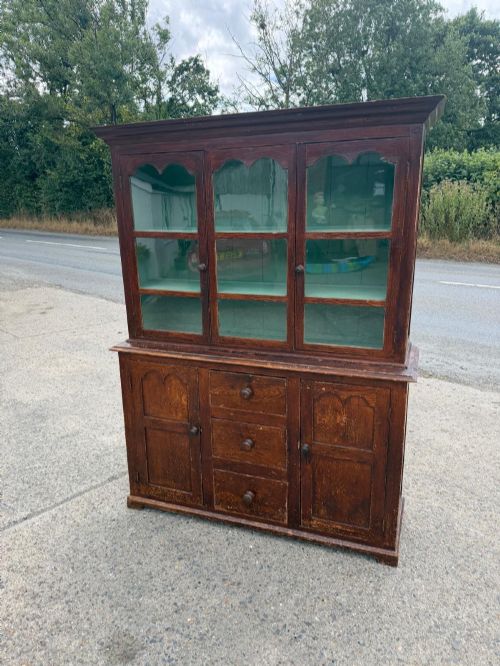
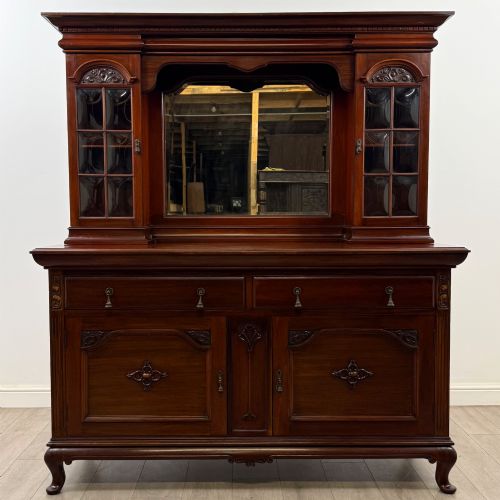


Dark Wood Buffet Hutch
A dark wood buffet hutch provides sturdy storage and display space, bringing rich tones and historic character into a room.
Dark Wood Buffet Hutch
When you search for a dark wood buffet hutch, you are looking at substantial storage furniture designed for dining spaces and living areas. These pieces combine lower cupboards or sideboards with upper display cabinets, dressers, and shelving units.
The versions you are most likely to meet on this page span several distinct periods and styles, including Victorian pine and oak examples, Edwardian mahogany pieces, and robust 18th-century carved oak dressers. Regional European influences also appear, such as French carved oak hunting cabinets and Breton buffet cabinets.
Makers utilised various decorative approaches across these eras, ranging from restrained Arts and Crafts designs to ornate French Renaissance Revival, Jacobean Revival, and Tudor Revival carving. Folk art and tramp art examples also feature, showing distinctive chip-carved surfaces.
How they were made
Makers relied primarily on solid oak, pine, and mahogany to construct these substantial frames, frequently employing flame mahogany for striking grain patterns on drawer fronts and door panels. Timber selection dictated the weight and overall durability of each sideboard and display cabinet.
Construction involved traditional joinery, complemented by functional hardware in brass and metal. Upper sections often incorporated glazed doors held together with lead cames, housing shelving for ceramic and glassware displays.
Dark Wood Buffet Hutch Retail Price Guide 2026
Typical asking prices for dark wood buffet hutch among the pieces listed under this phrase on Sellingantiques today, from the lower quarter to the upper quarter. They describe what is for sale here now, not the wider market.
The listings here span five distinct centuries of cabinet-making, featuring oak, pine, and mahogany across diverse regional and revival styles.
What varies in quality
Depth and precision of hand-carved detailing separate standard utility furniture from finer artistic examples, particularly on pieces featuring geometric motifs, figural work, or linenfold panels. Crisp execution of revival styles demonstrates the competency of the workshop.
Quality also rests in the selection of timber veneers and the integration of secondary woods, alongside the structural integrity of heavy glazed top dressers and multi-tiered buffet tables.
The Dark Wood Buffet Hutch Glossary
- Dresser
- A piece of furniture featuring storage cupboards or drawers below, often surmounted by open shelves or a glazed display cabinet.
- Buffet
- A sideboard or low cabinet utilised for serving food or storing dining room tableware.
- Glazed
- Fitted with glass panes, typically within wooden framing bars to protect displayed items from dust.
- Tramp art
- A style of decorative woodwork created by chip-carving layers of salvaged wood, often utilising simple pocket knives.
Dark Wood Buffet Hutch: Frequently Asked Questions
What is a buffet hutch used for?
These cabinets served primarily in dining rooms for storing tableware, cutlery, and linens while providing a surface to serve food.
The upper display shelves or glazed sections allowed households to showcase ceramics, glassware, and decorative objects.
How do I identify an Edwardian piece?
Edwardian furniture, produced in the early twentieth century, often lighter in proportion than Victorian equivalents, frequently utilises mahogany or oak.
Design influences from this period lean towards refined Arts and Crafts simplicity or restrained revival styles.
Are these pieces made of solid wood?
The listings show primary construction in solid timbers such as oak, pine, and mahogany, with some pieces incorporating flame mahogany veneers.
Internal shelves and secondary framing utilise matching or sturdy supporting woods appropriate to the period.