






Barley Twist Column
A barley twist column turns rigid timber and brass into a winding sculpture that catches the eye in any room.
Barley Twist Column
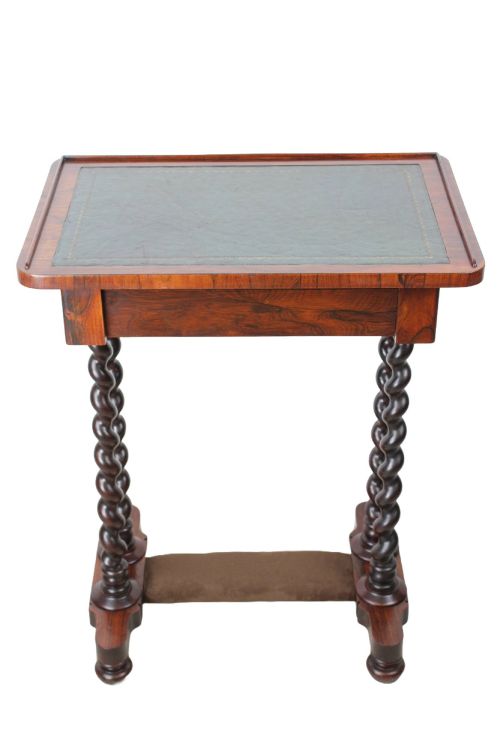
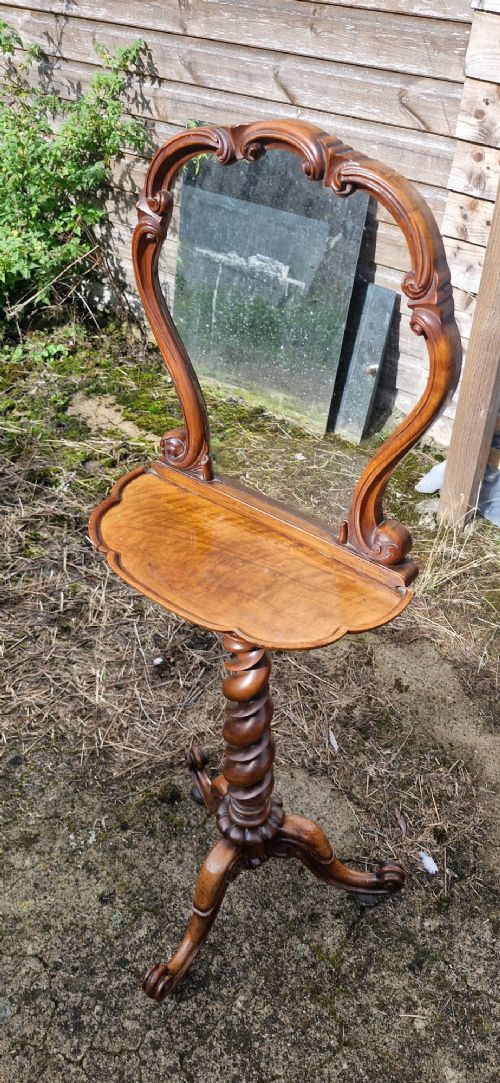
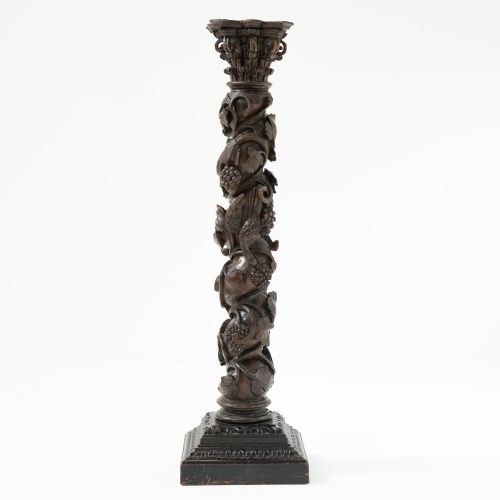
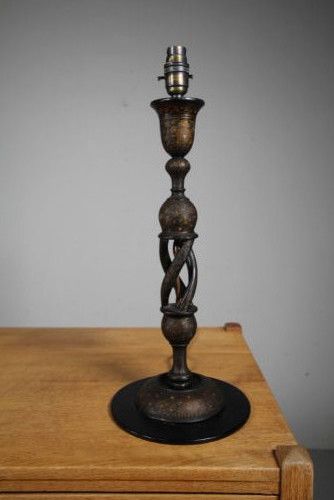
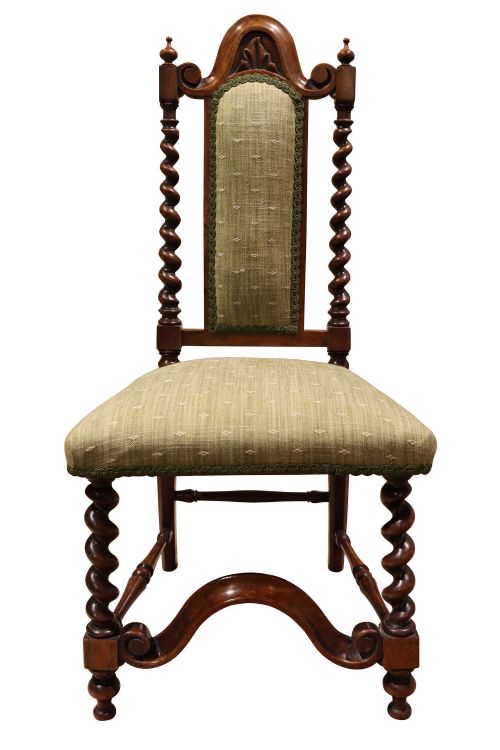
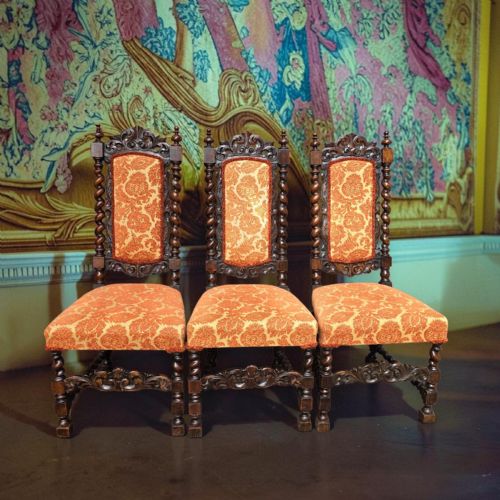
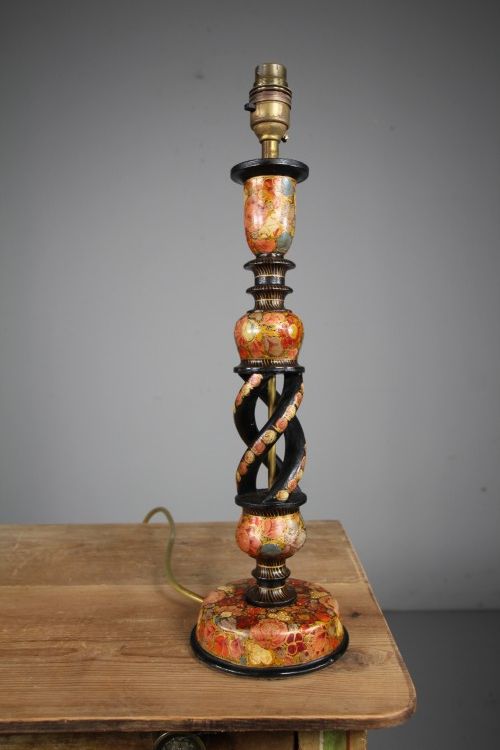
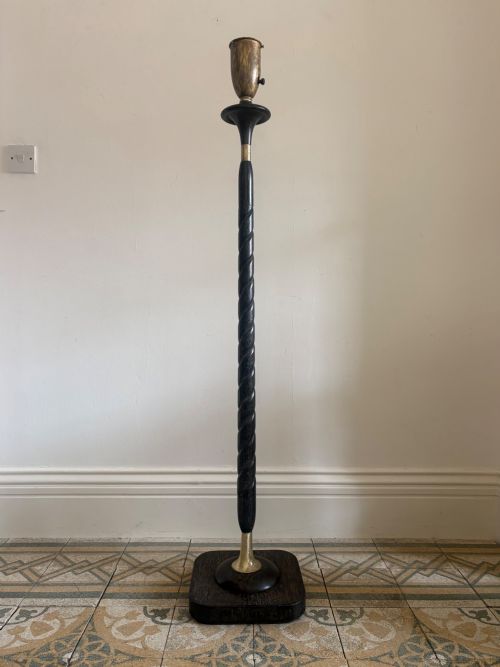
A barley twist column is a helical shaft found supporting furniture, illuminating rooms as floor and table lamps, or standing alone as plant stands and pedestals. When searching for a barley twist column, buyers encounter everything from structural supports on Victorian longcase clocks and cabinets to dedicated occasional tables and freestanding torcheres.
The most common versions on this page date from the Victorian era and the 1920s, fashioned in oak, walnut, mahogany, and heavy cast brass. These pieces range from diminutive candlesticks to tall floor lamps and architectural pillars, reflecting a design vocabulary borrowed from earlier seventeenth-century William and Mary styles.
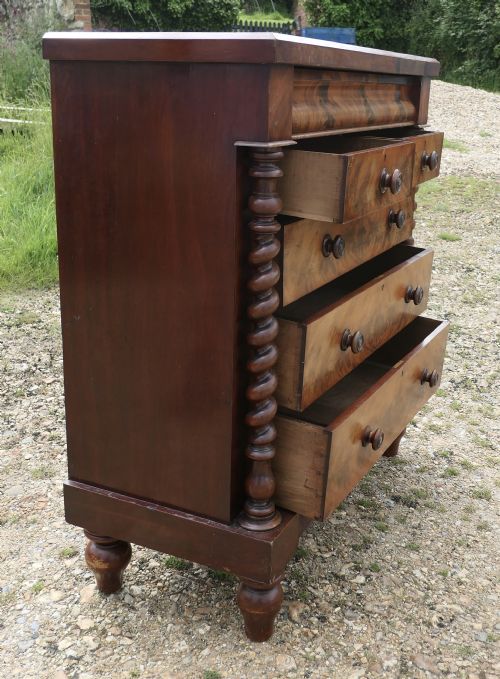
Makers integrated these spiral forms into utilitarian items such as occasional tables, umbrella stands, and chests of drawers, where the turned legs or flanking columns provide textural rhythm. Whether supporting a lamp or framing a clock face, the twist adds organic movement to domestic interiors.
Materials and construction
Craftsmen shaped these timbers using a lathe or by hand-carving dense hardwoods like oak, walnut, rosewood, and mahogany to achieve the characteristic helical profile. The grain of the wood follows the sweep of the spiral, demanding skill to prevent splitting along the natural lines of the timber.
Brass examples were cast in sections and finished with detailed joints, providing a heavier, reflective alternative to the warm tones of polished oak and ebonised wood. Many lighting pieces incorporate rewired electrical flex alongside original metalwork to suit contemporary homes.
Even clock faces needed architectural backing, resulting in towering oak cases guarded by miniature twisted sentinels.
Assessing quality and execution
The distinction between ordinary and exceptional pieces lies in the crispness of the carving and the depth of the spiral undercut. Superior examples display smooth, continuous curves without flattened edges, while lesser items show blunt transitions where the cutter rushed the timber.
Proportion and wood selection dictate overall character, with finely figured burr walnut, rich mahogany, and substantial cast brass elevating a standard support into a focal point. Uniformity of pitch along the entire length of the twist separates master turners from hurried production.
The Barley Twist Column Glossary
- Solomonic column
- A spiral column resembling a twisted shaft, derived from classical architecture and frequently replicated in seventeenth-century revival furniture.
- Torchiere
- A tall stand or candlestick designed to hold a light source high above the floor, often featuring a barley twist shaft.
- Ebonised
- Wood stained or painted to imitate ebony, giving a deep black finish popular on nineteenth-century decorative pieces.
- Longcase clock
- A tall pendulum clock housed in a wooden case where barley twist columns often flank the glazed hood door.
Barley Twist Column: Frequently Asked Questions
What periods do these columns come from?
The pieces span from the late seventeenth century through the Georgian and Regency periods, with a heavy concentration of Victorian and 1920s revivals.
Craftsmen across these eras repeatedly returned to the spiral form, meaning a 1920s oak floor lamp often echoes a design first popular under William and Mary.
How were barley twist columns used?
They served structural and decorative roles, acting as legs for side tables, framing the doors of cabinets and longcase clocks, or standing alone as torchieres.
In lighting, the twisted shaft provides height and visual texture for both brass candlesticks and converted floor lamps.
Are the wooden pieces solid or veneered?
Makers utilised solid hardwoods like oak, walnut, and mahogany for turned structural elements such as columns and table legs.
Veneers appear more frequently on flat cabinet surfaces, while the twisted columns themselves are almost universally turned from solid stock to maintain structural integrity along the spiral.
How do I date an oak barley twist piece?
Dating relies on secondary wood types, construction joints, and the sharpness of the turning tool marks.
Seventeenth-century originals show hand-carved irregularity, whereas Victorian and 1920s revival pieces display the mechanical precision of advanced lathe technology.